Key Points
- Oil prices surged to highest since 2022, with Brent crude rising nearly 7% to over $126 (£94) a barrel before retreating to around $114.
- US Central Command prepared plan for “short and powerful” strikes on Iran to break negotiation deadlock, as reported by Axios.
- Potential strikes target infrastructure; another plan involves seizing part of Strait of Hormuz with possible ground troops.
- Strait of Hormuz, vital for 20% of global oil and LNG, remains effectively closed amid stalled peace talks.
- UK petrol at 157p/litre (up 24p since war start), diesel at 188.5p/litre (up 46p), per RAC data.
- Iran’s Supreme Leader Mojtaba Khamenei vows to secure Strait of Hormuz and end “enemy’s abuses”.
- US blockades Iranian ports while Iran threatens ships; war began 28 February with US-Israeli actions.
- Energy executives met Trump Tuesday; markets mixed with Asia down, Europe up.
- Analysts warn of inflation, higher food/flight prices, fertiliser cost spikes into next year.
London (Britain Today News) April 30, 2026 – Brent crude oil prices rocketed to their highest level since 2022 on Thursday after a report emerged that US military leaders are preparing to brief President Donald Trump on fresh options for action against Iran. The surge, driven by escalating tensions in the Iran war, saw Brent climb almost 7% to more than $126 (£94) a barrel at one point, before pulling back sharply to around $114 later in the session. This volatility underscores the fragile state of global energy markets as peace negotiations with Tehran stall and the key Strait of Hormuz remains effectively closed.
- Key Points
- What sparked the oil price surge to $126 a barrel?
- How has the Iran war disrupted the Strait of Hormuz?
- What are the proposed US military options against Iran?
- What impact are rising oil prices having on UK motorists?
- Will higher energy costs affect food and travel prices?
- What do analysts say about oil market volatility?
- How have stock markets reacted to the news?
- What does this mean for global energy supplies long-term?
The report, first detailed by Axios, revealed that US Central Command has drawn up plans for a wave of “short and powerful” strikes aimed at breaking the deadlock in talks. As reported by Axios journalists citing anonymous sources, these proposals include targeting Iranian infrastructure. A separate option focuses on seizing control of part of the Strait of Hormuz to reopen it for commercial shipping, potentially requiring ground troops.
What sparked the oil price surge to $126 a barrel?
The immediate trigger was the Axios disclosure, which sent shockwaves through trading floors. Brent crude touched $126.31 a barrel earlier on Thursday, marking the loftiest peak since Russia’s full-scale invasion of Ukraine in 2022. The current Brent futures contract for June delivery expires today, contributing to the day’s sharp swings, while the more active July contract traded around $109 a barrel. Futures contracts represent agreements to buy or sell oil at a predetermined future date, amplifying market reactions to geopolitical news.
Energy prices have climbed steadily this week as diplomatic efforts falter. About 20% of the world’s oil and liquefied natural gas (LNG) typically flows through the Strait of Hormuz, a narrow waterway now choked by conflict. The BBC has sought comment from US Central Command and the White House, but no official response was available at time of writing.
How has the Iran war disrupted the Strait of Hormuz?
The conflict traces back to 28 February, when the US-Israeli war with Iran ignited. The US announced it would blockade Iranian ports for as long as Tehran threatens vessels attempting to navigate the Strait of Hormuz, severely hampering global energy shipments. Iran retaliated against US-Israeli airstrikes by vowing attacks on ships in the waterway.
In a statement attributed to Iran’s Supreme Leader Mojtaba Khamenei on Thursday, Tehran pledged to
“secure the Strait of Hormuz and eliminate the enemy’s abuses of the waterway”.
Khamenei’s remarks also declared that a “new chapter” for the region has unfolded since the war’s outset. This rhetoric heightens fears of further closures, with oil prices already up 6% on Wednesday following reports of Washington eyeing an “extended” blockade.
What are the proposed US military options against Iran?
Axios sources described the strike plans as calibrated for maximum impact with minimal duration. Targets would likely encompass key infrastructure to pressure Tehran without full-scale invasion. The Hormuz seizure alternative aims to restore shipping lanes, though it risks boots-on-the-ground escalation. President Trump is slated for a briefing on these strategies, amid energy executives’ meeting with him on Tuesday to discuss shielding US consumers from war fallout.
What impact are rising oil prices having on UK motorists?
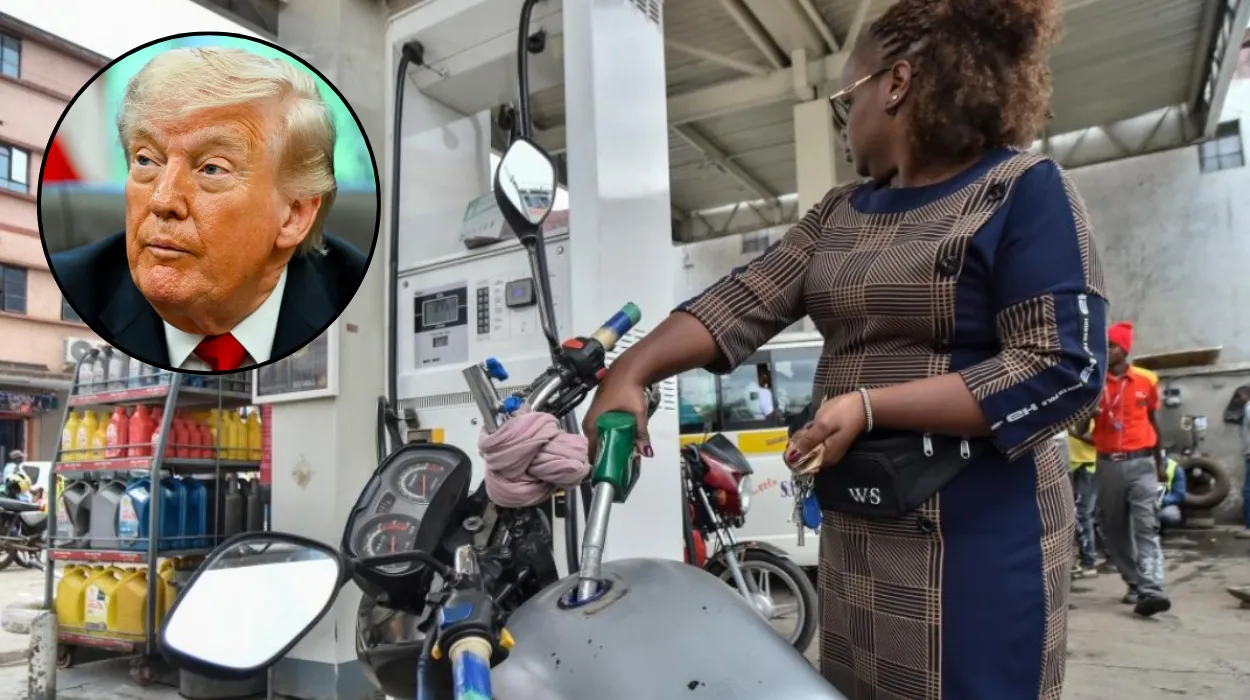
Crude oil forms the backbone of petrol and diesel, and the war’s onset has hammered pump prices. In the UK, petrol averages 157p per litre, a 24p rise from pre-war levels, according to motoring group RAC. Diesel stands at 188.5p a litre, up 46p over the same period.
RAC head of policy Simon Williams noted that while pump petrol prices have dipped slightly,
“our analysis of wholesale costs shows petrol is now more expensive for retailers to buy than at any time since the war began”.
On diesel, he added,
“However diesel, which has come down by 3p a litre, is currently well below its highest wholesale price since the start of the conflict, so should fall further.”
Will higher energy costs affect food and travel prices?
The ripple effects extend far beyond forecourts. The UK government has cautioned that households could face elevated energy, food, and flight ticket costs due to the war. Airlines have responded by hiking fares or slashing routes. Fertiliser prices are surging, with urea shipments blocked, threatening food supply chains.
Susannah Streeter, chief investment strategist at Wealth Club, warned that
“urea shipments, used for fertiliser, are blocked and costs have rocketed for farmers around the world, who didn’t buy stocks in advance. The worry is that all these costs will be passed on through supply chains, pushing up the price of everyday goods, later in the year and into next year.”
What do analysts say about oil market volatility?
Naveen Das, senior oil analyst at Kpler, told the BBC’s Today programme that escalation appears back on the agenda, whether through prolonged US blockades or fresh Iranian strikes.
“It does seem as though escalation in the war is back on the table, be it in the guise of the US continuing its blockade in Iran, but also reports and rumours that in order to get out of this bind, Iran may start to strike again,”
Das said. He flagged $125 a barrel as a threshold where
“businesses and politicians start to get a bit more jittery”,
potentially spurring de-escalation headlines given knock-on effects on inflation and daily life.
Will Walker-Arnott, investment manager at Raymond James, echoed concerns on the Today programme:
“The big question in my mind is how long the Trump administration can stand the economic heat.”
He highlighted mounting worries over
“the inflationary impact coming through from the rise in the oil price”.
Energy executives’ Tuesday huddle with Trump fuelled market jitters about supply disruptions.
How have stock markets reacted to the news?
Global bourses showed a split response. Asian markets closed lower, with Japan’s Nikkei shedding 1.1% and South Korea’s Kospi tumbling 1.4%. European indices bucked the trend: London’s FTSE 100 gained 1.6%, Germany’s Dax rose 1%, and France’s Cac 40 nudged up 0.1%. Traders appear torn between energy shock and hopes for diplomatic off-ramps.
What does this mean for global energy supplies long-term?
The war’s persistence threatens prolonged supply squeezes. With 20% of seaborne oil and LNG at stake, any Hormuz reopening would demand delicate military footing. Tehran’s defiance, coupled with Washington’s resolve, dims prospects for quick resolution. As Das noted, prices nearing $125 could cascade into broader economic pressures, from factory gates to supermarket shelves.
Williams at RAC anticipates some diesel relief but cautions on petrol’s wholesale bind. Streeter foresees cost pass-throughs lingering into 2027, hitting farmers first via fertilisers. Walker-Arnott questions Washington’s endurance against domestic inflation heat.
This episode recalls 2022’s Ukraine shocks, when Brent last pierced $126. Yet today’s dynamics layer Iranian chokepoints atop existing strains. Khamenei’s “new chapter” vow signals Tehran’s unyielding stance, while Axios’ briefing scoop spotlights Trump’s pivotal crossroads. Markets will hang on White House and Central Command replies, but for now, the oil surge grips investors and consumers alike.