Key Points
- UK’s Foreign Commonwealth and Development Office (FCDO) has merged education, health, gender equality, and development budgets into a single “Human Development” directorate.
- Combined funding drops 72% from £1.54bn in 2024–25 to £433m by 2026–27, per FCDO annual report analysis.
- Spending projected to recover to £1.24bn by 2028–29, but remains 20% below 2024–25 in cash terms and more with inflation.
- Reorganisation obscures tracking of individual programme cuts; some funds shift from other aid areas.
- Labour MP Bambos Charalambous criticises “staggering cuts” to education in poorest regions, harming UK’s reputation and children’s lives.
- Foreign Secretary Yvette Cooper’s statement protects multilateral fund Education Cannot Wait but ignores bilateral country-to-country education aid.
- South Sudan faces sharpest impact: highest global out-of-school children rate (two-thirds, ~2.8 million), worsened by Sudan civil war and 1.6 million refugees since early 2025.
- UK’s £67m Girls’ Education South Sudan programme (2018–2025) supported 1.5 million girls; ended March 2025, successor EFASS tender cancelled amid FCDO review.
- South Sudan Education Minister Kuyok Abol Kuyok expressed concern to BBC, noting UK’s reassurance but highlighting project’s value, even ring-fenced by Boris Johnson.
- International Development Committee chair Sarah Champion warned of 90% cut to FCDO contribution; described as “shortsighted own-goal”.
- Minister Jenny Chapman (Baroness Chapman) confirmed no dispute on 90% figure, cited EFASS transition; promised summer annual report details, prioritising education, health, humanitarian aid.
- Save the Children UK’s Chanju Mwanza decried cuts pulling “rug from under children”, noting 273 million global out-of-school children.
- FCDO spokesperson reaffirms commitment, focusing ODA on impactful aid for marginalised groups like girls, disabled children, conflict-affected; targets education systems, finance, UK expertise.
London (Britain Today News) April 30, 2026 – Britain’s aid spending on education and health in countries around the world stands to plummet by up to 72 per cent by 2027, as revealed through analysis of the latest Foreign Commonwealth and Development Office (FCDO) annual report.
- Key Points
- Why Have UK Education and Health Aid Budgets Been Slashed?
- Which Country Faces the Worst Impact from These Cuts?
- What Did UK Lawmakers Say About South Sudan Funding?
- How Are Aid Groups Reacting to the Funding Cliff?
- What Is the FCDO’s Official Stance on These Reductions?
- Will Aid Recover, and What Are the Long-Term Implications?
The drastic reduction stems from the FCDO folding three separate budget lines – covering education, health, gender and equality, and development – into a unified “Human Development” directorate. This reorganisation has slashed combined funding from £1.54 billion in 2024–25 to just £433 million between 2024–25 and 2026–27, a 72 per cent drop. Projections indicate a partial rebound to £1.24 billion by 2028–29, yet this remains 20 per cent below 2024–25 levels in cash terms, with inflation eroding it further.
Why Have UK Education and Health Aid Budgets Been Slashed?
The merger complicates precise tracking of cuts to specific programmes, as published accounts blend thematic lines and draw funds from broader aid allocations. As reported by The Independent, this opacity raises alarms among lawmakers and aid experts. Labour MP Bambos Charalambous, chair of the All-Party Parliamentary Group on Global Education, stated:
“It appears that staggering cuts are being made to education projects in some of the poorest parts of the world – at huge cost to the UK’s reputation, as well as to the life chances of children often living in war zones. That’s a tragedy, but the least ministers can do is come clean about what is happening.”
Foreign Secretary Yvette Cooper’s recent written statement to Parliament outlined broader aid reductions, with official development assistance (ODA) shrinking from 0.5 per cent to 0.3 per cent of Gross National Income (GNI) by 2028 to prioritise defence spending. Notably, it ring-fenced the multilateral Education Cannot Wait fund but omitted bilateral aid – direct country-to-country support funding teachers, classrooms, and curricula in impoverished nations.
This shift prioritises efficiency amid fiscal pressures, yet critics argue it undermines long-term global stability. The FCDO’s approach aims for targeted interventions, but details remain elusive.
Which Country Faces the Worst Impact from These Cuts?
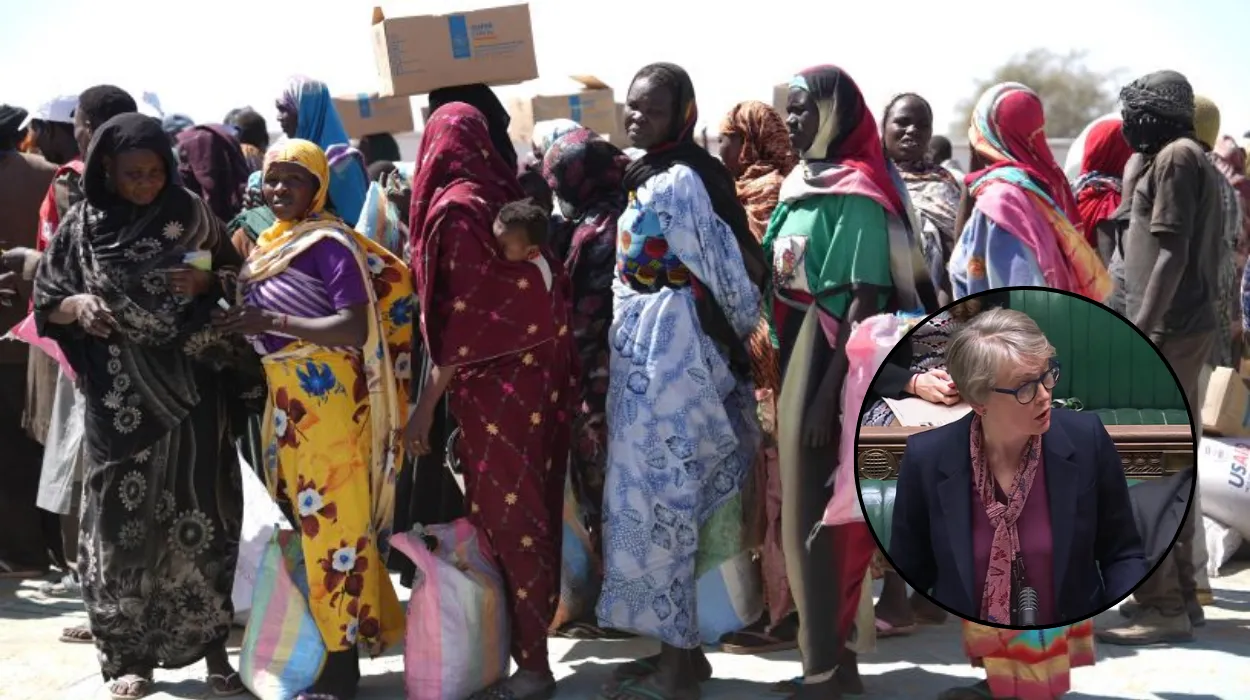
South Sudan exemplifies the crisis, boasting the world’s highest rate of out-of-school children: around two-thirds of school-age youngsters, roughly 2.8 million, lack education. This has intensified since Sudan’s civil war reignited in early 2025, driving over 1.6 million refugees across the border.
The UK’s Girls’ Education South Sudan programme, costing nearly £67 million since 2018, directly aided 1.5 million girls’ access to schooling. It concluded in March 2025, transitioning to Education for All South Sudan (EFASS). However, the EFASS tender was cancelled during a wider FCDO budget review.
South Sudan’s Minister of General Education, Kuyok Abol Kuyok, addressed concerns to the BBC last year. The UK embassy assured him it was merely a tender cancellation, not project termination, affirming Britain “remains in the game.” Unconvinced, he added:
“This is one of the best projects Great Britain is investing in South Sudan. I’m very concerned. Because, look, what is going to happen? Even former Conservative PM Boris Johnson ring-fenced this during those difficult days of austerity.”
What Did UK Lawmakers Say About South Sudan Funding?
The International Development Committee corresponded with Jenny Chapman, Minister of State for International Development and Africa, in February. Following input from South Sudan’s minister, they highlighted a projected 90 per cent cut to the FCDO’s programme contribution for the new financial year. Committee chair, Labour MP Sarah Champion, cautioned: the reduction would “likely see significant regression” in progress and branded it a “shortsighted own-goal” that risks destabilising partners before self-sufficiency.
In response, Baroness Chapman neither contested the 90 per cent cut nor elaborated deeply. She referenced the EFASS transition and pledged country allocations in the FCDO’s summer annual report. Education, health, and humanitarian responses, she affirmed, “remain priorities” in South Sudan. Sources indicate the FCDO seeks precise aid for marginalised communities, though implementation methods stay unclear.
How Are Aid Groups Reacting to the Funding Cliff?
Aid organisations decry the moves as devastating. Chanju Mwanza, Senior Education Advocacy Advisor at Save the Children UK, warned:
“The disproportionate cuts to UK education funding are pulling the rug from under children who need it most. Children consistently tell us that education is their top priority – even in the midst of crisis – yet with more than 273 million already out of school globally. Scaling back support now not only risks locking an entire generation out of learning, but also their sense of safety, stability and hope for the future.”
She spotlighted South Sudan:
“In South Sudan, where millions of children are already out of school, vital programmes have already been slashed or cancelled, and promised funding has fallen far short. Cutting both bilateral support and contributions to global funds removes the last safety net for the most vulnerable children.”
These cuts ripple beyond classrooms, exacerbating hunger, instability, and conflict cycles. Globally, 273 million children out of school face dimmer prospects without sustained donor backing.
What Is the FCDO’s Official Stance on These Reductions?
An FCDO spokesperson defended the strategy:
“Our commitment to international development remains a central part of our foreign policy. We know that tackling global challenges like conflict, instability and crises, as well as investing in growth and trade, is not only the right thing to do but also delivers mutual benefits to the UK and those we aim to support.”
The focus sharpens on efficacy:
“Our immediate focus is on ensuring UK ODA is impactful and is focused on the people and places that need it most.”
Education investments target high-risk groups – girls, children with disabilities, conflict victims – while bolstering systems, mobilising finance, and deploying UK expertise to elevate partner countries’ provisions.
Will Aid Recover, and What Are the Long-Term Implications?
Projections offer cautious optimism: funding climbs to £1.24 billion by 2028–29, yet lingers 20 per cent shy of 2024–25 cash levels. Inflation-adjusted, the gap widens, straining programmes amid rising global needs from wars, climate shocks, and displacement.
Critics like Charalambous and Champion urge transparency to safeguard UK’s soft power. In South Sudan, unresolved EFASS uncertainties threaten hard-won gains for 1.5 million girls, potentially reversing strides amid refugee influxes.
Broader ODA contraction to 0.3 per cent GNI reallocates resources to defence, reflecting geopolitical shifts. Yet, as Mwanza notes, education’s role in stability – prized even by crisis-hit children – demands sustained investment.
Ministers promise summer disclosures, but stakeholders press for immediate clarity. Kuyok Abol Kuyok’s plea echoes Boris Johnson’s past protections, underscoring bipartisan historical support now tested.
This restructuring tests UK’s global leadership. While FCDO eyes targeted impact, the 72 per cent plunge risks eroding trust in fragile states. Recovery hinges on precise execution, lest an entire generation pays the price.