Key Points
- Cypriot President Nikos Christodoulides said the British government’s handling of assurances over the use of UK sovereign bases in Cyprus during US‑Israeli strikes on Iran “caused annoyance.”
- In an interview with Kathimerini Executive Editor Alexis Papachelas, Christodoulides stressed he did “not wish to conceal” his displeasure with London’s position.
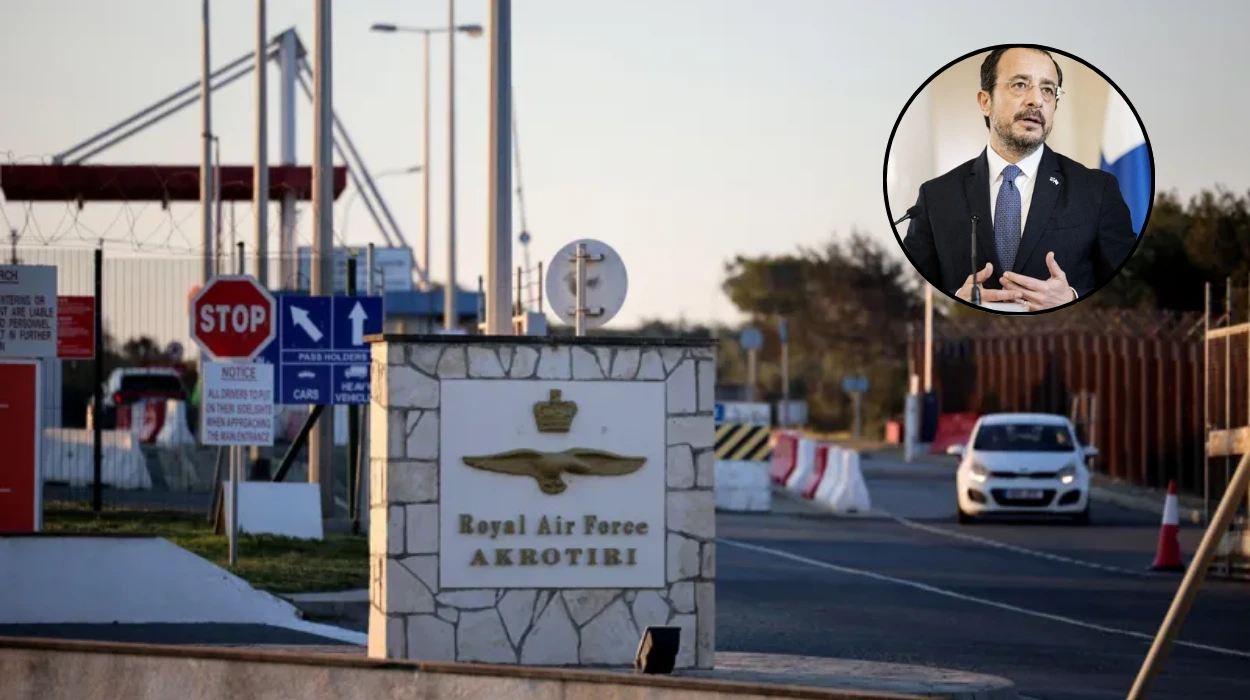
- The comments followed a suspected Iranian‑made one‑way drone, believed by Cypriot officials to be a Shahed system launched from Lebanon, striking the runway at Britain’s RAF Akrotiri air base, causing limited damage and no injuries.
- Cypriot authorities said the drone attack came amid US and Israeli strikes on Iranian missile and drone assets, prompting Nicosia to seek clear public assurances that British bases on the island would not be used for offensive operations.
- President Christodoulides argued that UK Prime Minister Keir Starmer should have issued an early, explicit statement that the British bases in Cyprus would have only a humanitarian role and would not participate in aggressive actions against Iran.
- Government spokesperson Konstantinos Letymbiotis said Nicosia had expected “unequivocal clarification” from London but considered the initial messaging inadequate, despite later receiving a clarifying position from the UK foreign secretary.
- Around 10,000 Cypriot civilians live within the areas of the sovereign base territories at Akrotiri and Dhekelia, amplifying domestic concern after the drone strike.
- Cypriot officials underlined that Cyprus is not a party to military operations against Iran and that the British bases, while under UK sovereignty, lie on Cypriot soil and directly affect the island’s security.
- Christodoulides said he is in “constant contact” with Lebanon’s political leadership regarding cross‑border attacks and the risk of further drone or missile incidents emanating from Lebanese territory, where Iran‑allied Hezbollah operates.
- Greece responded by activating the unified Greece–Cyprus defence doctrine and sending two frigates and F‑16 fighter jets to Cyprus to bolster deterrence and air defence after the Akrotiri strike.
- Greek Defence Minister Nikos Dendias said Greece would stand by Cyprus “throughout the crisis,” confirming two Greek F‑16s were already in Cyprus and two frigates were sailing towards the island.
- Cyprus Defence Minister Vasilis Palmas welcomed the Greek deployment and broader European Union solidarity, describing the presence of allied forces as a significant development for the Republic’s security.
- Christodoulides hailed the EU’s response, saying it was the first time he had seen such coordinated support by EU institutions and member states in the face of a direct security threat to Cyprus.
- He described Greece’s decision to send the frigate Kimon, another frigate with the “Centaur” system, and F‑16 jets as one of the most important defence developments in Cyprus’ history.
- The Cypriot president reiterated that if political conditions allowed, Cyprus would apply to join NATO “tomorrow,” but Turkey’s stance currently blocks such a move.
- Turkey, a NATO member, invaded Cyprus in 1974 after a coup aimed at union with Greece, leaving the island divided between the internationally recognised Republic of Cyprus in the south and a Turkish‑Cypriot entity in the north recognised only by Ankara.
- Christodoulides said Nicosia is nonetheless proceeding with all necessary military, operational and administrative preparations so that Cyprus can apply to NATO when circumstances permit.
- British officials said the Akrotiri strike did not mean the United Kingdom was at war, emphasising that the attack caused only minor material damage and no casualties.
- The UK Ministry of Defence confirmed that force protection measures at Akrotiri had been raised to the highest level and that two other drones heading towards the base were intercepted.
- The incident revived Cypriot concerns seen previously during UK and US use of British bases on the island for operations in Yemen and elsewhere, when activists warned that the facilities could make Cyprus a target for retaliation by Iran‑aligned groups.
Cyprus (Britain Today News) March 5, 2026 – Cypriot President Nikos Christodoulides has openly criticised what he described as an inadequate and belated British clarification over the use of the United Kingdom’s sovereign bases on the island during US and Israeli strikes on Iran, saying London’s stance “caused annoyance” in Nicosia as a suspected Iranian‑made drone hit RAF Akrotiri.
- Key Points
- Why did Christodoulides say the British stance on the bases caused ‘annoyance’?
- What happened at the British Akrotiri base and how serious was the drone attack?
- How did Nicosia and London communicate over the use of British bases in the Iran strikes?
- What role did Greece and the European Union play in supporting Cyprus?
- How does this incident fit into Cyprus’ longer‑term security concerns and NATO aspirations?
- How are Cypriot civilians living near the bases reacting to the security risks?
Why did Christodoulides say the British stance on the bases caused ‘annoyance’?
In his interview with Kathimerini Executive Editor Alexis Papachelas, President Nikos Christodoulides underlined that he did “under no circumstances” wish to hide the irritation felt in Nicosia over London’s handling of the episode. As paraphrased from the interview, he said the British government’s approach “caused annoyance,” stressing that, particularly “in such difficult circumstances,” leaders “in positions of authority” bear a heightened responsibility to be frank and transparent with partners.
As reported by the Cyprus Mail, government spokesperson Konstantinos Letymbiotis explained that Cyprus had expected “unequivocal clarification” from the UK that the bases would not be used for anything other than humanitarian purposes, especially after remarks by Prime Minister Keir Starmer linked British facilities to strikes on Iranian targets. According to Letymbiotis, Nicosia considered the initial British messaging insufficient and only later received a more precise clarification from the UK foreign secretary, by which time public concern on the island had already intensified.
Christodoulides’ remarks also reflected sensitivities stemming from the unique status of the British sovereign base areas, where about 10,000 Cypriot civilians live under a complex legal framework shaped by Cyprus’ 1960 independence arrangements. The president suggested that, given this direct impact on Cypriot citizens and the proximity of the drone strike, it was
“important for that to have been publicly clarified from the beginning”
that the bases would not be used for aggressive action against Iran.
What happened at the British Akrotiri base and how serious was the drone attack?
According to reporting by US News & World Report, a one‑way drone identified by senior Cypriot officials as an Iranian‑made Shahed system struck the runway of RAF Akrotiri shortly after midnight, causing limited damage but no injuries. Officials told the outlet that the drone was likely launched by Hezbollah from Lebanon and flew at low altitude, which helped it evade detection before impact.
The Guardian reported that Cypriot and British authorities treated the incident as part of a pattern of sustained targeting of the strategic base, with two additional drones intercepted on the following Monday morning. A spokesperson for the UK Ministry of Defence said British forces were “addressing suspected drone activity” at Akrotiri, confirming that force protection measures had been raised to the highest level and that steps had been taken to safeguard personnel.
In comments cited by the Guardian, President Christodoulides confirmed that a Shahed drone had struck the base, causing “minor material damage,” and reiterated that Cyprus
“does not engage in any manner and does not intend to partake in any military operation”
connected to the broader confrontation with Iran. The Washington Post similarly noted that British officials, while condemning the incident, insisted that the strike did not mean the United Kingdom was at war and emphasised that no casualties were recorded.
How did Nicosia and London communicate over the use of British bases in the Iran strikes?
As reported by Cyprus Mail journalist staff, Nicosia convened an extended meeting of the national council in the immediate aftermath of the Akrotiri incident, during which President Christodoulides briefed political leaders on security measures, civil protection steps and diplomatic exchanges with London. Following that meeting, spokesperson Konstantinos Letymbiotis publicly expressed “strong dissatisfaction” with the UK over what he described as a lack of “clear and timely assurances” that the bases would be used solely for humanitarian activity.
Letymbiotis said the Cypriot government had, through “many communications and at various levels,” been informed privately that the British bases would have an exclusively humanitarian role but had hoped for an explicit public statement before the first drone strike. He added that a subsequent clarifying position from the UK foreign secretary did not fully erase concerns about the delay, although Nicosia continued to communicate its stance “consistently at all levels.”
The Washington Post reported that the controversy unfolded against the backdrop of US and Israeli strikes on Iranian missile sites, which used various regional facilities and raised fears in Cyprus that the island could be perceived by Tehran and allied militant groups as part of a hostile infrastructure. British officials quoted in the same report stressed that UK forces at Akrotiri remained focused on existing missions and humanitarian operations and rejected suggestions that the United Kingdom sought to draw Cyprus into any war with Iran.
What role did Greece and the European Union play in supporting Cyprus?
Greek Defence Minister Nikos Dendias announced that Athens would dispatch two frigates and F‑16 fighter jets to Cyprus after the Akrotiri strike, activating the long‑standing unified Greece–Cyprus defence doctrine. In comments reported by Greek outlet Proto Thema, Dendias said the decision followed a telephone conversation between Greek Prime Minister Kyriakos Mitsotakis and President Christodoulides and was designed to
“contribute to Cyprus’ defence throughout the crisis.”
According to Proto Thema, the frigate Kimon and a second frigate equipped with the “Centaur” system were ordered to sail immediately towards the island, alongside a pair of F‑16s tasked with reinforcing air defence and surveillance in the wider eastern Mediterranean. A further report cited by Repo/ENC noted that Cypriot authorities publicly thanked the Greek government for its “quick response,” framing the deployment as a tangible sign of solidarity.
In televised remarks carried by the Associated Press Television service, Dendias confirmed that two Greek F‑16s were already stationed in Cyprus and that two Greek Navy frigates were en route, while Cyprus Defence Minister Vasilis Palmas welcomed support from European partners and allied states. Christodoulides, for his part, praised what he described as an unprecedented level of cooperation from EU institutions and member governments, calling the Greek deployment
“one of the most significant developments in the history of the Republic of Cyprus”
in defence terms.
How does this incident fit into Cyprus’ longer‑term security concerns and NATO aspirations?
The drone strike and the dispute over British messaging rekindled broader debates in Cyprus about the strategic implications of hosting UK bases that have been used in multiple regional conflicts, including operations against Houthi targets in Yemen. A previous analysis by the UK‑based organisation Action on Armed Violence, cited in 2025, reported that Cypriot activists and some political voices had warned that the bases’ role in those operations could expose the island to retaliatory attacks by Iran‑aligned actors.
In his Kathimerini interview, Christodoulides linked the current tensions to Cyprus’ desire for deeper integration into Euro‑Atlantic security structures, stating that,
“if it were possible to join NATO tomorrow,”
the Republic would have already submitted its application. However, he emphasised that this is not feasible “right now” because the political circumstances are not in place, given Turkey’s position as a NATO member and its longstanding opposition to Cypriot accession.
The president recalled that Turkey’s 1974 intervention, following a coup in Nicosia aiming at union with Greece, left the island divided between the internationally recognised Republic in the south and the Turkish‑Cypriot north, which Ankara alone recognises as a state. He said that, despite these constraints, Cyprus is proceeding with
“preliminary work on a military level, an operational level, an administrative level,”
so that it will be ready to apply to NATO “when political conditions permit.”
How are Cypriot civilians living near the bases reacting to the security risks?
The Washington Post noted that an estimated 10,000 Cypriot civilians live within the areas covered by the British sovereign base territories, including around RAF Akrotiri, where the runway was struck. Residents reportedly rushed to seek safety when the drone hit, highlighting the proximity of the facilities to local communities and the anxiety generated by being near a high‑value military target.
Past reporting referenced by Action on Armed Violence indicated that the use of British bases on Cyprus for operations in Yemen had already raised concerns among locals about the risk of reprisals, with some activists warning that the island’s strategic location could draw it into regional conflicts despite its stated neutrality. Christodoulides’ insistence that Cyprus is
“not participating in military operations against Iran”
and his demand for clear British assurances can therefore be seen as a response to both national security considerations and domestic pressure from communities living in the shadow of foreign military infrastructure.