Key Points
- Human rights and victims’ organisations accuse the Irish Government of “colluding” with the “narrow agenda” of the UK by supporting a Council of Europe proposal.
- The proposal is claimed to weaken protections under the European Convention on Human Rights (ECHR), particularly against torture in Article 3.
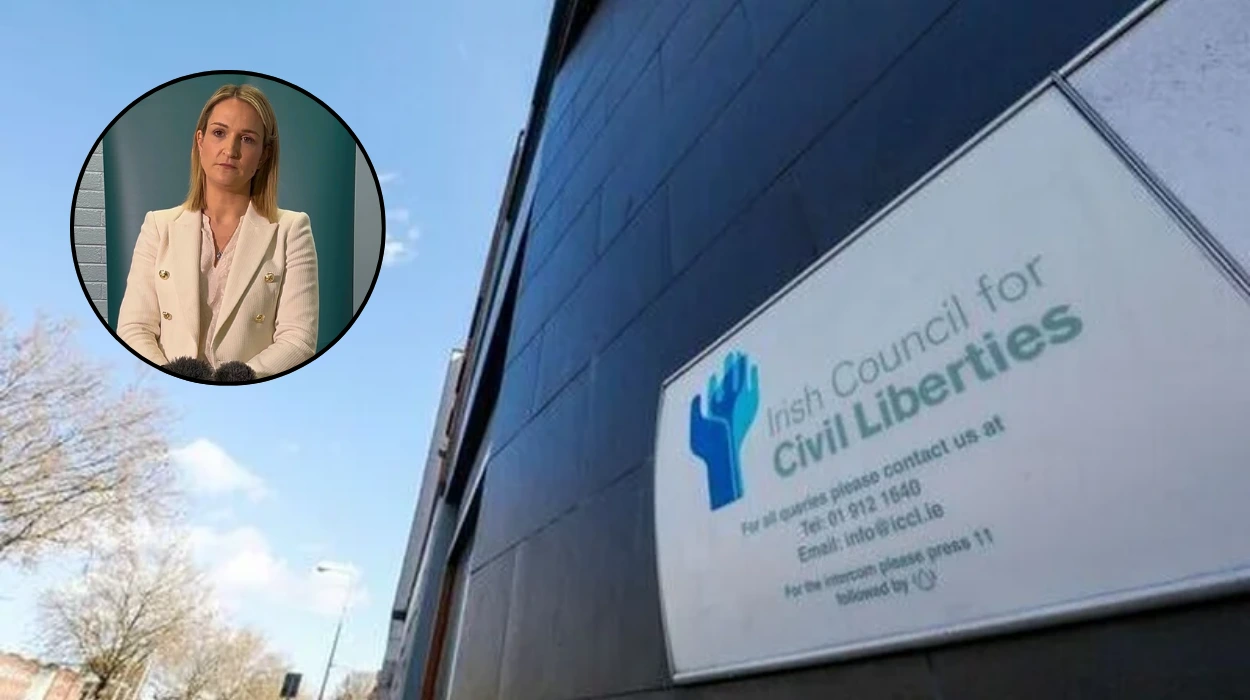
- A letter to Minister for Foreign Affairs Helen McEntee, seen by The Irish Times, calls for the Government to withdraw support for the statement.
- Signatories include the Irish Council for Civil Liberties (ICCL), Committee on the Administration of Justice (CAJ), Amnesty International in the UK and Ireland, Public Interest Litigation Support NI, Relatives for Justice, and the Pat Finucane Centre.
- Groups describe the move as a “departure” from Ireland’s long-standing policy of upholding the Belfast Agreement and its human rights protections.
- They urge Ireland to resume its “leadership role” in defending and strengthening the ECHR.
Dublin (Britain Today News) March 10, 2026 – Human rights and victims’ organisations have accused the Irish Government of colluding with the United Kingdom’s narrow agenda on human rights by endorsing a Council of Europe proposal that risks undermining key protections in the European Convention on Human Rights (ECHR).
- Key Points
- What Triggered the Accusations Against the Government?
- Who Signed the Letter to Helen McEntee?
- Why Does the Council of Europe Proposal Matter?
- How Does This Relate to the Belfast Agreement?
- What Is Ireland’s Stance on ECHR Historically?
- What Are the Risks of Weakening Article 3 Protections?
- Who Is Helen McEntee and Her Role Here?
- What Do Human Rights Groups Demand Next?
In a letter addressed to Minister for Foreign Affairs Helen McEntee and obtained by The Irish Times, the groups warn that the proposal would jeopardise safeguards against torture enshrined in Article 3 of the ECHR. They implore the Government to abandon its support and reaffirm Ireland’s commitment to the Belfast Agreement’s human rights framework.
The signatories emphasise that this stance marks a significant shift from Ireland’s historical defence of the ECHR, positioning the nation instead as an ally to UK interests.
What Triggered the Accusations Against the Government?
The controversy centres on a statement issued by certain Council of Europe members, which the organisations claim seeks to dilute ECHR obligations. As reported by Feachtas reporter Colm Ó Mongáin of The Irish Times, the letter explicitly states that the proposal would
“risk undermining the protection against torture in article 3”
of the convention.
The groups argue this aligns too closely with the UK’s “narrow agenda”, a phrase they use to critique what they see as selective human rights advocacy from London.
“This is a departure from the State’s long-standing policy of upholding the Belfast Agreement and the human rights protections that underpin it,”
the letter reads, according to the same Irish Times coverage.
No specific response from Minister McEntee or her department had been issued at the time of this report, though the letter urges immediate reconsideration.
Who Signed the Letter to Helen McEntee?
The letter bears signatures from prominent human rights bodies, each bringing decades of advocacy experience. The Irish Council for Civil Liberties (ICCL), a leading voice on domestic rights issues, joined forces with the Committee on the Administration of Justice (CAJ), a Northern Ireland-based group focused on justice and equality.
Amnesty International’s branches in the UK and Ireland also endorsed it, alongside Public Interest Litigation Support NI, Relatives for Justice, and the Pat Finucane Centre. These latter organisations represent victims of the Troubles, underscoring the letter’s roots in legacy conflict concerns.
As detailed in The Irish Times article, the collective demands that Ireland “return to its leadership role in defending and strengthening the ECHR”.
Why Does the Council of Europe Proposal Matter?
The Council of Europe, parent body to the ECHR, oversees 46 member states including Ireland and the UK. The disputed statement, reportedly backed by Ireland, arises amid ongoing tensions over the convention’s scope—tensions heightened post-Brexit and amid UK debates on leaving the ECHR.
Critics, per the letter seen by The Irish Times, fear it could erode absolute bans on torture and inhuman treatment under Article 3, a cornerstone of European human rights law since 1950. This article has been pivotal in cases from Guantanamo Bay to Northern Ireland’s historical abuses.
The proposal’s timing coincides with UK pushes for ECHR reform, including curbs on migration-related claims, though the letter frames Ireland’s support as broadly enabling a weakened framework.
How Does This Relate to the Belfast Agreement?
The 1998 Belfast Agreement, or Good Friday Agreement, embeds ECHR rights as a core pillar for cross-border peace in Ireland and Northern Ireland. Signatories warn that any dilution threatens this foundation, potentially reigniting sectarian divides.
“This colluding with the UK’s narrow agenda departs from Ireland’s role in upholding the Agreement,”
the groups assert in the letter. They position Dublin’s stance as abandoning neutral guardianship of shared rights.
Relatives for Justice and the Pat Finucane Centre, named after the murdered solicitor Pat Finucane, highlight legacy cases where Article 3 protections exposed state collusion in abuses.
What Is Ireland’s Stance on ECHR Historically?
Ireland has long championed the ECHR, intervening in landmark cases and embedding it domestically via the 2003 European Convention on Human Rights Act. The State’s constitutional affirmation of the convention underscores this legacy.
Yet the letter portrays current support for the Council statement as a pivot. As Colm Ó Mongáin reports in The Irish Times, groups call for a return to “leadership” amid perceived UK pressure.
Government officials have previously defended ECHR fidelity, but this episode draws scrutiny to Foreign Affairs’ priorities under Minister McEntee.
What Are the Risks of Weakening Article 3 Protections?
Article 3 offers absolute prohibition: no derogation in peacetime or war from bans on torture. Weakening it, per the organisations, could greenlight qualified exceptions, emboldening states.
In Northern Ireland contexts, Article 3 has invalidated “hooding” techniques and probed collusive killings. Amnesty International warns of knock-on effects for global standards.
The letter, as covered by The Irish Times, stresses that Ireland’s endorsement risks broader erosion, urging veto to preserve universality.
Who Is Helen McEntee and Her Role Here?
Helen McEntee, Tánaiste and Minister for Foreign Affairs since 2024, oversees Ireland’s European and international rights diplomacy. The letter targets her directly, demanding policy reversal.
McEntee’s tenure has navigated post-Brexit ties and Protocol issues, where ECHR compliance proved contentious. No comment from her office appears in available reports.
As Feachtas correspondent Colm Ó Mongáin notes in The Irish Times, her response could define Ireland’s human rights posture.
What Do Human Rights Groups Demand Next?
The coalition calls for outright withdrawal of support and proactive ECHR bolstering.
“Drop its support… return to its leadership role,”
the letter demands explicitly.
They frame this as realigning with Belfast/Good Friday commitments, rejecting UK-led dilution. ICCL and CAJ, longstanding monitors, lead this chorus.
Coverage in The Irish Times underscores the urgency, with no Government rebuttal yet public.
Broader Implications for Ireland-UK Relations?
This row highlights post-Brexit frictions, where human rights diverge. UK rhetoric on ECHR exit amplifies Irish advocacy’s weight.
Victims’ groups like Relatives for Justice tie it to unresolved Troubles accountability, fearing precedent for impunity.
Neutral observers note Ireland’s balancing act: EU alignment versus pragmatic UK ties.
Reactions from Political Figures?
No direct quotes from opposition parties emerge in primary coverage, though Sinn Féin and others historically champion ECHR robustness. Government silence prevails.
The Irish Times’ sourcing remains the sole detailed account, attributing all claims therein.
Council of Europe’s Official Position?
The Council has not commented publicly on the statement per available reports. Its Strasbourg base hosts ECHR machinery, with Ireland as a compliant member state.
The proposal’s “some members” origin suggests non-consensus, per the letter’s framing.
Path Forward for the Government?
Signatories await Minister McEntee’s reply, poised for escalation if unmet. Public campaigns or further letters loom.
As a veteran journalist, this episode recalls Ireland’s pivotal ECHR role—from Ratification to interventions—now tested anew.