What does Ministry of Defence policy cover?
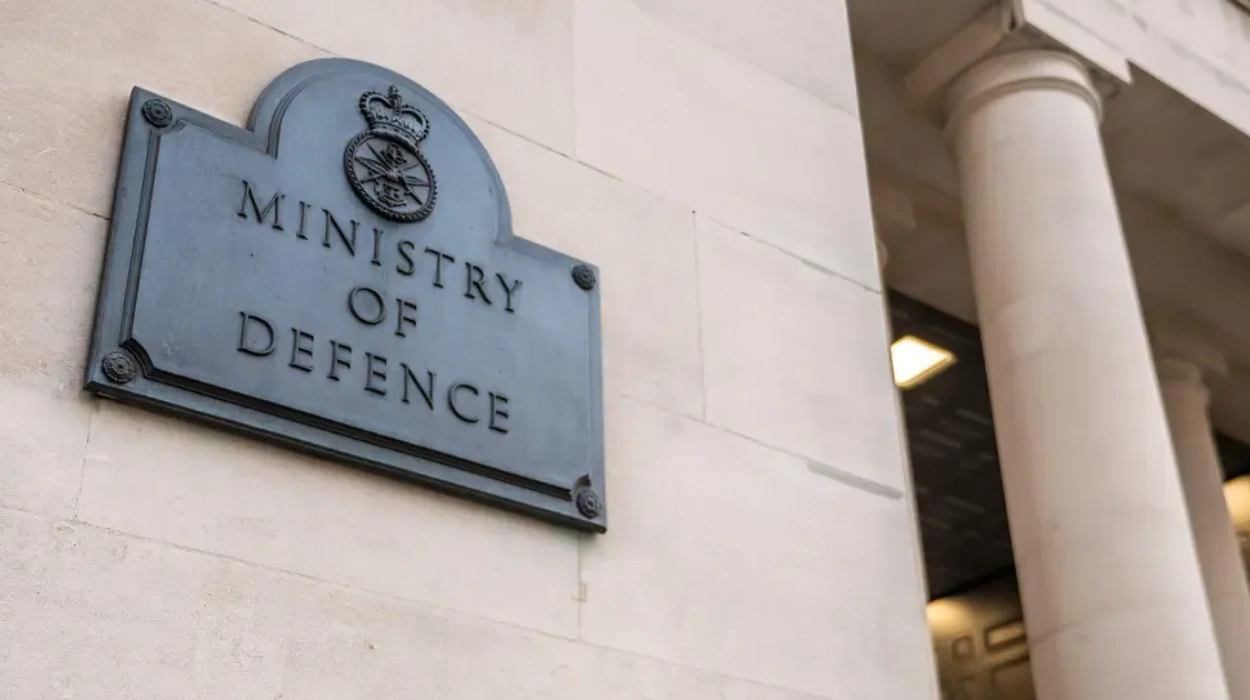
Ministry of Defence policy covers how a state organises defence, sets security priorities, manages alliances, supports military readiness, and uses diplomacy, industry, and intelligence to protect national interests. In the UK, the MOD links homeland security, NATO commitments, overseas partnerships, and defence industrial policy into one strategic framework.
- What does Ministry of Defence policy cover?
- Why does defence news matter?
- How did modern MOD strategy develop?
- What are the main defence priorities?
- How does defence diplomacy work?
- What tools are used?
- Which regions matter most?
- How does the MOD support NATO?
- What is the global defence outlook?
- Which trends shape policy?
- How does defence support the economy?
- Why does information sharing matter?
- What changes are coming next?
- Why does this topic stay relevant?
The Ministry of Defence is the government department responsible for military policy, armed forces administration, defence planning, and international defence engagement. In the UK context, current policy places strong emphasis on NATO, European security, support for Ukraine, industrial resilience, exports, and global partnerships. The MOD’s 2026 Defence Diplomacy Strategy describes defence diplomacy as the use of defence tools short of military operations to build international relationships and advance strategic outcomes.
That definition matters because modern defence policy extends far beyond troops and equipment. It includes training, intelligence-sharing, strategic communications, military education, ship visits, exercises, procurement partnerships, and technology cooperation. The result is a policy field that connects security, foreign policy, trade, and innovation.
Why does defence news matter?
Defence news matters because it signals shifts in military posture, alliance priorities, spending, industrial cooperation, and threat perception. Changes in MOD policy affect deterrence, procurement, diplomatic alignment, and national resilience, which makes defence coverage relevant to governments, businesses, and the public.
Defence reporting tracks decisions that shape the future security environment. These decisions include funding commitments, alliance statements, equipment programmes, overseas deployments, and strategic reviews. The MOD’s own long-term analysis says defence planning must account for uncertainty, power competition, climate pressure, cyber risk, and technological change.
Defence news also has economic meaning. The UK MOD’s 2026 diplomacy strategy states that defence should operate as an engine for growth through exports, industrial partnerships, inward investment, and capability collaboration. It cites major recent agreements with allies and notes that UK Defence secured a record £3.2 billion in foreign direct investment since July 2024.
How did modern MOD strategy develop?
Modern MOD strategy developed through Cold War deterrence, post-Cold War expeditionary operations, and today’s return to great-power competition. The current UK approach now combines homeland defence, NATO-first planning, allied industrial cooperation, and long-term strategic foresight across Europe and global regions.
After the Cold War, many European defence systems focused on intervention, crisis management, and smaller expeditionary missions. That framework changed as Russia became more assertive, China expanded its global reach, and cyber and space became central to military power. The MOD’s latest strategic documents reflect that shift by prioritising collective defence, resilience, and alliance coordination.
The MOD’s Global Strategic Trends: Out to 2055 publication, released in September 2024, is a clear example of this long-range approach. It identifies six interconnected drivers of change: global power competition, demographic pressures, climate change, technological advances and connectivity, economic transformation and energy transition, and inequality and pressure on governance.
What are the main defence priorities?
The main defence priorities are homeland protection, Euro-Atlantic deterrence, global security shaping, economic resilience, and support for wider government objectives. In UK policy, NATO comes first, but Europe, the Middle East, the Indo-Pacific, Africa, and the Americas remain strategically important.
The MOD’s 2026 Defence Diplomacy Strategy sets out five objectives. These are to defend the UK, its Overseas Territories, and Crown Dependencies; deter and defend in the Euro-Atlantic; shape the global security environment; drive secure and resilient economic growth; and support wider government objectives.
This framework places NATO at the center of defence planning. It also treats the United States as the UK’s most important defence and security ally and preserves strong links with European partners. The strategy explicitly links security in the Euro-Atlantic with security in the Middle East and Indo-Pacific, showing that the MOD sees defence as a global system rather than a regional one.
How does defence diplomacy work?
Defence diplomacy works by using military relationships, training, intelligence, exports, and presence overseas to strengthen alliances and influence outcomes without fighting. It combines political coordination, capability cooperation, and institutional trust to support deterrence and foreign policy goals.
The MOD defines defence diplomacy as the use of all Defence levers short of military operations to build and sustain international relationships and strengthen alliances and partnerships. That includes direct military-to-military contact, attaché networks, education, joint exercises, defence exports, and high-level engagement.
The UK strategy also stresses organisation and prioritisation. Defence diplomacy now operates through a single ministerially endorsed international prioritisation, a Strategic Effects Cycle, and an Integrated Global Defence Network. The public summary says the UK has Defence representation in 172 nations, 239 Defence Section staff, and over 1,000 personnel embedded in NATO’s command and force structures.
What tools are used?
The MOD uses multiple tools to convert strategy into influence. These include military forces in all domains, special operations, intelligence, global presence, education and training, alliances and partnerships, strategic communications, industrial strategy, exports, economic security, and high-level international engagement.
These tools work together. A naval visit can reinforce reassurance. A training course can strengthen leadership ties. An export deal can deepen interoperability. Intelligence sharing can improve trust and decision-making. The strategy treats these activities as part of one coordinated system rather than separate policy areas.
Which regions matter most?
The most important regions are the Euro-Atlantic, the Middle East, the Indo-Pacific, Africa, and Latin America and the Caribbean. The MOD prioritises Europe first, but it maintains a global posture because trade routes, supply chains, alliances, and overseas territories all depend on wider regional stability.
Europe remains the core theatre of UK defence planning. The MOD states that there is no British security without Europe and no European security without Britain. The strategy says the UK will reinforce NATO, deepen ties with European allies, continue support to Ukraine, and maintain pressure on Russia through deterrence and coordinated partnership.
The Middle East matters because of persistent military engagement, security partnerships, intelligence exchange, and regional burden-sharing. The Indo-Pacific matters because of technology collaboration, exercises, maritime cooperation, and partnerships linked to freedom of navigation. Africa matters because instability there affects wider security, including NATO’s southern flank. Latin America and the Caribbean matter because of military cooperation, export opportunities, and the protection of Overseas Territories.
How does the MOD support NATO?
The MOD supports NATO through force readiness, nuclear deterrence, allied training, intelligence sharing, and leadership in multinational structures. UK policy treats NATO as the central institution for collective defence, with contributions that span Europe, North America, and global security partnerships.
The Defence Diplomacy Strategy says NATO is foremost in how the Armed Forces plan, invest, train, and equip themselves. It also says the UK is the only European ally to declare its nuclear deterrent in full to NATO, which the strategy presents as a major signal of commitment.
NATO support also includes integration with allied command structures and support for coalition activity. The UK says it will continue strengthening NATO as an institution and use the alliance as a platform for engagement beyond the Euro-Atlantic, including the Middle East, Indo-Pacific, and North Africa. That approach turns NATO from a regional defence treaty into a global strategic network.
What is the global defence outlook?
The global defence outlook is shaped by power competition, nuclear risk, cyber conflict, space operations, climate pressure, and technology change. The MOD’s long-term assessment says resilience, agility, and new deterrence models are essential in a more uncertain and contested world.
The MOD’s Global Strategic Trends analysis says Russia’s future remains uncertain, China will keep using economic interdependence backed by military strength, and the number of nuclear-armed states is likely to grow. It also says space and cyberspace will increasingly affect battlefield success.
This outlook explains why global defence policy now includes economic coercion, supply chain risk, and critical technology as security issues. Defence planning no longer focuses only on force size and weapons stockpiles. It also covers industrial capacity, data systems, resilience of institutions, and access to advanced technology.
Which trends shape policy?
Three trends dominate current policy. First, great-power competition drives decisions about NATO, Russia, and China. Second, technological acceleration pushes investment in cyber, data, AI, and space. Third, economic and demographic pressures force governments to link defence, trade, and resilience.
Each of these trends appears in MOD planning documents. The Global Strategic Trends paper identifies drivers of change, while the Defence Diplomacy Strategy turns those drivers into practical priorities such as industrial partnerships, export policy, international education, and network optimisation.
How does defence support the economy?
Defence supports the economy through jobs, investment, exports, skills, and industrial collaboration. The MOD now treats economic security as a core part of defence policy, not as a separate issue, because supply chains, innovation, and production capacity directly affect military strength.
The 2026 strategy says defence diplomacy will drive secure and resilient economic growth. It highlights exports, capability collaboration, and inward investment as essential parts of the defence mission. It also says the UK Defence sector secured record foreign direct investment and that defence exports now form a central objective of diplomacy.
This link between security and growth is practical. Defence procurement supports skilled manufacturing. Military education creates long-term ties with foreign officers. Joint development programmes, such as naval and air capability projects, bind allies into shared platforms and common standards. That improves interoperability while helping domestic industry compete globally.
Why does information sharing matter?
Information sharing matters because defence depends on shared intelligence, common threat understanding, and coordinated action. The MOD treats intelligence cooperation as a force multiplier that improves deterrence, strengthens alliances, and helps partners respond faster to crises.
The Defence Diplomacy Strategy says the UK will strengthen intelligence sharing and coordination so that it supports international prioritisation and a NATO-first posture. It also links intelligence policy to economic security, warning that foreign powers use economic levers to undermine defence operations, programmes, and capabilities.
This matters because no modern defence system functions in isolation. Missile defence, maritime monitoring, cyber resilience, logistics, and crisis response all rely on timely information. The stronger the intelligence network, the more effective the alliance structure becomes.
What changes are coming next?
The next changes focus on prioritisation, network redesign, export integration, education reform, and AI-enabled coordination. The MOD is moving toward a more selective, data-driven, and alliance-focused model that concentrates resources where they produce the strongest strategic effect.
The strategy says the Integrated Global Defence Network Review will examine overseas personnel and align them with strategic priorities. It also says foreign defence export staff are being integrated into Defence structures by April 2026, with network review options due to Ministers in spring 2026.
Other near-term developments include new intelligence-sharing reviews, targeted engagement models, reforms to education allocation, and a stronger alumni network. The strategy also states that the first cohorts under the new international education approach will begin in September 2026. These timelines show that defence policy is now being treated as an active management system, not a static statement of intent.
Why does this topic stay relevant?
This topic stays relevant because defence policy changes slowly in structure but quickly in priority. Global threats, alliance shifts, industrial change, and technology advances keep the Ministry of Defence central to national security, diplomacy, and economic resilience.
An evergreen understanding of MOD news requires attention to institutions, not only headlines. The recurring themes are clear: deterrence, alliances, readiness, resilience, and strategic competition. The UK example shows how one ministry can connect warfighting, diplomacy, industry, and long-term planning in a single policy architecture.
For readers, the key point is simple. Defence news is not only about conflict. It is also about how states prepare, cooperate, innovate, and protect national interests across borders, markets, and domains. That is why Ministry of Defence policy remains one of the most important lenses for understanding global security.