Key Points
- More than 30 Iranian universities and hundreds of schools struck amid Iran–US–Israel hostilities.
- Five professors and 60 students confirmed dead.
- Iran’s Science Minister calls the attacks “crimes against humanity”.
- Precision strikes targeted AI, biomedical, and physics labs—seen as linked to defence research.
- UNESCO condemns the targeting of educational institutions.
- IRGC declares US and Israeli universities “legitimate targets” in retaliation.
- Two-week ceasefire began 7 April as peace talks opened in Islamabad.
- Damage reported at Sharif, Shahid Beheshti, Pasteur, and Amirkabir universities.
- Iranian academics warn of long-term scientific setbacks.
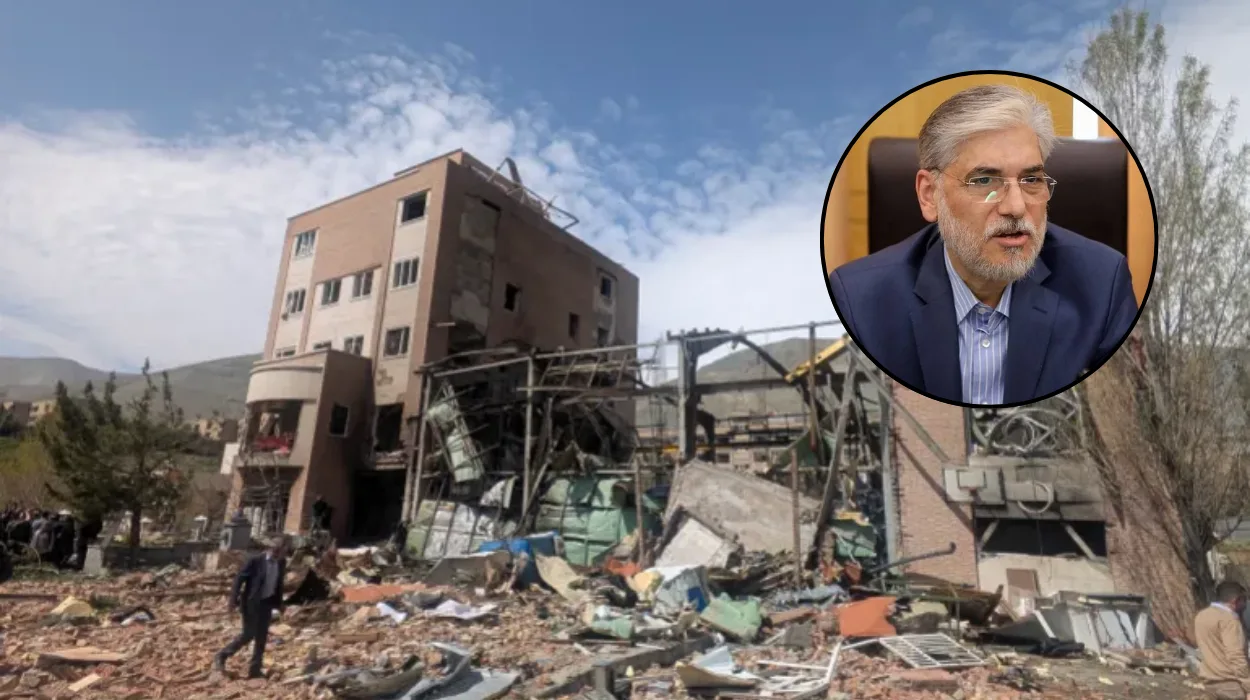
Tehran (Britain Today News) April 10, 2026 — Attacks on leading Iranian universities have devastated the country’s science and research infrastructure, as Iran’s Ministry of Science confirmed that more than 30 institutions and hundreds of schools were hit during recent air strikes.
- Key Points
- Why were Iranian research universities targeted?
- How serious is the destruction of academic infrastructure?
- What has been the international response to these attacks?
- Who are the scientists reportedly killed?
- What role does the IRGC play in academic retaliation threats?
- How might these attacks impact Iran’s scientific future?
- Will the ceasefire stop further academic losses?
Minister of Science, Research and Technology Hossein Simaei-Sarraf, visiting Shahid Beheshti University in Tehran on 4 April, said the bombardment represented
“violations of international law and crimes against humanity.”
The fragile two-week ceasefire, which began on 7 April, temporarily halted hostilities between Iran, the United States, and Israel, but the scientific toll continues to mount.
Why were Iranian research universities targeted?
Iranian officials say research-intensive universities were among early strike zones after the conflict broke out on 28 February. Laboratories working on computing, physics, and biomedical science were reportedly precision targets. According to the Science Ministry’s assessment, five professors and 60 students are confirmed killed.
On 6 April, Sharif University of Technology, often labelled Iran’s top engineering research hub, was struck. Extensive damage occurred in its High-Performance Computing Centre, as well as nearby laboratory buildings and the main campus mosque. Masoud Tajrishi, Sharif’s president, said:
“The enemy does not want us to succeed or have development and progress, but our universities are now united by these attacks.”
The Sharif attack followed air strikes on the Laser and Plasma Research Institute at Shahid Beheshti University, the Pasteur Institute, and the Satellite Laboratory at the Science and Technology University — all centres specialising in advanced AI modelling and defence-related research.
How serious is the destruction of academic infrastructure?
The scale of devastation expanded through March. On 9 March, the Supreme National Defence University was hit; 23 March saw damage to Tehran’s Space Science and Technology campus; 24 March targeted Malek Ashtar and Imam Hossein universities; and 29 March brought destruction in Isfahan University of Technology.
Social media footage verified widespread debris around Amirkabir University of Technology in central Tehran. Iran’s Red Crescent Society stated on 10 April that 32 universities and 857 schools had been impacted nationwide.
The Pasteur Institute, a century-old biomedical facility founded alongside France’s Institut Pasteur, suffered significant losses. Its vaccine and biotechnology research had crucial regional health relevance. The institute’s alumni association later declared that attacking educational sites
“constitutes a gross violation of global norms protecting spaces of learning and innovation.”
What has been the international response to these attacks?
UNESCO released a strong condemnation on 30 March:
“Educational institutions must remain spaces dedicated to knowledge and international cooperation.”
The UN agency urged all warring parties to respect humanitarian law and United Nations Security Council Resolution 2601.
Academic networks have called for restraint. The research advocacy group Scholars at Risk warned on 28 March that
“parties must refrain from launching attacks which could cause disproportionate damage to civilian facilities.”
Researchers also expressed alarm at indirect effects of the war. Richard Stone, writing in Science, quoted biologist Hossein Akhani from Tehran University, who explained that sanctions and power outages jeopardised specimen archives, noting:
“If the United States follows through on threats to wreck Iran’s power grid, we face the potential loss of irreplaceable scientific heritage.”
Who are the scientists reportedly killed?
Recent targeted killings compound the damage. Electrical engineer Saeed Shamghadri of Iran University of Science and Technology and Ali Fouladvand, a senior figure in the Organisation of Defensive Innovation and Research, were confirmed dead last week.
Another casualty, Mohammad Naved Qarishi, a missile engineer with Tehran’s Space Research Institute, died in a separate attack. Iranian media interpret these deaths as part of Israel’s long-standing campaign against scientists linked to nuclear research programmes.
What role does the IRGC play in academic retaliation threats?
Following repeated strikes, Iran’s Revolutionary Guard Corps declared on 7 April that US and Israeli universities may now be considered “legitimate targets”. The statement prompted outrage among Iranian academia. Mohammad Hossein Omid, president of Tehran University, wrote a joint letter from 15 university heads urging the Guard
“to refrain from attacks on foreign universities to demonstrate Tehran’s commitment to safeguarding higher education as human and global heritage.”
Analysts note that this internal academic appeal demonstrates Iran’s effort to frame attacks on research institutions as international humanitarian violations, not reciprocal wartime acts.
How might these attacks impact Iran’s scientific future?
Iran hosts more than 3.2 million students, 80,000 faculty, and 500 higher education institutions nationwide. While fewer than 10% have been directly struck, experts warn that loss of elite research facilities disproportionately harms postgraduate training and innovation.
Pirouz Azadi, a historian at the University of Phoenix, told University World News that
“the death of students and academics pains me and I cannot condone or agree with loss of innocent lives.”
Meanwhile, Arshin Adib-Moghaddam, professor of global thought at SOAS University of London, condemned targeted university bombings as
“acts of state terrorism that must be prosecuted as war crimes.”
Neve Gordon, professor of international law and human rights at Queen Mary University of London, drew stark comparisons to earlier attacks against universities in Gaza. He warned that silence from global academic leaders
“allows destruction of universities and killing of scholars with impunity,”
adding that this pattern could
“easily metastasise beyond Iran if the world fails to act.”
Will the ceasefire stop further academic losses?
The tentative two-week ceasefire agreed on 7 April between Iran, the United States, and Israel temporarily halted strikes while negotiations occur in Islamabad, Pakistan. Talks are scheduled to continue through 22 April, but uncertainty lingers. Iranian academics fear that reconstruction costs and blocked access to scientific data could take decades to recover.
Many universities in Tehran remain shuttered under martial restrictions. Communication blackouts and power cuts have hampered publication work and data transfers. Despite international appeals, there are no immediate plans yet announced for foreign aid or cooperation to restore damaged research centres.