Key Points
- Donald Trump Jr. criticised the European Union during a business discussion in Banja Luka, Bosnia, calling it a “disaster” due to liberal policies discouraging investment.
- He predicted a “major fracture” between eastern and western EU member states, praising eastern Europe’s work ethic over western “woke nonsense.”
- The event occurred in Republika Srpska, the Serb-run entity in Bosnia, whose leaders admire Donald Trump and Vladimir Putin.
- Trump Jr. visited in a private capacity, as confirmed by the US Embassy in Sarajevo; the trip boosted local Serb separatist leaders.
- Bosnian Serb leader Milorad Dodik hailed the visit alongside JD Vance’s trip to Hungary as a US shift towards Christian positions in Europe.
- Context includes lifted US sanctions on Dodik by the Trump administration, reversing Biden-era measures over separatism.
- Bosnia is an EU membership candidate; the bloc is its top trading partner, investor, and aid provider.
- Trump Jr. quoted banking, finance, tech, and AI leaders viewing Europe as fixable if it “gets out of its own way.”
Bosnia (Britain Today News) April 7, 2026 – Donald Trump Jr. launched a scathing attack on the European Union during a business forum in this northwestern Bosnian town, declaring the bloc a “disaster” hamstrung by liberal policies that repel major investors.
- Key Points
- Why Did Donald Trump Jr. Target the EU’s Policies in Bosnia?
- What Is the Context of Trump Jr.’s Visit to Republika Srpska?
- How Does This Fit into Broader US-EU Tensions?
- Who Is Milorad Dodik and Why Does He Matter Here?
- What Boost Does This Give to Serb Leaders in Bosnia?
- Why Is Eastern Europe Praised in Trump Jr.’s Speech?
- What Role Does the EU Play in Bosnia’s Economy?
- How Does This Reflect Trump Family Influence Abroad?
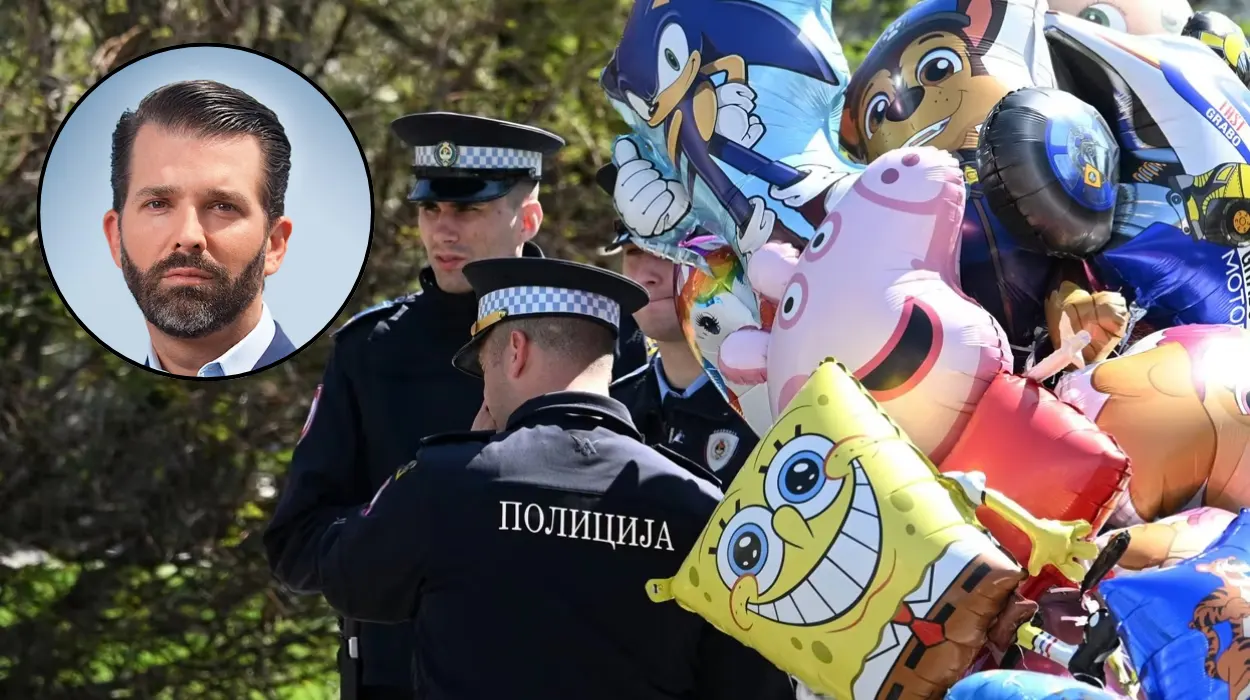
The eldest son of US President Donald Trump addressed an audience in Banja Luka, the administrative centre of Republika Srpska, the Serb-dominated entity within Bosnia and Herzegovina. Video recordings from the official RTRS television captured his remarks, where he asserted that
“the biggest players, the biggest names in banking and finance, in tech and AI across the board”
regard Europe as a disaster in need of repair.
Why Did Donald Trump Jr. Target the EU’s Policies in Bosnia?
Trump Jr. argued that the EU’s regulatory environment stifles growth, stating emphatically,
“The only way it gets fixed, though, in my opinion is if they (Europe) get out of their own way.”
His comments resonated in a region wary of Brussels’ influence, particularly among Republika Srpska’s leadership, who view the 27-nation bloc with suspicion despite Bosnia’s candidacy for membership.
The forum highlighted contrasts between eastern and western Europe. Trump Jr. praised eastern nations for maintaining a strong
“work ethic that has (withstood) some of the ‘woke’ nonsense that has really been a parasitic thing in the mind in Western Europe.”
He foresaw this divide escalating, saying,
“I see that creating major fractures in the European Union between those few countries in eastern Europe that actually still believe in common sense, and Western Europe that’s clearly missing in the political discourse these days.”
Republika Srpska’s political elite, known for their admiration of President Trump and Russian President Vladimir Putin, hosted the event. The US Embassy in Sarajevo confirmed via email to reporters that Trump Jr. attended “in a private capacity.” Nonetheless, his presence provided a visible endorsement to local separatist figures amid ongoing tensions.
What Is the Context of Trump Jr.’s Visit to Republika Srpska?
Banja Luka serves as the de facto capital of Republika Srpska, an entity born from the 1995 Dayton peace accords that ended Bosnia’s 1992-1995 ethnic war. That conflict, which claimed over 100,000 lives, stemmed largely from Serb ambitions to secede and unite with neighbouring Serbia, clashing with Bosniak (predominantly Muslim) and Croat communities.
Separatist rhetoric persists, led by figures like Milorad Dodik, the former Republika Srpska president and current political heavyweight. Dodik, a vocal ally of Hungary’s nationalist Prime Minister Viktor Orbán, has repeatedly advocated for the Serb entity’s independence from Bosnia’s federation.
In a post on X, Dodik linked Trump Jr.’s appearance to US Vice President JD Vance’s concurrent trip to Hungary, ahead of Orbán’s reelection bid in a contentious vote.
“These two visits signal an important shift of the US administration under the leadership of President Trump and the care for this part of Europe regarding the position of Christians,”
Dodik declared.
This timing underscores shifting US priorities. The Biden administration had imposed sanctions in 2022 on Dodik, his associates, and linked entities over separatist activities that risked reigniting instability. Those measures were rescinded last year by the Trump administration, signalling a thaw in relations with pro-Trump Balkan leaders.
How Does This Fit into Broader US-EU Tensions?
The Trump administration has consistently challenged the EU, particularly on trade imbalances and stringent technology regulations. Criticisms have sharpened amid the ongoing Iran conflict, straining ties with traditional European allies.
Trump Jr.’s Bosnia remarks echo familial critiques of European governance. His father has long portrayed the EU as a bureaucratic behemoth undermining sovereignty, a view shared by eastern members like Hungary and Poland, who resist what they see as overreach from Brussels.
Bosnia’s EU aspirations add irony. The bloc remains the country’s largest trading partner, primary investor, and source of financial aid, funnelling resources to stabilise the fragile state. Yet, leaders in Republika Srpska prioritise alliances with Moscow and Washington over integration, viewing EU norms as culturally alien.
Who Is Milorad Dodik and Why Does He Matter Here?
Dodik’s endorsement amplifies the visit’s impact. As a sanctioned figure under prior US policy, his rehabilitation under Trump reflects geopolitical realignments. He has defied international mediators by pushing referendums and declarations challenging Bosnia’s unity, drawing rebukes from the EU and UN.
His X statement frames the visits as pro-Christian advocacy, tapping into narratives of eastern Europe resisting secular liberalism. This aligns with Trump Jr.’s diagnosis of a EU rift, where “common sense” in the east clashes with western progressivism.
What Boost Does This Give to Serb Leaders in Bosnia?
Local analysts view Trump Jr.’s platform as a morale lifter for Republika Srpska’s leadership. In a private capacity or not, the optics of a Trump family member speaking in Banja Luka bolster their narrative of Western conservative sympathy. It contrasts with EU pressures for constitutional reforms to advance Bosnia’s accession path.
The US Embassy’s clarification underscores the non-official nature, yet the event’s staging by RTRS television ensures wide local dissemination. Serb politicians, already buoyed by Vance’s Hungary support for Orbán, interpret this as validation amid electoral battles.
Why Is Eastern Europe Praised in Trump Jr.’s Speech?
Trump Jr. singled out eastern Europe’s resilience, contrasting it with western “parasitic” influences. Countries like Hungary and Poland, frequent Trump allies, embody this for him—prioritising national identity over supranational mandates. His prediction of fractures warns of potential EU disintegration if liberal policies persist.
This rhetoric energises populist movements across the continent, from France’s National Rally to Italy’s Brothers of Italy, who critique Brussels similarly.
What Role Does the EU Play in Bosnia’s Economy?
Despite political frictions, economic ties bind Bosnia to the EU. As the biggest trading partner, the bloc accounts for the lion’s share of imports and exports. Investments fund infrastructure, while aid supports post-war reconstruction and minority rights.
EU membership candidacy, granted in 2022, hinges on resolving ethnic divisions— a prospect Dodik and allies resist. Trump Jr.’s investment critique overlooks these dynamics, focusing instead on regulatory burdens he claims deter “biggest names” in finance and tech.
How Does This Reflect Trump Family Influence Abroad?
The dual visits—Trump Jr. in Bosnia, Vance in Hungary—project American conservatism’s reach into Europe’s fault lines. With Orbán’s vote looming, they counter EU-backed centrists, reinforcing alliances with nationalists.
In Bosnia, this emboldens Dodik’s camp, potentially complicating Dayton’s fragile balance. As the Trump administration prioritises such ties, questions arise over long-term stability in the Balkans.