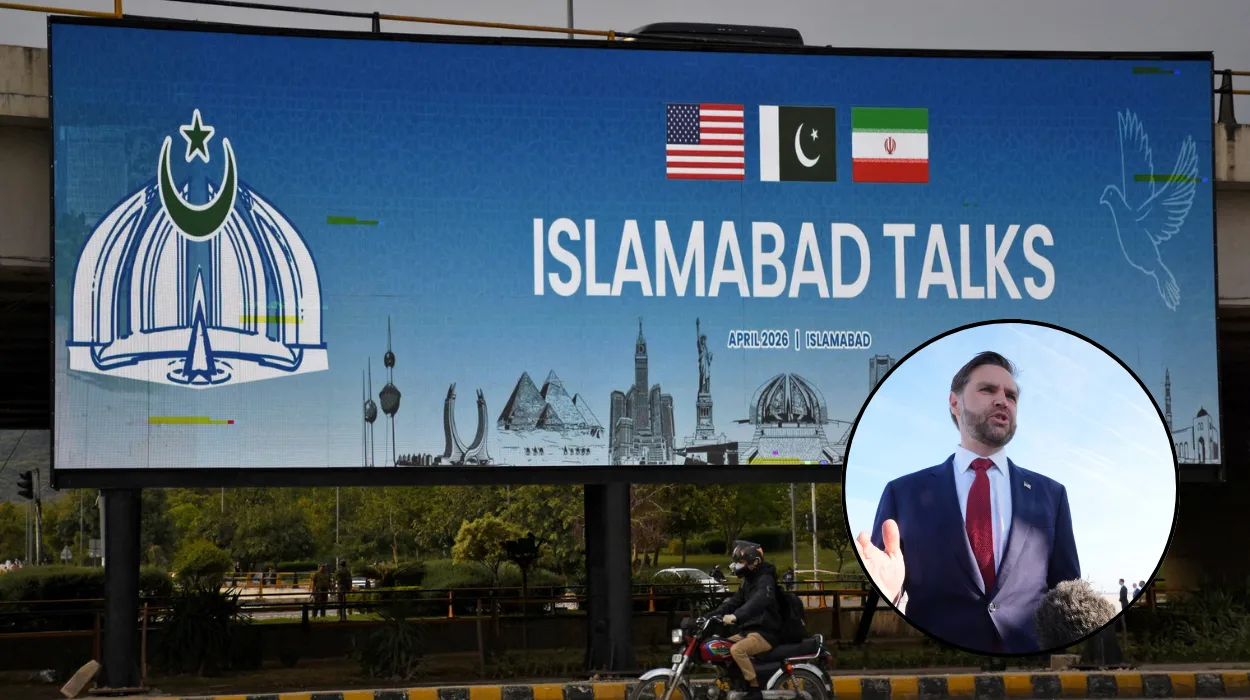
Key Points
- US Vice-President JD Vance warned Iran not to “try and play” the US during planned talks in Islamabad on Saturday.
- Iran insists on a ceasefire in Lebanon and release of its blocked assets before negotiations begin.
- Mohammad Baqer Qalibaf, Iran’s parliamentary speaker, stated on X that two agreed measures—Lebanon ceasefire and asset release—must be implemented first.
- Uncertainty surrounds whether Iran’s delegation, led by Qalibaf and Foreign Minister Abbas Araghchi, will attend.
- Israel reportedly removed Qalibaf and Araghchi from its target list at Washington’s request last month.
- President Donald Trump threatened to resume attacks if talks fail, stating US forces are rearming with superior weapons.
- Trump accused Iran of failing to allow oil through the Strait of Hormuz as per the agreement.
- Over 300 Lebanese civilians killed by Israeli bombing since the US-Iran ceasefire began two weeks ago.
- Lebanon’s President Joseph Aoun reported 13 state security personnel killed in an Israeli strike on a government building in Nabatieh.
- The two-week ceasefire struck Tuesday night between US and Iran reportedly includes Lebanon, per Iranians and Pakistani mediators; Trump and Netanyahu deny this.
- Israel continues bombing Lebanon targeting Hezbollah, Iran’s ally.
- Vance expressed optimism but cautioned against bad faith negotiations.
- US delegation includes Steve Witkoff and Jared Kushner, who previously engaged in nuclear and missile talks.
- Prior Omani-mediated talks with UK observers showed progress before US-Israeli attack on 28 February.
- The five-week bombing campaign killed Iran’s Supreme Leader Ali Khamenei but failed to topple the regime.
- Talks to focus on reopening Strait of Hormuz, Iran’s nuclear programme, sanctions relief, and release of detained Americans.
- Iran demands reparations for war damage.
- Advance teams from US and Iran at Serena Hotel in Islamabad; Saudi and Gulf officials arriving.
- Pakistan imposed 2-mile security perimeter, city lockdown, and public holiday.
- Hezbollah’s Naim Qassem urged Lebanese government to avoid concessions and vowed to fight Israel.
- Lebanese army deployed in Beirut to enforce no arms outside state control after Israeli attack killing 303.
- Hezbollah claimed strikes on Israeli soldiers near Bint Jbeil, a key “capital of resistance.”
- Hezbollah launched rockets at Israel; Israel conducted airstrikes killing 13 Lebanese security officers in Nabatieh.
Islamabad (Britain Today News) – April 10, 2026 – Tensions escalated on the eve of high-stakes peace negotiations as US Vice-President JD Vance issued a stern warning to Iran against attempting to “play” the United States, while Tehran conditioned its participation on Israel halting its offensive in Lebanon.
Vance made the remarks as he boarded Air Force Two bound for Islamabad, where talks scheduled for Saturday could decide the fate of a fragile two-week ceasefire or spark a renewed US-led war against Iran with profound global economic repercussions. Hours before the negotiations, profound doubts lingered over whether they would proceed at all.
Why Is Iran Refusing to Join Islamabad Talks Without Conditions?
As reported by Middle East correspondent, Mohammad Baqer Qalibaf, Iran’s parliamentary speaker and co-leader of the delegation, declared on X:
“Two of the measures mutually agreed upon between the parties have yet to be implemented: a ceasefire in Lebanon and the release of Iran’s blocked assets prior to the commencement of negotiations. These two matters must be fulfilled before negotiations begin.”
It remained unclear Friday evening whether Qalibaf and Foreign Minister Abbas Araghchi planned to travel to Islamabad. Reports indicated last month that Israel had removed both from its bombing target list at the request of Washington.
The ceasefire, agreed upon Tuesday night between the US and Iran, explicitly encompassed Lebanon according to Iranian and Pakistani mediators. However, President Donald Trump and Israeli Prime Minister Benjamin Netanyahu maintained otherwise, with Israel persisting in its campaign against Hezbollah, Iran’s regional ally, even after Netanyahu signalled readiness for direct peace talks with Beirut.
What Did Trump Say About Rearming for Potential Iran Conflict?
President Trump amplified the uncertainty, revealing to the New York Post that US forces were rearming aggressively.
“We have a reset going. We’re loading up the ships with the best ammunition, the best weapons ever made – even better than what we did previously and we blew them apart,”
he stated.
“And if we don’t have a deal, we will be using them, and we will be using them very effectively.”
Trump later posted on his social media platform:
“The Iranians don’t seem to realize they have no cards, other than a short term extortion of the World by using International Waterways. The only reason they are alive today is to negotiate!”
He further accused Iran of breaching the oil transit terms.
“That is not the agreement we have!”
Trump wrote in an overnight post, highlighting Iran’s alleged poor handling of shipping through the Strait of Hormuz.
The disruption, stemming from the US-Israeli strikes on Iran on 28 February and Tehran’s retaliatory closure of the strait, has spiked oil prices—a direct threat to Trump ahead of November’s congressional elections, as it throttles a fifth of global oil and liquefied fossil gas flows.
How Optimistic Is JD Vance About the Negotiations?
Despite the shadows, Vance struck an upbeat note upon departure.
“We’re looking forward to the negotiation. I think it’s going to be positive,”
he said.
“If the Iranians are willing to negotiate in good faith, we’re certainly willing to extend the open hand.”
Yet he tempered this with resolve:
“If they’re going to try and play us, then they’re going to find that the negotiating team is not that receptive.”
Joining Vance in the US delegation are Steve Witkoff, Trump’s international negotiator, and Jared Kushner, the president’s son-in-law. Both participated in pre-attack discussions with Iranians on nuclear and missile programmes, mediated by Oman with UK observers present. Those talks had yielded meaningful progress, setting the stage for continuation until the surprise 28 February assault.
What Are the Core Issues at Stake in Islamabad?
The five-week aerial campaign that followed killed Supreme Leader Ali Khamenei and inflicted severe damage on Iran’s military, yet failed to unseat the Islamic regime. Iran retained leverage by menacing Hormuz shipping.
Islamabad’s agenda centres on reopening the strait, curbing Iran’s nuclear ambitions, easing sanctions, and securing reparations for Tehran from war damages. According to the Washington Post’s national security team, the US side will press for the release of detained Americans.
Advance teams from both nations checked into Islamabad’s five-star Serena Hotel Friday, with Pakistani officials shuttling messages. Saudi Arabia and other Gulf states dispatched representatives to safeguard their stakes. Pakistan ringed the site with a 2-mile security cordon, locked down the city centre, and declared a public holiday—its most ambitious global mediation in years.
What Is Hezbollah’s Stance on Lebanon-Israel Developments?
Hezbollah remained silent on the Lebanese-Israeli direct talks, despite longstanding opposition to Israeli engagement. Group leader Naim Qassem issued a statement Friday afternoon:
“We will not accept a return to the status quo, and we call upon those in authority to cease making gratuitous concessions.”
He pledged continued resistance to “expel the occupier,” omitting explicit reference to the negotiations.
Beirut bolstered its army presence around the prime minister’s office to enforce a ban on non-state arms in the capital, following Wednesday’s Israeli strike that killed at least 303. Clashes persisted in southern Lebanon, where Hezbollah claimed hits on Israeli troops near Bint Jbeil—the 2006 “capital of resistance” pivotal for controlling regional crossroads.
Hezbollah fired rocket salvos at Israel throughout Friday, met by Israeli airstrikes. Lebanon’s state security agency reported 13 personnel killed in a Nabatieh strike on a provincial government building—the deadliest toll yet for Lebanese forces. Lebanon’s government, uninvolved in the Hezbollah-Israel war, has nonetheless lost soldiers to Israeli actions.
Since the ceasefire’s start, Israeli bombs have claimed over 300 Lebanese civilian lives. President Joseph Aoun disclosed Friday that 13 state security members perished in the Nabatieh assault on a government edifice.
These developments underscore the high-wire fragility of the Islamabad summit, where diplomatic breakthroughs or breakdowns could reshape Middle East stability and world energy markets.