Key Points
- The United Nations is reviewing whether Sir Keir Starmer’s Chagos Islands deal breaches international human rights laws, potentially jeopardising the agreement.
- Allegations accuse the British government of “ethnic cleansing and potentially crimes against humanity” for efforts to expel native Chagossians from the archipelago.
- James Tumbridge, attorney general for the Chagossian government, submitted an urgent letter to the UN human rights commissioner demanding intervention.
- The submission names Sir Keir Starmer and argues that evicting four indigenous Chagossians currently on the islands violates their right not to be forcibly removed from their lands.
- Historical context: Britain forcibly removed Chagossians in the 1960s and 1970s to establish the UK-US base on Diego Garcia, breaching minority rights.
- Recent legal victory granted Chagossians right of abode; over 300 express interest in resettling.
- The deal stems from a 2019 ICJ advisory opinion urging the UK to return the islands to Mauritius.
- Legislation shelved due to opposition from Donald Trump; Washington’s approval needed for the strategic Diego Garcia base.
- UK plans to pay £35bn over 99 years to lease back the base from Mauritius.
- Mauritius vows to pursue diplomatic and legal avenues; Foreign Minister Dhananjay Ramfal calls it a matter of justice.
- Maldives and Seychelles have submitted territorial claims, complicating the issue.
- Chagossian first minister Misley Mandarin accuses the UK of blocking humanitarian aid, including solar panels, mosquito nets, and sheets, for six people on Île du Coin.
- Four Chagossians, led by Mr Mandarin, landed in February; two others joined.
- Nigel Farage, Reform UK leader, criticises the deal as a denial of Chagossian rights.
- Dame Priti Patel, shadow foreign secretary, calls it poetic justice and vows Conservatives will prioritise national interest.
- UN and Foreign Office approached for comment.
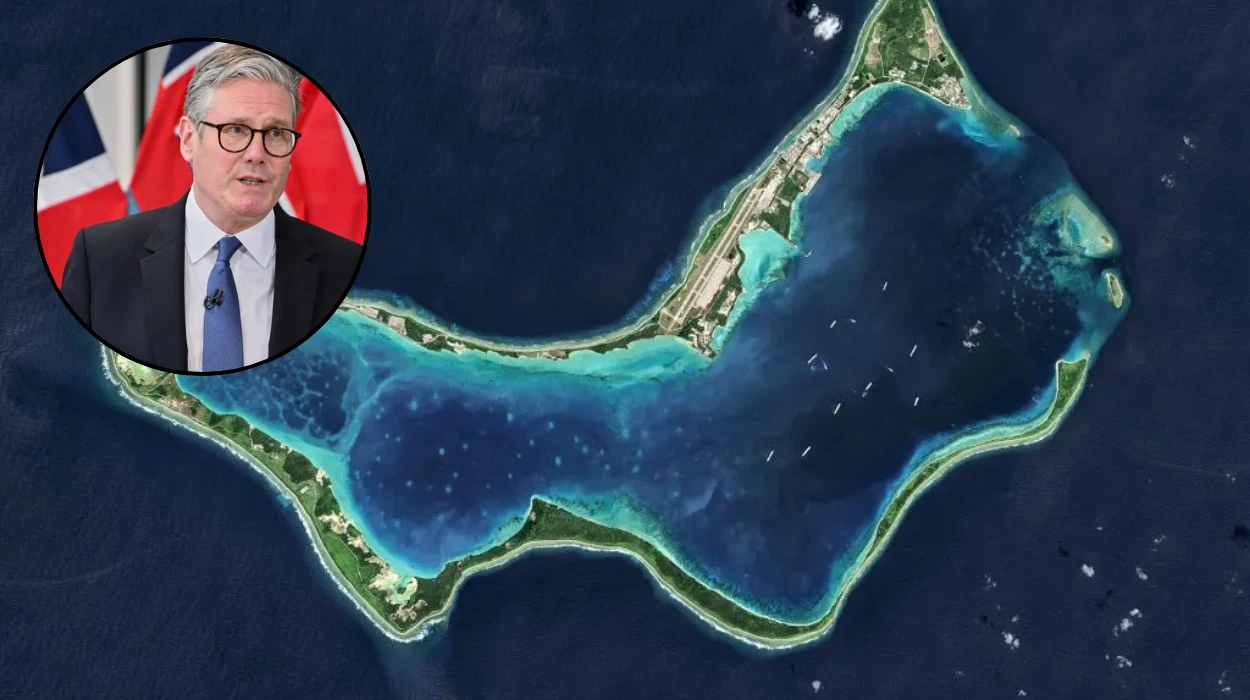
United Kingdom (Britain Today News) – April 11, 2026 – The United Nations has launched a review into whether Prime Minister Sir Keir Starmer’s controversial Chagos Islands deal constitutes a human rights violation, amid accusations of ethnic cleansing and potential crimes against humanity levelled against the British government.
- Key Points
- What Triggered the UN Human Rights Review?
- Why Was Recent Eviction Attempt Halted?
- How Has Mauritius Responded to the Delay?
- What Are Chagossian Leaders Saying About Aid Blockade?
- Who Are the Key Political Critics?
- What Is the Historical Context of the Chagos Dispute?
- Could This Derail the UK-Mauritius Deal Entirely?
The probe focuses on the government’s attempts to evict native Chagossians from the archipelago as part of plans to cede sovereignty to Mauritius. Officials are assessing claims that these actions breach international laws protecting indigenous peoples from forced removal.
What Triggered the UN Human Rights Review?
James Tumbridge, the attorney general for the Chagossian government, submitted an urgent application to the UN human rights commissioner. As detailed in the letter, which explicitly names Sir Keir Starmer, the British government stands accused of acts amounting
“to ethnic cleansing and potentially crimes against humanity”
through its expulsion efforts.
The document argues that removing four indigenous Chagossians, who recently returned to their homeland, violates
“the right of indigenous peoples not to be forcibly removed from their lands”.
It references Britain’s historical actions in the 1960s and 1970s, when the Chagossian population was forcibly evicted to pave the way for the UK-US military base on Diego Garcia.
This expulsion, the submission contends, breached minority rights under international law. Current plans to expel the islanders and hand the territory to Mauritius would
“further entrench a continuing breach”
and create a new violation.
The intervention risks derailing the entire deal, thrusting the Chagos dispute back to the UN, where it originated. The saga began with a 2019 International Court of Justice (ICJ) advisory opinion, prompted by a UN request, which deemed UK control over the islands unlawful in a non-binding resolution. The ICJ urged returning the Chagos Archipelago to Mauritius.
Why Was Recent Eviction Attempt Halted?
The UN submission follows a significant legal victory for the Chagossians. A court ruling declared they hold a right of abode on their homeland. More than 300 Chagossians have since expressed interest in resettling, highlighting the growing momentum behind their cause.
This comes amid broader setbacks for the deal. Sir Keir Starmer shelved implementing legislation after opposition from US President Donald Trump. Washington’s approval remains essential, given the islands host the strategic Diego Garcia joint UK-US air base.
Ministers lacked time to pass the bill before Parliament’s current session ends and the King’s Speech next month. Despite this, Labour insists on pressing ahead. The agreement would see the UK pay approximately £35bn over 99 years to lease back the base.
How Has Mauritius Responded to the Delay?
Mauritius has reaffirmed its determination to secure the islands. Dhananjay Ramfal, Mauritius’s foreign minister, declared:
“We will spare no effort to seize any diplomatic or legal avenue to complete the decolonisation process.”
Speaking at an Indian Ocean conference in Mauritius, he emphasised:
“This is a matter of justice.”
Complicating matters further, the governments of the Maldives and Seychelles have lodged their own claims to parts of the territory, injecting additional geopolitical tension into the dispute.
What Are Chagossian Leaders Saying About Aid Blockade?
Chagossian first minister Misley Mandarin has sharply criticised the British government. Speaking shortly after news that the Chagos deal would omit from the King’s Speech, Mr Mandarin stated:
“We were happy when we heard the giveaway had been halted. But even that good news turned to a very very bad experience when our resupply boat was blocked.”
He detailed the blockade’s impact:
“They refuse us solar panels to make clean water, mosquito nets and sheets to sleep on.”
Mr Mandarin recalled the historical injustice:
“The British government removed us from the island in the 60s and 70s. Now, when we are back, they are trying to remove us in another way by not supplying us with humanitarian aid.”
The aid was intended for six people encamped on Île du Coin. Four local Chagossians, led by Mr Mandarin, arrived in February. Two additional individuals, not named in the UN proceedings, later joined them.
Who Are the Key Political Critics?
Opposition figures have seized on the developments. Nigel Farage, leader of Reform UK, remarked:
“How ironic that international law may scupper Starmer’s vile attempt to deny Chagossians their rights.”
Dame Priti Patel MP, shadow foreign secretary, lambasted the Prime Minister:
“Keir Starmer spent decades in wigs and courtrooms defending everyone except the British national interest, and now the UN is on his doorstep. Poetic justice at its finest. We fought this outrageous surrender of British sovereign territory every step of the way, which has led to his Chagos vanity project now destined for the bin. Unlike Labour, Conservatives will always put our country first.”
The UN and the Foreign Office were approached for comment but had not responded at the time of publication.
What Is the Historical Context of the Chagos Dispute?
The Chagos Archipelago’s plight traces back decades. In the 1960s, Britain detached the islands from Mauritius before the latter’s independence, purchasing them for £3 million to construct Diego Garcia. This cleared space for the pivotal military base, used in operations from the Cold War to recent conflicts.
Chagossians, numbering around 1,500 at the time, were uprooted to Mauritius and the Seychelles amid claims of coercion, including pets culled and homes bulldozed. Decades of litigation followed, with courts repeatedly affirming their right to return, though successive governments resisted full resettlement due to base security.
The 2019 ICJ opinion marked a turning point, backed by the UN General Assembly’s call for UK withdrawal within six months—a deadline unmet. Sir Keir’s deal aimed to resolve this by transferring sovereignty while securing the base, but native rights now threaten to unravel it.
Could This Derail the UK-Mauritius Deal Entirely?
The UN review carries high stakes. A finding of human rights breaches could invalidate the treaty, especially amid Trump’s scepticism and competing claims from neighbours. Labour’s commitment persists, yet parliamentary arithmetic and international scrutiny loom large.
Chagossian advocates view the probe as vindication. Mr Tumbridge’s letter demands immediate safeguards for the four residents, warning of irreversible harm. With resettlement interest surging, the islands’ future hinges on balancing security, sovereignty, and indigenous justice.
As the drama unfolds, it underscores enduring colonial legacies in the Indian Ocean, where strategic assets clash with human rights imperatives.