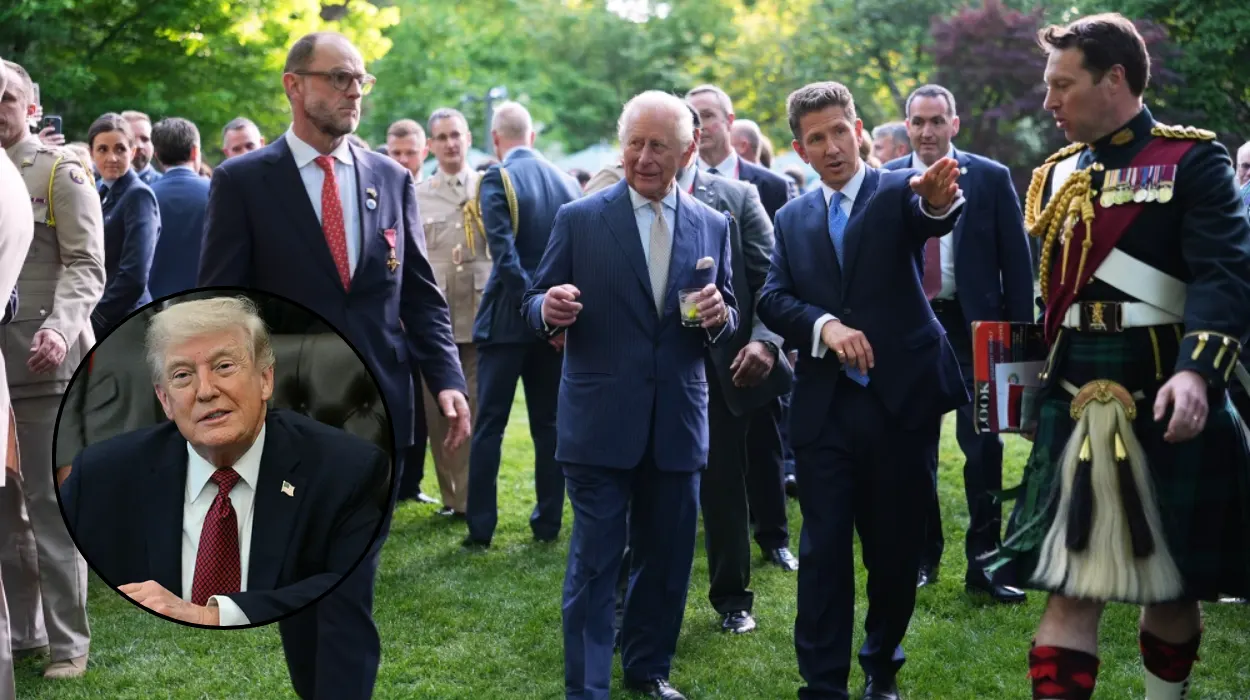
Key Points
- King Charles III is set to deliver a rare address to the U.S. Congress, reaffirming the long-standing “special relationship” between the United Kingdom and the United States.
- Buckingham Palace says the king will stress shared values of democracy, freedom, and mutual friendship in a landmark anniversary year marking 250 years since America’s independence.
- The speech comes at a delicate diplomatic moment, with transatlantic tensions heightened by President Donald Trump’s war against Iran and his criticism of Prime Minister Keir Starmer.
- The king is expected to frame U.K.-U.S. ties as an alliance built on “reconciliation and renewal” over the past 250 years.
- Charles will also acknowledge the recent assassination attempt at the White House Correspondents’ Association dinner and express sympathy to the Trumps.
- The address will be delivered from the House of Representatives dais, a historic setting previously used by Franklin D. Roosevelt during World War II.
- Queen Elizabeth II remains the only other British monarch to have addressed a joint session of Congress, doing so in 1991.
Washington (Britain Today News) April 28, 2026 – King Charles III is preparing to use one of the most symbolic platforms in American politics to reaffirm the United Kingdom’s ties with the United States, as he delivers a rare address to Congress on Tuesday in a year charged with historical and diplomatic significance.
The monarch will tell lawmakers that the two countries continue to share
“the highest regard and friendship of the British people to the people of the United States in this landmark anniversary year,”
referring to the 250th anniversary of America’s declaration of independence from Britain. The speech is designed to underline the endurance of the transatlantic bond at a time when the alliance is under pressure from the wider political climate.
According to the palace report, Charles will present the U.K.-U.S. relationship as one rooted in shared democratic values, freedom and mutual security. He is expected to say that the story of the two nations over the past quarter of a millennium has been one of “reconciliation and renewal” and of one of
“the greatest alliances in human history.”
Why is the speech so significant?
The address is notable not only because British monarchs rarely speak before Congress, but also because it comes during a period of strain between London and Washington. President Donald Trump’s war against Iran has complicated relations with Prime Minister Keir Starmer, whom Trump has criticised for not joining the U.S. in the initial attack on Iran and for failing, in his words, to act like “no Winston Churchill.”
The political tension gives Charles’s speech added weight, since it is intended to project steadiness and continuity while avoiding overt partisanship. In diplomatic terms, it also offers the king a chance to reinforce the idea that the relationship between the two countries is larger than any single administration or current dispute.
Charles’s personal ties with Trump are also relevant to the backdrop of the visit. The president and Queen Camilla hosted Trump at a state dinner at Windsor Castle in September, and that relationship appears to have helped preserve a channel of warmth even as broader government-to-government friction has grown.
What will King Charles say to lawmakers?
The speech is expected to last about 20 minutes and will focus on history, friendship and practical cooperation between the two countries. The king will say that the United States and the United Kingdom can defend and reaffirm their long-standing democratic values to create security and prosperity “for themselves and the world,” according to the palace official who previewed the remarks.
The timing is deliberate, with the speech framed as both ceremonial and forward-looking. By highlighting the 250-year anniversary of American independence, Charles is effectively acknowledging the difficult origins of the relationship while celebrating how it transformed into a close alliance. That message is likely to resonate in Congress, where symbolic speeches often carry as much diplomatic value as policy statements.
The address also appears carefully crafted to avoid direct engagement with current disputes, while still recognising them. Instead of dwelling on points of conflict, Charles is expected to offer a broader message about resilience, shared institutions and the power of democratic partnership.
Why is the venue important?
The king will speak from the dais of the House of Representatives, the same setting used by President Franklin D. Roosevelt when he addressed Congress after the attack on Pearl Harbor. That historical connection adds gravity to the moment and places Charles’s remarks within a broader narrative of wartime solidarity and alliance-building.
Winston Churchill later addressed Congress from the Senate chamber, further embedding British-American wartime cooperation into the institutional memory of the Capitol. By choosing this venue, the visit links the modern relationship to some of the most consequential moments in 20th-century history.
Queen Elizabeth II remains the only other British monarch to have addressed a joint session of Congress, in 1991. Charles’s speech therefore carries the rarity and symbolism that accompany only the highest levels of statecraft.
How does the current climate shape it?
The tone of the visit is being shaped by the wider geopolitical and political atmosphere. Trump’s criticism of Starmer over Iran has raised questions about how closely the two governments are aligned, even though the public messaging around the royal visit is likely to remain diplomatic and restrained.
Charles’s intervention is not expected to alter policy directly, but it can help calm or soften perceptions of strain. Royal speeches in such settings usually function as strategic reminders of continuity, shared history and long-term mutual interests. In that sense, the king’s words may be less about immediate controversy and more about reaffirming a framework for future cooperation.
The reference to the White House Correspondents’ Association dinner shooting also introduces a note of concern and empathy. By acknowledging the incident and expressing sympathy, Charles is expected to show solidarity in the face of violence without allowing the moment to become overtly political.
What does it mean for U.K.-U.S. ties?
The speech underscores how much symbolic diplomacy still matters in Anglo-American relations. Even when governments disagree, the monarchy can serve as a ceremonial bridge that reinforces the wider relationship between the two nations.
By describing the alliance as one of “reconciliation and renewal,” Charles is likely to present the partnership as a mature bond that has survived conflict, disagreement and historical change. That framing is especially relevant in 2026, when the independence anniversary invites reflection on how former adversaries became close allies.
For both sides, the message is clear: the relationship is not defined by one dispute, one administration or one crisis. Instead, it is anchored in a long record of shared institutions, strategic coordination and mutual political values.