Key Points
- US and Iran begin direct negotiations in Islamabad, Pakistan.
- Talks come days after a two-week ceasefire was announced.
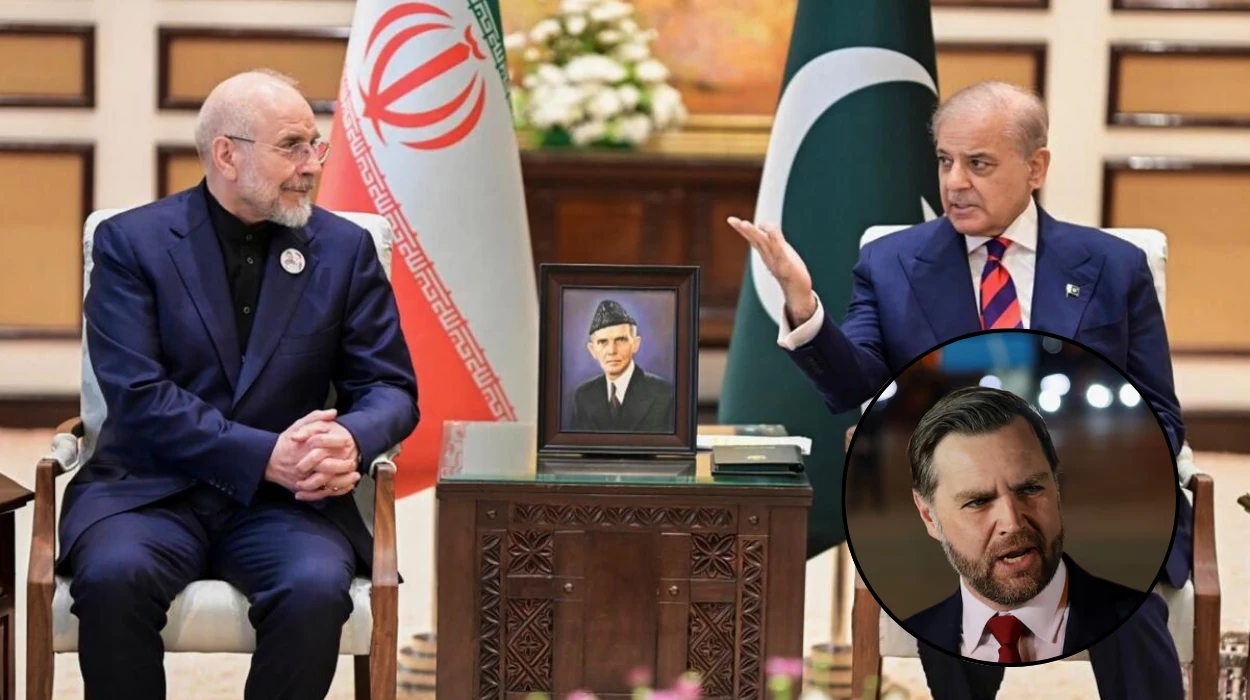
- US delegation led by Vice President JD Vance; Iranian side led by Parliament Speaker Mohammad Bagher Qalibaf.
- Ceasefire under threat as Israel continues attacks on Hezbollah in Lebanon.
- Iran demands sanctions relief and control over the Strait of Hormuz.
- The US seeks nuclear restrictions and reopening of the strait.
- Casualties reach thousands in Iran, Lebanon, and Israel.
- Pakistani Prime Minister Shehbaz Sharif mediating alongside Chinese, Saudi, Egyptian and Qatari officials.
- Energy markets remain volatile as Strait of Hormuz remains largely closed.
- Israeli strikes continue in Lebanon despite ongoing peace efforts.
Islamabad (Britain Today News) April 11, 2026 – The United States and Iran began long-anticipated face-to-face negotiations in Pakistan on Saturday, marking the first direct engagement between the two adversaries since the outbreak of the devastating regional war seven weeks ago. The discussions opened in Islamabad just days after a fragile two-week ceasefire was announced, raising cautious hopes for de-escalation in a conflict that has already taken thousands of lives and disrupted global oil markets.
- Key Points
- Why are US and Iranian officials meeting in Pakistan?
- What issues are dominating the talks?
- How did the conflict reach this stage?
- How are both sides positioning themselves?
- What is the situation on the ground in Pakistan?
- How are regional players reacting?
- How is Israel responding amid the peace efforts?
- What are the economic implications?
- What lies ahead?
Why are US and Iranian officials meeting in Pakistan?
According to senior Pakistani officials familiar with the mediation efforts, the three-party talks commenced after Iran’s primary conditions were met—among them a reduction in Israeli strikes across southern Lebanon and a temporary halt in cross-border hostilities. The negotiations are being hosted by Prime Minister Shehbaz Sharif’s government, with support from Chinese, Saudi, Egyptian, and Qatari envoys observing from the sidelines.
The U.S. delegation is being led by Vice President JD Vance, while Iran has sent its Parliament Speaker Mohammad Bagher Qalibaf to head its team. A senior Pakistani official, speaking anonymously due to diplomatic sensitivities, confirmed that discussions were “progressing well,” though it remained unclear whether negotiators were seated together or engaging in indirect exchanges.
What issues are dominating the talks?
The agenda encompasses wide-ranging and contentious issues — from reopening the Strait of Hormuz to the disarmament of Iran-backed militant groups in Lebanon and Syria. Iran, according to its state media, reiterated its 10-point proposal calling for a guaranteed end to hostilities, sanctions relief, and control over the strait — a strategic choke point responsible for nearly a fifth of global oil trade before the conflict.
In contrast, American negotiators arrived with a 15-point draft agreement placing emphasis on curbing Iran’s nuclear programme, reopening the Strait of Hormuz for commercial traffic, and securing commitments from Tehran to restrain its regional allies, including Hezbollah in Lebanon.
How did the conflict reach this stage?
The war erupted earlier this year following the February 28 airstrikes involving Israel, Iran, and Hezbollah — violence that rapidly spread across the Middle East. The conflict has since killed over 3,000 people in Iran, nearly 2,000 in Lebanon, 23 in Israel, and more than a dozen across neighbouring Gulf states.
The disruption of oil and gas shipments through the Persian Gulf triggered a sharp rise in international energy prices, with Brent crude soaring above 94 dollars per barrel, a 30% increase since late February. The Strait of Hormuz — now partially sealed under Iranian military control — has largely paralysed world trade routes dependent on Gulf energy exports.
How are both sides positioning themselves?
Despite the diplomatic window, both Washington and Tehran have maintained hardline postures. Speaking on Friday, U.S. Vice President JD Vance expressed cautious optimism but warned that
“if they’re going to try and play us, then they’re going to find that the negotiating team is not that receptive.”
Iranian Foreign Minister Abbas Araghchi, a member of Tehran’s negotiation team, acknowledged entering discussions with “deep distrust” owing to prior rounds of negotiations that failed following American military actions.
“We are prepared to retaliate if attacked again,”
Mr Araghchi said, emphasising Iran’s unwillingness to negotiate under duress.
Meanwhile, U.S. President Donald Trump wrote on social media that Iranian officials “have no cards” to bargain with, asserting that
“the only reason they are alive today is to negotiate.”
In a separate press briefing, he accused Iran of extortion through its control of the Strait and vowed to reopen it “with or without them.”
What is the situation on the ground in Pakistan?
Security measures in Islamabad were unprecedented as talks began. Authorities sealed major roads, restricted civilian movement, and advised residents to remain indoors. The Pakistani capital — usually bustling with diplomatic activity — resembled a lockdown zone under tight curfew-like conditions, underscoring the high stakes of the peace effort.
A senior adviser in Sharif’s office said Islamabad had become
“a temporary epicentre of cautious diplomacy,”
with foreign delegations working in strict confidentiality to avoid public pressure.
How are regional players reacting?
Regional actors have displayed mixed responses. Saudi Arabia publicly supported Pakistan’s mediation, while Egypt and Qatar stressed that both Washington and Tehran must preserve the ceasefire to prevent another escalation. Chinese officials, meanwhile, described the dialogue as
“a critical step toward restoring stability across the Gulf.”
In Tehran, local residents voiced a blend of hope and scepticism. As reported by the Associated Press, 62-year-old resident Amir Razzai Far told reporters:
“Peace alone is not enough for our country, because we’ve been hit very hard… the people have to pay for that.”
How is Israel responding amid the peace efforts?
Despite mounting international appeals, Israel continues its strikes in Lebanon, particularly targeting Hezbollah positions along the southern border. The Lebanese state-run news agency reported that at least three civilians were killed on Saturday morning, though operations reportedly subsided later in the day.
Israel maintains that the ceasefire arrangements pertaining to Iran do not include the Lebanese theatre. The Israeli government insists that Lebanon must assume responsibility for disarming Hezbollah as part of any regional peace framework. Negotiations on this front are scheduled to resume in Washington on Tuesday, according to President Joseph Aoun’s office in Beirut.
The Lebanese army, however, faces limited capacity to enforce such a disarmament plan given Hezbollah’s entrenched influence and vast arsenal accumulated over decades.
What are the economic implications?
Analysts warn that the prolonged instability surrounding the Strait of Hormuz could deepen global economic turmoil. Before the conflict, more than 100 cargo vessels transported crude oil and natural gas through the strait daily. Since February, that number has fallen to just a dozen, sharply constraining global supply chains.
Iran has proposed levying transit fees on vessels passing through the strait as part of a future peace arrangement — an idea quickly rejected by Oman and the U.S. on grounds that it would legitimise Tehran’s maritime blockade.
What lies ahead?
Diplomatic observers describe the Islamabad talks as one of the most significant peace attempts in recent Middle Eastern history. However, experts caution that the gulf between Iranian and American positions remains wide. Washington demands verifiable limits on Tehran’s military and nuclear capabilities, while Iran insists its sovereignty and economic independence be guaranteed first.
With both sides clinging to leverage — Iran through control of the strait, and the U.S. through sanctions and military positioning in the Gulf — the path to a sustainable peace remains uncertain.
The regional humanitarian toll continues to rise, and the fragile ceasefire risks unravelling amid Israel’s refusal to halt attacks in Lebanon. Still, diplomats participating in Islamabad remain intent on framing a roadmap that can at least prevent a broader conflagration — one that has already reshaped the political and economic landscape of an entire region.