Key Points
- London councils in Hackney, Richmond, and Wandsworth are trialling shire horses for rewilding and park care.
- The eco initiative aims to reseed wildflower meadows using traditional non-mechanised methods.
- Shire horses replace heavy machinery to reduce carbon footprint and soil compaction.
- Oakwood Clydesdale supplies the trained horses used for low-impact land management.
- Nicola Read from Oakwood Clydesdale highlights biodiversity benefits and community engagement.
- Hackney Council says the trial may expand to other parks if successful.
- Local schools are involved, giving children insight into historical and sustainable landwork.
- The shift supports London’s broader environmental and carbon-reduction goals.
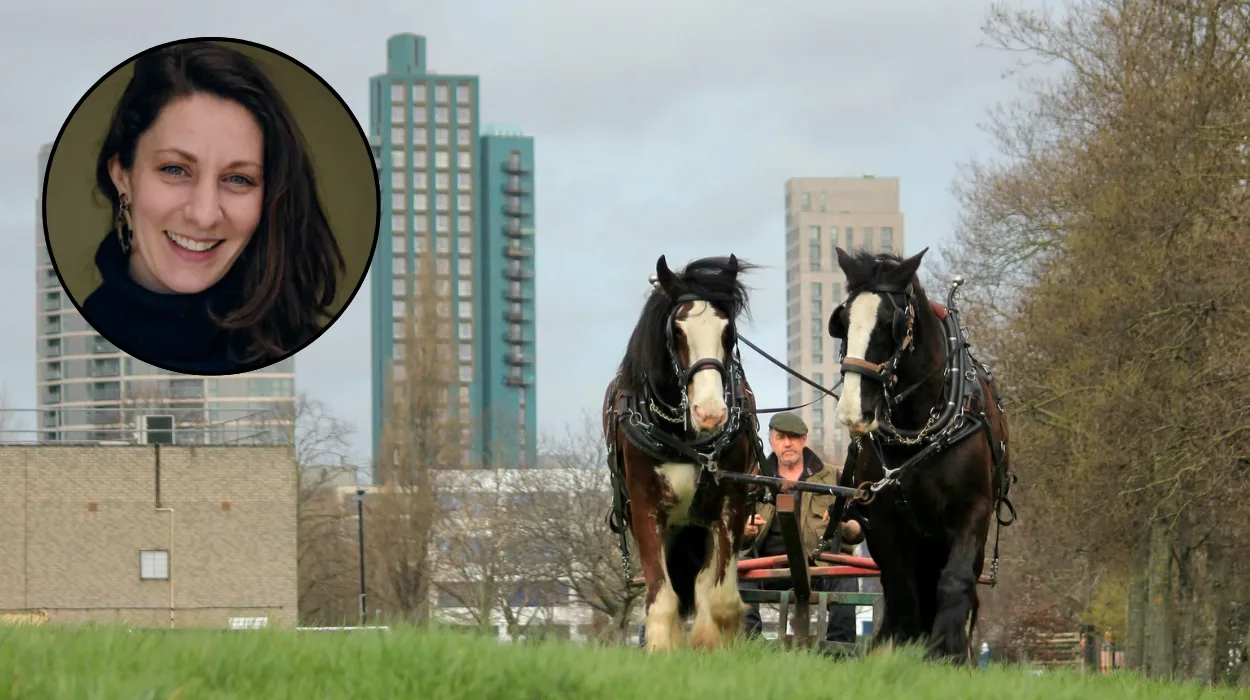
London (Britain Today News) April 10, 2026 – In a move blending tradition with modern ecological goals, London councils are turning to a centuries-old form of horsepower to nurture the city’s green spaces. Shire horses, renowned for their strength and gentle impact on the land, are now being deployed in boroughs such as Hackney, Richmond, and Wandsworth to reseed wildflower meadows and maintain biodiversity without the emissions or disruption caused by heavy machinery.
- Key Points
- Why are shire horses being used for London’s rewilding projects?
- How do horses contribute to biodiversity and soil health?
- What role does Oakwood Clydesdale play in the project?
- How does using shire horses benefit London’s communities?
- Are other areas in Britain adopting similar eco-land management practices?
- Could this traditional approach replace machinery permanently?
- What are the prospects for sustainability in London parks?
Why are shire horses being used for London’s rewilding projects?
The initiative stems from growing concern about the environmental toll of conventional park maintenance. Tractors and powered mowers, while efficient, exert excessive pressure on soil, causing compaction that impedes drainage and wildflower seed germination. As reported by Nicola Read of Oakwood Clydesdale in The Telegraph (2026), replacing fuel-powered vehicles with heavy horses represents an ecologically sound shift:
“When you put a tractor on the land, it’s very heavy, and the weight of the tractor can create soil compaction which reduces water drainage and the ability for wildflowers to germinate.”
Shire horses pull non-motorised equipment capable of cutting, harrowing, and aerating the ground, creating ideal conditions for natural reseeding. The absence of engines means zero carbon emissions, while their light tread preserves the fragile top layer of soil that wildflowers depend upon.
How do horses contribute to biodiversity and soil health?
The technique is more than rustic novelty; it is scientifically effective. Horses harrow and disc the land — one process aerates while the other breaks down organic matter — yielding an optimal seed bed for germination.
“If you can improve the water drainage and loosen that top surface of soil, the soil can aerate, which allows the wildflower seeds to thrive,”
She added that horses are
“much lighter, so there is less soil compaction.”
The results, as early trial data from Hackney Council suggest, include higher seed viability and less disturbance to microfauna such as insects and small mammals that often suffer under machinery blades.
“The trial will help assess whether this low-impact approach could be rolled out more widely,”
said a Hackney Council spokesperson, noting the project’s expected contribution to London’s net-zero aims.
What role does Oakwood Clydesdale play in the project?
Oakwood Clydesdale, a specialist in traditional draught-horse agriculture, supplies and manages the equine workforce. The stable has long championed sustainable farming and conservation methods. Its operations extend beyond Hackney into Wandsworth, Bushy Park, Richmond, and National Trust estates like Morden Hall and Ham House.
According to Read, the horses used are a carefully bred lineage of shires and Clydesdales.
“They are a manufactured breed,”
she explained.
“They’ve undergone selected breeding for hundreds of years to make the best workhorses.”
These animals are prized not only for power but temperament, making them ideal for sensitive ecological work.
“They are similar to the likes of the Border Collie — they need mental as well as physical stimulation,”
she added.
How does using shire horses benefit London’s communities?
Beyond environmental improvement, this pastoral return carries cultural and educational significance. Oakwood Clydesdale collaborates with local schools, inviting students to observe the horses in action and learn about London’s agricultural heritage. Read said:
“For a lot of kids in London, they wouldn’t necessarily see horses at work, or know how horses used to work the land. Local schools will bring classes out to see what goes on.”
Such outreach fosters community awareness of sustainability efforts and the importance of maintaining urban biodiversity. In dense city boroughs with limited green space, the presence of horses brings a sense of connection to nature that modern urban life often lacks. Community members have described the projects as
“a peaceful yet powerful reminder of slower, cleaner work.”
Are other areas in Britain adopting similar eco-land management practices?
According to environmental groups cited, the use of heavy horses for land restoration is gaining traction across the UK, particularly in Sites of Special Scientific Interest (SSSI). In these locations, heavy machinery can cause irreparable ecological damage or prove logistically impractical. Shire horses, conversely, can navigate narrow, delicate, or uneven terrain, performing maintenance that supports species diversity without harm.
In Richmond and Bushy Park, for instance, Oakwood’s teams have worked to restore meadows degraded by urban encroachment. Their low-impact harrowing has improved soil quality and helped native flora such as oxeye daisies and red campions re-establish. Similar trials are underway in Wandsworth, where the council views the program as part of a broader rewilding strategy tied to London’s biodiversity action plan.
Could this traditional approach replace machinery permanently?
Hackney Council has confirmed that the ongoing tests will determine scalability for wider implementation.
“It’s also a lower-pollution alternative to traditional machinery,”
the council spokesperson stated. Should the trial yield strong results, other boroughs may follow suit as part of the capital’s drive toward sustainable urban management.
Environmental analysts have noted that such hybrid methods — combining traditional agritechnics with modern conservation — could redefine Britain’s approach to urban ecology. In effect, reintroducing working horses is not regression but adaptation: utilising what history offers to meet today’s sustainability standards.
What are the prospects for sustainability in London parks?
If expanded successfully, this program will mark an evolution in how councils manage public land. Rather than relying solely on mechanical solutions or artificial turfing, horse-drawn maintenance reconnects parks to living ecosystems. The absence of fuelled engines not only reduces carbon emissions but also limits noise pollution, making habitats safer for nesting birds.
Wildflower meadows in places such as Hackney Marshes and Richmond Park may soon thrive under this revived stewardship model. Residents, conservationists, and educators alike could benefit, blending ecology, education, and heritage into one vision for the capital’s green future.
London’s rewilding push signals a deeper environmental transformation — one that recognises the value of tradition in achieving modern sustainability. The sight of shire horses working the city’s fields may evoke pastoral nostalgia, yet it stands firmly within London’s 21st-century environmental agenda: cleaner air, richer soil, and renewed biodiversity.