Key Points
- Jay Whybrow, 37, from Tonbridge in Kent, was running the 2026 London Marathon for Blind Veterans UK.
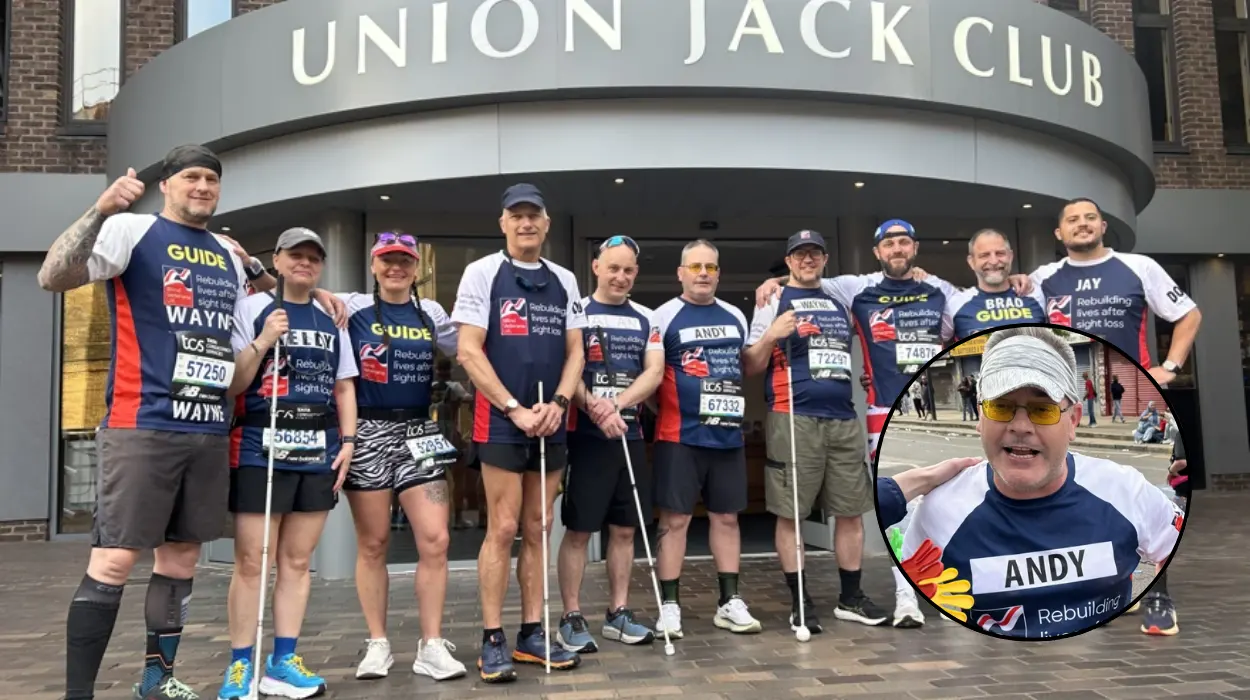
- His first London Marathon took an unexpected turn when he stepped in to guide blind veteran Andy Leitch after Andy’s guide runner, Brad Bradbury, suffered a calf injury at mile three.
- Jay and Brad previously served together in the Coldstream Guards.
- Jay was medically discharged after a brain injury caused by an IED in Afghanistan in 2009.
- Jay said the marathon was a major personal challenge because he lives with PTSD, noise sensitivity and crowds.
- Jay spent three years in hospital after his injury, learning to walk and talk again.
- Jay and Andy finished the marathon in six and a half hours.
- Brad, despite his injury, kept going and finished in seven hours and 20 minutes.
- Andy Leitch, 51, from Aldershot, lost his sight because of retinitis pigmentosa and has been supported by Blind Veterans UK since 2011.
- Andy was taking part in his 11th London Marathon.
- Andy said the marathon had always been a dream and Blind Veterans UK helped make it a reality.
- Andy also said he has already signed up for next year.
- Andy is fundraising with fellow blind veterans and they aim to raise at least £1,250.
- Andy has been training throughout the year with a 200 miles a month challenge.
How did a marathon guide save the day for a blind veteran?
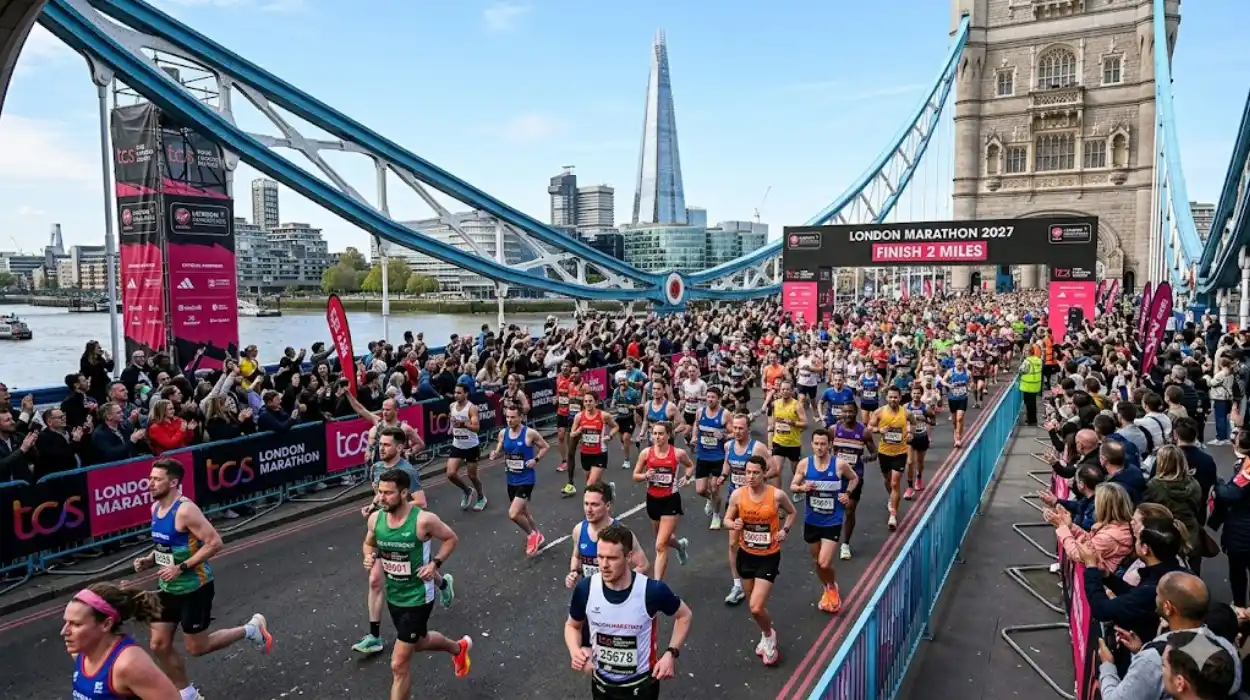
London (Britain Today News) May 6, 2026 – A charity supporter’s first London Marathon became an unexpected act of service and solidarity when Jay Whybrow stepped in to guide blind veteran Andy Leitch after Andy’s original guide runner was forced out by injury just three miles into the race.
- Key Points
- How did a marathon guide save the day for a blind veteran?
- What happened when Brad was injured at mile three?
- Who is Andy Leitch and why was the marathon important to him?
- Why is Andy already planning for next year?
- How has training helped Andy physically and mentally?
- What happened to Brad Bradbury after the injury?
- What does this story say about the London Marathon?
As reported in the supplied account, Jay, 37, from Tonbridge in Kent, had set out to run the 2026 London Marathon in support of Blind Veterans UK, the national charity for vision-impaired ex-Service men and women. His involvement with the charity came through his friend and work colleague Brad Bradbury, who had signed up as a guide runner. What began as a standard marathon challenge quickly turned into a test of resilience, trust and improvisation when Brad suffered a calf injury at mile three, leaving Andy at risk of being unable to continue.
The story carries added weight because Jay and Brad had served together in the Coldstream Guards. Jay’s own path to the marathon was shaped by injury and recovery. He was medically discharged after suffering a brain injury in Afghanistan in 2009, when he was injured by an improvised explosive device, and he said the marathon represented a major personal milestone. He explained that he lives with post-traumatic stress disorder and still struggles with noise and crowds.
Jay said running the marathon was “a huge personal challenge” because of those difficulties. He also described the years after his injury as a long and difficult rehabilitation period, saying he spent three years in hospital learning to walk and talk again. He added that his memory has been affected and that he did not remember Brad when they reconnected through work, although Brad remembered him.
What happened when Brad was injured at mile three?
Jay said that before the race he, Andy and Brad were all in the same wave and decided to begin together as a trio. He explained that he had initially planned to separate and run his own race, but the day developed differently once Brad’s injury put Andy’s participation in jeopardy.
After Brad was unable to continue, Andy asked Jay whether he would guide him for the remainder of the marathon so the veteran could finish the challenge. Jay agreed, and what had started as a solo running effort became a shared mission to help another athlete complete one of the world’s best-known road races.
Jay said the change made the day even more meaningful.
“It ended up being a different marathon than the one I had trained for, but it was so much better than running on my own. I helped Andy, he may not realise it, but he helped me too,”
he said.
He also explained that guiding Andy helped ease the very symptoms he had feared before the race.
“Guiding Andy took my mind off the noise, and the crowds which I was worried about due to my PTSD, plus Andy is a seasoned London Marathon runner with this being his 11th time, and therefore I had my own personal tour guide telling me what was coming up ahead. I 100% want to be a guide again now, I’m hooked.”
Who is Andy Leitch and why was the marathon important to him?
Andy Leitch, 51, from Aldershot, has a long military background of his own. He joined the Army in 1992 and spent 19 years with the Royal Logistics Corps. At 37, with only two years left to serve and future plans already forming outside the military, he was forced to retire early after losing his sight to retinitis pigmentosa.
Andy has been supported by Blind Veterans UK since 2011, and the charity has played an important role in his rehabilitation. According to the account, sport and fitness have been central to that rehabilitation, helping him rebuild confidence, routine and physical strength.
Andy said the London Marathon had always been a dream for him. In 2015, Blind Veterans UK gave him the chance to make that dream come true. He admitted that he did not fully appreciate just how demanding the 26.2-mile distance would be, but said the finish line brought a greater reward than the pain he felt during the race.
He said:
“Running the London Marathon had always been a dream of mine, and in 2015, Blind Veterans UK gave me the chance to make it a reality. I’ll admit I didn’t fully appreciate just how tough 26.2 miles would be. The pain was real, but the sense of achievement when I crossed that finish line was greater.”
Why is Andy already planning for next year?
After completing his 11th London Marathon, Andy joked about the pace of the event and the energy around the course.
“I was hoping to chase down the leader, but he finished before I even started!”
he said.
He added that the atmosphere was “cracking” and said he enjoyed meeting supporters who lined the route to cheer the runners on. Andy also confirmed that he has already signed up for next year, underlining how central the marathon has become to his annual routine and fundraising efforts.
Andy said Blind Veterans UK had supported not only him but also his family, and that this is why he remains committed to giving back.
“Blind Veterans UK has done so much for both my family and me. That’s why I’m so passionate about giving back by supporting the charity and helping them to make a difference for others, just like they did for us,”
he said.
His fundraising has not been limited to marathon day. As he trained for this year’s race, Andy committed to a 200 miles a month challenge, maintaining activity throughout the year to keep his preparation consistent.
How has training helped Andy physically and mentally?
Andy said the routine of training has had a clear impact on both his mental and physical wellbeing. He explained that getting out for regular walks and runs boosts his confidence, self-worth and focus, while also helping him keep on track with his charity commitment.
He said:
“The routine and physical and mental impact of getting out on my training walks and runs is clear to me. The knowledge that what I’m doing is supporting Blind Veterans UK keeps me focused and boosts my self-worth and confidence.”
He also revealed that he kept going the day after the marathon, going out for a ten-mile run because he still had 35 miles left to complete before the end of April. That detail reflects both his determination and the structured approach he has taken to his fundraising target.
Andy described Blind Veterans UK as more than a charity.
“Blind Veterans UK isn’t just a charity, it’s a lifeline. It’s changed my life, and I know it’s done the same for many others. I’ll always champion what they do and do my bit to support and fundraise for them whenever I can,”
he said.
What happened to Brad Bradbury after the injury?
Although Brad Bradbury’s injury disrupted the race plan, he still showed determination to continue. After suffering the calf injury at mile three, he managed to get back up, keep going and eventually hobble over the finish line in seven hours and 20 minutes.
That detail adds another layer to the story: while Jay’s intervention ensured Andy could complete the marathon, Brad’s persistence ensured that his own effort was not abandoned. The three men’s shared military background and the charity context gave the moment a strong sense of comradeship and mutual support.
What does this story say about the London Marathon?
The London Marathon often produces stories of elite times and major fundraising totals, but this one stands out because it is about adaptation, empathy and resilience. Jay did not just run for a cause; he became the practical solution when another runner’s plans fell apart. Andy did not simply finish another marathon; he did so with support that allowed him to continue despite an unexpected setback. Brad, meanwhile, pushed through injury to complete his effort.
The account shows how charity sport can become something larger than the result on the finish line. It can connect people with shared histories, offer confidence to those living with the effects of injury, and create moments where one person’s willingness to help becomes the key to another person’s success.
Andy and his fellow blind veterans are jointly fundraising and aiming to raise a minimum of £1,250. For them, the marathon is both a physical challenge and a platform for awareness and support.