


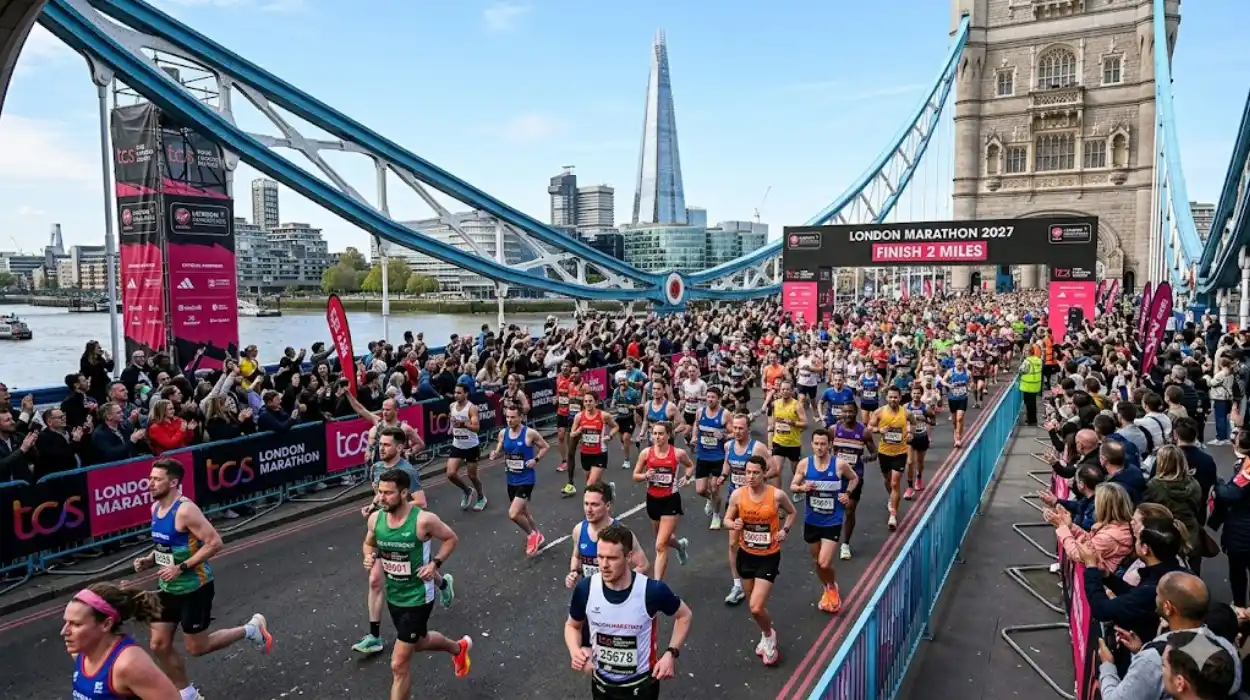
The London Marathon 2027 is scheduled for Sunday 25 April 2027, with a major ballot window opening on 24 April 2026 and closing on 1 May 2026. The event uses several entry routes, including the public ballot, Good for Age, Championship, charity places, and international tour operator places.
- What is the London Marathon 2027?
- When is the London Marathon 2027?
- How does entry work?
- Who can enter the ballot?
- What are the main entry rules?
- How does Good for Age work?
- What is Championship entry?
- How do charity places work?
- What should international runners know?
- What are the most important dates?
- Why is the race so competitive?
- What does the 2027 edition mean for runners?
- How should runners prepare now?
What is the London Marathon 2027?
The London Marathon 2027 is a 26.2-mile road marathon in London, organised by London Marathon Events Ltd, and it remains one of the world’s largest marathon races. The 2027 edition is set for Sunday 25 April 2027, with official entry conditions governing who can apply, how they can enter, and what rules apply to participation.
The London Marathon began in 1981 and has grown into a major international running event, with a strong charity focus and a broad mix of elite runners, club runners, and recreational entrants. Its structure matters because entry demand is far greater than available places, so the selection process uses multiple routes instead of a single open-registration system. The marathon distance is 26.2 miles, which equals 42.195 kilometres, and that standard distance is used in official marathon competition worldwide.
The 2027 race is especially notable because reports indicate discussions about a larger two-day format, though that plan had not been officially confirmed in the sources reviewed. For readers and applicants, the essential facts remain the official race date, the current entry categories, and the published conditions of entry.
When is the London Marathon 2027?
The London Marathon 2027 takes place on Sunday 25 April 2027. The public ballot for the 2027 race opens on Friday 24 April 2026 at 9am and closes on Friday 1 May 2026 at 4pm.
The date matters because London Marathon planning runs across a long timeline. Runners usually begin training several months in advance, while charities, clubs, and travel providers build their schedules around the race weekend. The ballot timing also matters because it is the main public route for most runners, and missing the opening window means waiting for the next cycle.
The published ballot dates show the race follows a predictable annual pattern. The ballot opens immediately around the previous race weekend and remains open for one week, which gives runners a short application window. Official marathon communications and media coverage both point to this established timeline for 2027.
How does entry work?
London Marathon entry works through several routes, not one single registration system. The main routes are the public ballot, Good for Age, Championship entry, charity places, and selected international packages.
This structure exists because the race receives far more applications than places. The ballot is the broadest route and is open to a large public pool, while the faster-runner categories reward qualifying performances. Charity and tour operator routes support fundraising and international participation, and they remain important because they cover runners who do not qualify through performance or ballot selection.
For 2027, the main practical implication is that every applicant needs to choose the route that matches their profile. A first-time runner, a fast club athlete, and a charity fundraiser each enter through different pathways, and each pathway has different eligibility rules. That is the core mechanism of London Marathon entry and the reason the event remains accessible while still controlled.
Who can enter the ballot?
The public ballot is the main entry route for most runners, including UK residents and international runners through separate application pathways. It is open to adults, and the entry decision is made by random draw rather than speed.
The ballot is the most widely used route because it gives every eligible runner a chance. It does not reward the fastest runners or the most experienced runners. It uses a draw-based system, which creates fairness in a race where demand is much higher than supply.
For UK entrants, the ballot also includes an optional “double your chances” mechanism in which runners can pay an adjusted fee and gain entry to a second draw if they miss the first one. Reported 2026-27 pricing shows a UK entry fee of £79.99, reduced to £49.99 if the entrant opts to donate the fee to the London Marathon Foundation during application. These details are important because they directly affect how many runners decide to enter and what they pay up front.
What are the main entry rules?
The main rules are that runners must meet the age and eligibility requirements for their chosen entry route, accept the official conditions of entry, and comply with race safety and participation rules. The event’s conditions define the legal framework for entry and participation.
The general conditions of entry set out the relationship between the runner and London Marathon Events Ltd. They define the event, the event date, the fee, and the applicable laws that govern participation. This matters because marathon entry is not just a race application; it is a formal participation agreement with safety, legal, and operational requirements attached.
Race rules also cover practical compliance. Runners must follow instructions from organisers, respect course rules, and meet any specific requirements tied to their category, such as qualifying performance verification for Good for Age or Championship entry. The result is a system that combines open access with controlled standards.
How does Good for Age work?
Good for Age is a performance-based route for runners who meet a qualifying marathon standard on a certified course. It is a UK resident route and uses a fastest-first allocation model, so meeting the time standard is necessary but not sufficient.
Good for Age exists to reward runners who have already demonstrated strong marathon ability. It is one of the most competitive routes because it offers entry to runners who can prove they have run a qualifying time. However, the place is not automatic, because demand can exceed the cap and the organisers then allocate places from the fastest qualifiers down.
For the 2026 race, the Good for Age cap was 6,000 places, split evenly between men and women, with allocation on a fastest-first basis. That provides a clear model for how the route operates and why very fast times matter. For 2027 applicants, the same logic remains central: the standard opens the door, but the ranking of applicants decides who gets a place.
What is Championship entry?
Championship entry is the elite amateur route for faster runners who meet higher qualifying standards and hold the relevant athletics membership. It is capped and allocated fastest-first when applications exceed available places.
This route sits above Good for Age in performance terms. It is designed for club runners with very strong marathon standards, not for casual entrants. The capped allocation means runners must not only qualify, but also compete with other qualified runners for a limited number of places.
For the 2026 race, Championship entry was capped at 1,200 places, split between 600 men and 600 women. That structure shows how London Marathon balances prestige, performance, and demand. For a runner aiming at this route, the key issue is not only the qualifying time but also how quickly their time ranks against other applicants.
How do charity places work?
Charity places are reserved entries issued by partner charities in exchange for fundraising commitments. They are a central part of the London Marathon’s identity because the event is one of the biggest fundraising marathons in the world.
Charity entries expand access for runners who do not secure a ballot or performance-based place. Each charity sets its own fundraising target, application rules, and selection criteria. This creates a wide range of entry options across causes, from health charities to local and international organisations.
The wider significance is substantial because charity fundraising is a defining feature of the race. Reports about a possible expanded 2027 format noted the event could generate tens of millions in charitable contributions if more runners take part. That reinforces why charity places remain a major part of the entry ecosystem, not a secondary add-on.
What should international runners know?
International runners usually enter through the public ballot or through official travel and charity routes, depending on eligibility and availability. The key point is that the London Marathon uses separate pathways, so international applicants should match their entry method to the route rules.
International entry is important because the London Marathon attracts runners from around the world. That global demand is one reason the event relies on managed entry systems rather than open sign-up. Tour operator packages and charity places often serve runners outside the UK who want a more predictable route into the race.
International runners should also pay attention to timing. Ballot windows are short, and official conditions can differ by route and residency. The safest approach is to check the specific route requirements before submitting an application, because the chosen path determines eligibility, fees, and confirmation rules.
What are the most important dates?
The key 2027 dates are Sunday 25 April 2027 for race day, Friday 24 April 2026 for ballot opening, and Friday 1 May 2026 for ballot closing. These dates shape training plans, fundraising deadlines, and travel bookings.
The entry calendar is one of the most practical parts of marathon planning. A runner who misses the ballot opening window loses access to the main public draw for that year. A charity runner also has to secure a place early, because charity allocations often fill well before race day.
The race date itself drives the whole training cycle. Most marathon plans run for 16 to 20 weeks, so runners often begin structured preparation many months before April. That makes the official date more than a calendar item; it sets the training, recovery, and fundraising timetable.
Why is the race so competitive?
The London Marathon is competitive because demand far exceeds supply, and the organisers use a mix of random selection and performance standards to manage that demand. This keeps the race accessible while protecting course capacity and safety.
A major road marathon cannot accept unlimited runners. Course width, transport logistics, policing, medical support, and finish-area operations all place hard limits on participation. That is why entry routes are divided into categories and capped where necessary.
The competition also reflects the event’s global reputation. London is one of the six World Marathon Majors, which makes it a target race for runners seeking prestige, personal bests, charity fundraising, and international recognition. That status explains why the ballot is highly oversubscribed every year.
What does the 2027 edition mean for runners?
The 2027 edition gives runners a clear planning target, but the exact route they use matters more than the date alone. The most important action is choosing the correct entry method and preparing for the ballot or qualifying standard on time.
For everyday runners, the ballot is the most realistic path. For faster runners, Good for Age and Championship entry offer a performance-based alternative. For charity-focused entrants, fundraising commitments can unlock places even without a ballot success. Each route serves a different runner profile, which is why the London Marathon remains both inclusive and selective.
The broader relevance of 2027 is that the event continues to evolve. Reported talks about a possible two-day format show the race is under pressure to expand, but the official entry structure still governs the experience for applicants today. In practical terms, anyone planning for London 2027 should treat the official date, entry window, and route rules as the core facts.
How should runners prepare now?
Runners should prepare by choosing an entry route, checking the deadline, confirming eligibility, and building a training plan around the April 2027 race date. Early action matters because the ballot closes quickly and charity or performance places are limited.
A sensible preparation sequence is straightforward. First, decide whether the ballot, Good for Age, Championship, charity, or international route fits best. Second, collect the information needed for that route, such as qualifying proof or charity contact details. Third, align training, fundraising, and travel plans with the race calendar.
The final implication is simple: London Marathon 2027 rewards preparation. Runners who understand the rules, track the dates, and act early have the best chance of turning interest into a confirmed place. The event remains one of the most sought-after marathon starts in the world because it combines elite sport, mass participation, and large-scale charity impact in a single race day.