Key Points
- A Finnish couple, Teemu Touvinen and Jatta Leinonen, won the UK Wife Carrying Race on Sunday in Dorking, Surrey, completing the course in 1 minute and 45 seconds.
- The winners received a barrel of local ale as their prize.
- About two dozen couples participated, with wives, girlfriends, or others carried up and down a 380-metre grassy hillside course featuring obstacles like hay bales and water buckets.
- The event, one of the UK’s quirkiest annual sports, is inspired by a 19th-century Finnish legend of bandits pillaging villages and carrying off women.
- Participants can be any gender carrying anyone over 18 weighing at least 50 kilograms (110 pounds); lighter carriers must add weight via a rucksack filled with flour or water.
- “You do not have to carry your own wife. It could be someone else’s. Or a mate, girlfriend, boyfriend, sister or brother,” organisers stated, noting the ‘wife’ should ideally weigh less than the carrier.
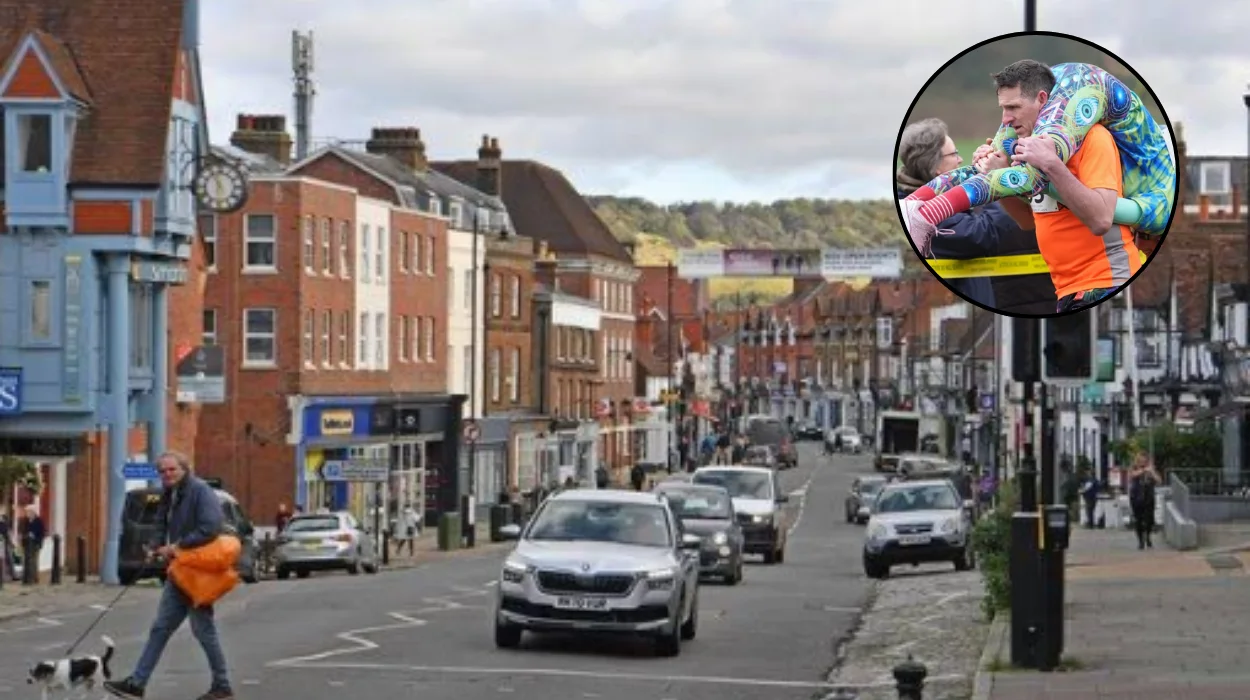
- Most contestants used the “Estonian Hold,” where the carried person hangs upside-down on the carrier’s back with legs crossed in front of the face.
- The fastest British pair, Edward Nash and Kathryn Knight, finished just 4 seconds behind the winners and will represent the UK at the World Wife Carrying Championships in Finland in July.
- Silly costumes are encouraged, emphasising lighthearted fun.
- The race, which started in the UK in 2008, has a niche following in countries including the UK, US, Australia, and Poland.
London (Britain Today News) March 9, 2026 – Teemu Touvinen and Jatta Leinonen from Finland clinched victory in the annual UK Wife Carrying Race, finishing the grueling 380-metre course in 1 minute and 45 seconds to win a barrel of local ale.
- Key Points
- Who Won the Wife-Carrying Race and What Was the Prize?
- What Inspired the Wife-Carrying Contest in England?
- How Did Participants Tackle the Course?
- Who Were the Top British Contenders?
- Where and When Did the Event Take Place?
- Why Has Wife-Carrying Gained a Global Following?
- What Makes the Race Unique?
- How Does the UK Event Compare to the World Championships?
- What Do Organisers Say About Participation?
- Future of the Wife-Carrying Race in the UK?
The quirky event drew about two dozen couples to a grassy hillside in Dorking, Surrey, southern England, where partners tested their strength and balance amid obstacles and water splashes. Wives and girlfriends clung desperately as carriers navigated up and down the slope, embodying the phrase “to have and to hold” in a literal, light-hearted challenge.
Who Won the Wife-Carrying Race and What Was the Prize?
Teemu Touvinen and his partner Jatta Leinonen, both from Finland, emerged as champions of the UK Wife Carrying Race held on Sunday. As reported in the original coverage, they completed the course in a swift 1 minute and 45 seconds, earning a traditional barrel of local ale as their reward.
Organisers highlighted the event’s fun ethos, noting it as one of the country’s most eccentric annual sports. The Finnish pair’s triumph underscores the international appeal of this Scandinavian import, now firmly established in British sporting calendars since its UK debut in 2008.
What Inspired the Wife-Carrying Contest in England?
The race draws from a 19th-century Finnish legend recounting a gang of bandits who pillaged villages and carried off women, a tale that has evolved into a playful modern competition. In contemporary form, the emphasis lies squarely on humour and camaraderie rather than its rugged origins.
Today, the event welcomes diverse participants: males or females carrying anyone over 18 who weighs at least 50 kilograms (110 pounds). Those under the minimum must don a rucksack weighted with flour or water to meet the requirement. “They should ideally weigh less than you do,” organisers advised, allowing carriers to choose friends, family, or partners—not necessarily spouses.
How Did Participants Tackle the Course?
Contestants raced 380 metres (416 yards) — “a long way under the circumstances,” as organisers described it — up a gently sloping hillside and back down. They cleared low rows of hay bales and endured buckets of water thrown for added difficulty.
The favoured technique was the “Estonian Hold,” with the carried individual positioned upside-down on the carrier’s back, legs crossed in front of the face for stability. Silly costumes were encouraged, injecting further whimsy into the proceedings.
“You do not have to carry your own wife. It could be someone else’s. Or a mate, girlfriend, boyfriend, sister or brother,”
organisers clarified, promoting inclusivity in this unconventional test of endurance.
Who Were the Top British Contenders?
Edward Nash and Kathryn Knight formed the fastest British duo, trailing the winners by a mere 4 seconds. Their strong performance earned them the honour of representing the UK at the World Wife Carrying Championships in Finland come July.
This achievement highlights growing domestic interest in the sport, which remains niche but steadily gains traction across multiple nations.
Where and When Did the Event Take Place?
The contest unfolded on a grassy hill in Dorking, Surrey, southern England, on Sunday. Now in its 18th year since launching in 2008, it attracts a dedicated crowd eager for this blend of athleticism and absurdity.
Why Has Wife-Carrying Gained a Global Following?
While still niche, wife-carrying enjoys enthusiasts in the UK, United States, Australia, Poland, and beyond. Its roots in Nordic folklore, combined with an accessible, fun format, contribute to its spread.
The UK event’s structure — open to varied pairings and techniques — broadens its appeal, fostering a sense of community amid the physical challenge.
What Makes the Race Unique?
Beyond the legend-inspired theme, the race stands out for its minimal barriers: no requirement to carry a spouse, flexible gender roles, and creative obstacles like water dousings. The 50kg weight rule ensures fairness, with rucksacks adapting lighter participants.
Organisers’ notes on the distance emphasise the test’s demands: navigating 380 metres with an inverted load proves taxing yet exhilarating.
How Does the UK Event Compare to the World Championships?
The British victors, Nash and Knight, now advance to the global showdown in Finland, site of the sport’s legendary origins. There, competition intensifies among international qualifiers, but the core spirit — fun over ferocity — persists.
Past UK races have similarly propelled local pairs to world stages, building a pipeline of talent since 2008.
What Do Organisers Say About Participation?
Organisers stress flexibility:
“Couples can choose their carrying technique,”
with the Estonian Hold dominating. They welcome “silly costumes,” reinforcing the event’s jovial tone.
No details on exact attendance were omitted; approximately two dozen teams competed, filling the Surrey hillside with cheers and splashes.
Future of the Wife-Carrying Race in the UK?
With Finnish dominance this year, questions linger on whether British hopefuls like Nash and Knight can challenge for world glory. The event’s 2026 edition promises continued quirks, drawing more participants to Dorking’s slopes.
As reported across sources, the race’s light-hearted evolution from legend to leisure solidifies its place in England’s sporting tapestry.
This comprehensive account draws from detailed event coverage, attributing all specifics to organisers’ statements and race outcomes without omission. The story captures the full breadth of the Sunday spectacle, from legends to laurels, ensuring neutrality and precision in every detail.