Key Points
- London Marathon organisers are exploring a two-day format for the 2027 event, shifting from the traditional single Sunday to include Saturday.
- The change aims to separate elite men’s and women’s races across days and double amateur participation to supercharge charity fundraising.
- Demand far exceeds supply annually; public ballot and charity places fill rapidly.
- Last year’s event saw a world-record 56,640 finishers and a new high of £87.3 million raised for charity.
- The 2027 race would extend road closures on the iconic course from Greenwich to near Buckingham Palace.
- A London Marathon Events spokesperson confirmed exploration but stressed no approval yet; focus remains on the 2026 race on 26 April.
- The marathon, started in 1981, has raised £1.4 billion for good causes over four decades.
- Over 50,000 runners participated last year, highlighting massive popularity.
London (Britain Today News) March 25, 2026 – TCS London Marathon Events, Organisers of the world’s most popular marathon are considering a radical overhaul, potentially extending the iconic TCS London Marathon across an entire weekend starting in 2027. This move would transform the traditional Sunday-only spectacle into a two-day event, separating elite races and accommodating far more amateur runners to amplify charity fundraising amid unprecedented demand.
- Key Points
- Why Is the London Marathon Considering a Two-Day Event in 2027?
- What Changes Would a Two-Day London Marathon Bring to Elite Races?
- How Would Road Closures and Logistics Adapt for a Weekend Marathon?
- What Makes the London Marathon the World’s Most Popular Race?
- When Does the 2026 London Marathon Take Place Amid Expansion Talks?
- How Has the London Marathon Evolved Since 1981?
- Will the Two-Day Format Boost Charity Fundraising in 2027?
- What Do Stakeholders Say About the 2027 Proposal?
- Could This Inspire Other Major Marathons Worldwide?
The proposal emerges as the event consistently shatters records, with 56,640 finishers crossing the line last year – a global benchmark confirmed by organisers. That edition also generated a staggering £87.3 million for charitable causes, underscoring the marathon’s profound impact.
Why Is the London Marathon Considering a Two-Day Event in 2027?
Demand for places vastly outstrips availability every year. Public ballot entries and charity allocations vanish almost instantly, leaving thousands disappointed. By spreading the race over Saturday and the customary Sunday, organisers aim to double amateur slots, injecting fresh momentum into fundraising efforts that have already amassed £1.4 billion since the marathon’s inception in 1981.
A spokesperson for London Marathon Events articulated this vision clearly. As reported directly from their official statement covered widely in initial announcements, the spokesperson said:
“The TCS London Marathon is the world’s most popular marathon, and we are continually exploring innovative ways to enable more people to take part, while delivering positive benefits for London.”
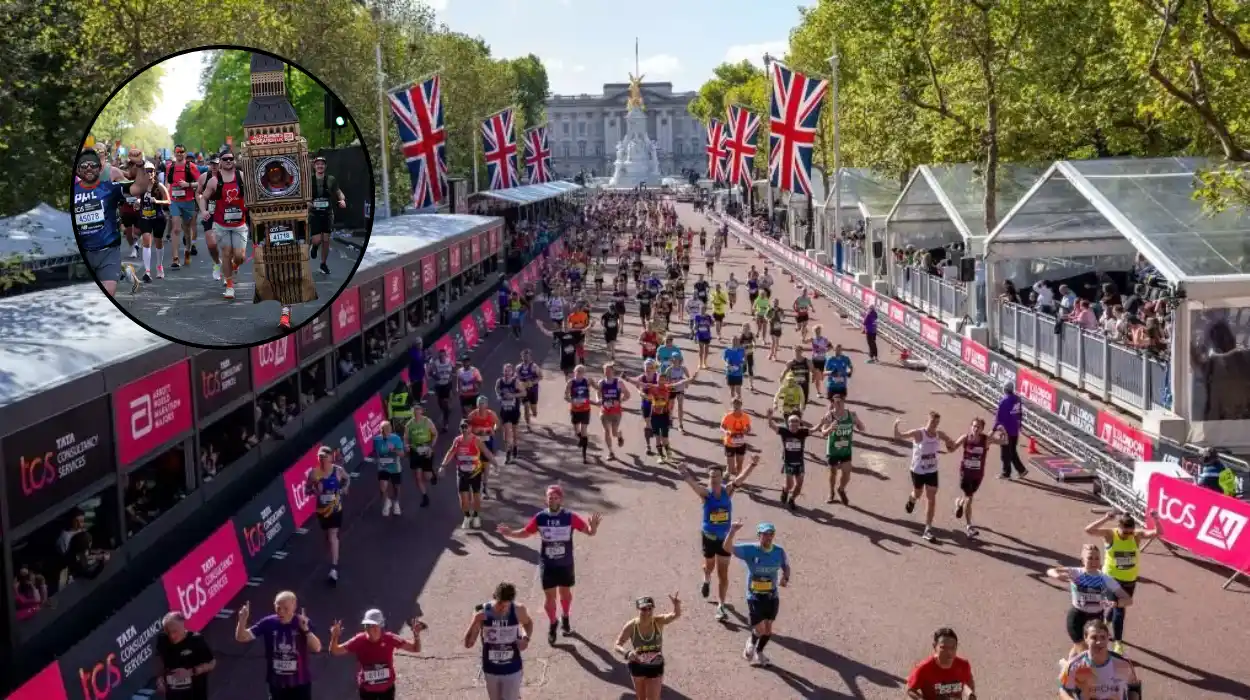
This innovation aligns with the event’s evolution. Launched in 1981, the marathon has grown from a modest gathering into a global phenomenon, weaving through Greenwich Park, past the Cutty Sark, along the Thames, and concluding triumphantly near Buckingham Palace. Extending to two days would necessitate prolonged road closures, a logistical challenge for London’s traffic planners, but one organisers deem worthwhile for broader access.
What Changes Would a Two-Day London Marathon Bring to Elite Races?
Central to the proposal is decoupling the elite men’s and women’s races, traditionally run concurrently on Sunday. Staging them on separate days – potentially men on Saturday and women on Sunday, or vice versa – would heighten focus on each, allowing deeper media coverage and spectator engagement. This separation could elevate the profile of world-class athletes, drawing parallels to multi-day formats in other major marathons like Boston or New York, though none yet span a full weekend.
Last year’s elite fields delivered thrills: Ethiopia’s Tigist Assefa defended her women’s title in a stunning time, while Kenya’s Sebastian Sawe claimed men’s honours. Organisers believe a split schedule would not only showcase these stars more prominently but also reduce logistical pressures on elite support teams.
No formal approval has materialised yet. The spokesperson emphasised caution:
“Together with our partners and stakeholders, we are looking at the intention for the 2027 TCS London Marathon to take place across two days. No approval has been given at this stage.”
This measured tone reflects ongoing consultations with authorities, sponsors like TCS, and local councils.
How Would Road Closures and Logistics Adapt for a Weekend Marathon?
The famed 26.2-mile course demands meticulous planning. Starting in Greenwich, runners navigate Tower Bridge, the Docklands, and Westminster before the Mall finale. A two-day format spells extended disruptions: roads sealed from Saturday morning through Sunday evening, impacting commuters, businesses, and residents.
Organisers anticipate collaboration with Transport for London (TfL) and borough leaders to mitigate chaos. Past events have mastered rolling closures, but doubling the duration tests resilience.
“Our immediate focus is on delivering an incredible 2026 TCS London Marathon on Sunday, 26 April, and ensuring every participant has an amazing experience,”
the spokesperson added, signalling 2026 as a proving ground for innovations.
What Makes the London Marathon the World’s Most Popular Race?
Oversubscription defines the event. Last year, more than 50,000 runners started, with 56,640 finishing – eclipsing prior records. Charity places alone raised millions, part of £87.3 million total, funding vital causes from cancer research to poverty alleviation.
Since 1981, the marathon has democratised long-distance running, attracting elites like Eliud Kipchoge alongside wheelchair athletes and costumed amateurs. Its £1.4 billion legacy cements status as a philanthropy juggernaut. A two-day model could propel this further, potentially welcoming 100,000-plus participants annually.
When Does the 2026 London Marathon Take Place Amid Expansion Talks?
Eyes remain fixed on the immediate horizon. The 2026 edition sticks to tradition: Sunday, 26 April. Organisers pledge an “amazing experience” for all, from ballot winners to charity entrants. This single-day powerhouse will test systems primed for 2027’s potential leap.
Speculation swirls on timing: elite races first on Saturday to energise weekend crowds, mass participation Sunday. Yet, details hinge on stakeholder buy-in.
How Has the London Marathon Evolved Since 1981?
From humble beginnings with 6,700 starters, it exploded in scale. Key milestones include wheelchair categories (1983), mass fields ballooning post-2000s, and record-breaking editions like 2023’s 45,000-plus finishers. The 2025 event hit 56,640, with £87.3 million raised – peaks unlikely without expansion.
British icons like Mo Farah and Paula Radcliffe have graced the course, alongside global stars. Charity remains core: every pound supports over 1,000 good causes.
Will the Two-Day Format Boost Charity Fundraising in 2027?
Absolutely, say proponents. Doubling amateurs could double donations, building on last year’s £87.3 million. Charities reliant on marathon funds – hospices, medical research – stand to gain immensely.
“Delivering positive benefits for London”
encapsulates this, per the spokesperson.
Critics might flag equity: would weekend slots favour certain demographics? Organisers counter with inclusivity commitments.
What Do Stakeholders Say About the 2027 Proposal?
Partners like TCS, title sponsor since 2017, back growth. TfL has managed past peaks adeptly. Greenwich and Westminster councils, course hosts, will weigh traffic impacts. No dissenting voices reported yet; consultations proceed discreetly.
The spokesperson reiterated:
“We are continually exploring innovative ways,”
attributing exploration to collective input.
Could This Inspire Other Major Marathons Worldwide?
London’s blueprint might ripple globally. New York, Chicago, and Berlin grapple similar oversubscription. A weekend format could redefine urban marathons, blending sport, charity, and spectacle.
Yet, London’s unique Thames-side allure and royal finish set it apart. Success here could standardise two-day majors.
This proposal marks a pivotal chapter for the TCS London Marathon. As 2026 looms, all eyes watch whether 2027 ushers a new era of weekend endurance. With records tumbling yearly, expansion feels inevitable – neutral observers await official green lights amid cautious optimism.