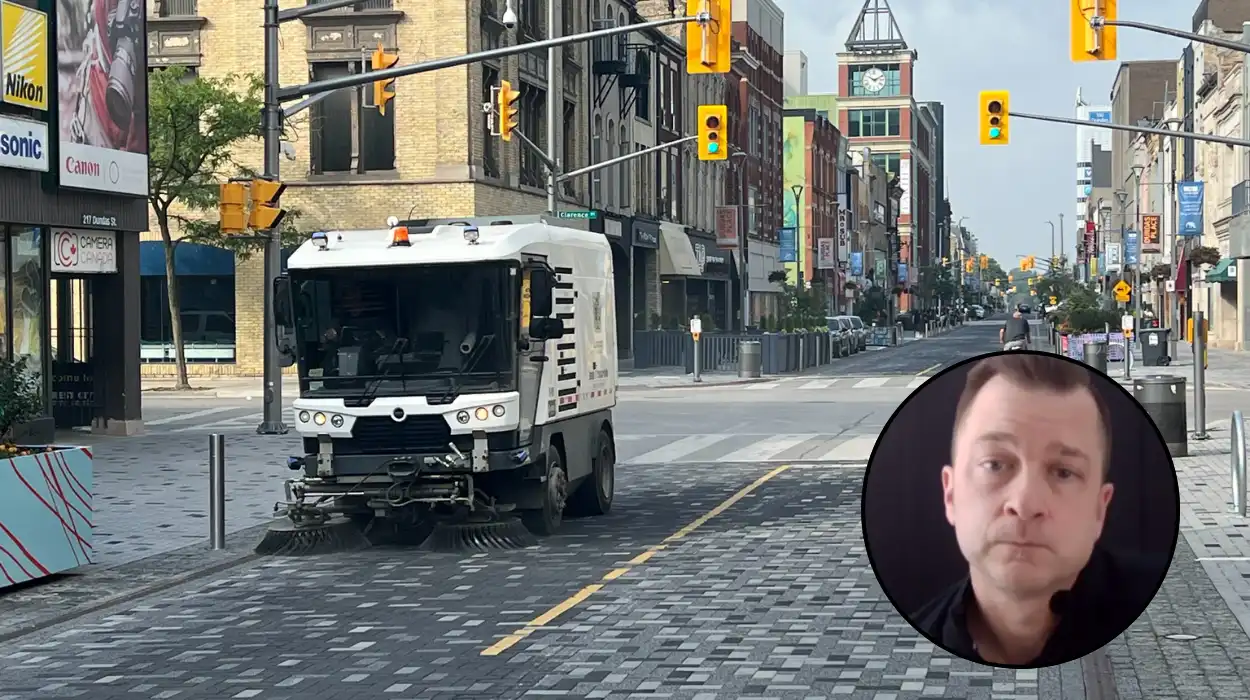
Key Points
- The City of London has launched a public vote to name one of its eight street sweepers for the first time.
- The naming contest is tied to National Public Works Week, which runs from May 17 to May 23, 2026.
- Voting is open until May 15, 2026, through the city’s website.
- The winning name will be revealed on May 23, 2026, at the Touch-A-Truck event at the Adelaide Yard.
- The 10 finalist names were gathered from community suggestions submitted online.
- Joel Gillard, the city’s division manager of road operations, said the idea was inspired by other municipalities that have named snowplows.
- Gillard said the contest is meant to be fun, family-friendly and community-building.
- The city says the naming initiative is also a way to celebrate the work of public works crews during spring clean-up.
- Public Works Week will honour teams involved in water services, wastewater infrastructure, winter roads and the urban forest team, among others.
- Similar naming contests have been run elsewhere, including Chatham-Kent’s snowplough naming initiative.
Why is London asking residents to name a street sweeper?
London (Britain Today News) May 4, 2026 — The City of London has turned one of its street sweepers into a community project, inviting residents to vote on a name as part of a new public contest linked to National Public Works Week. The idea is being framed as a light-hearted way to recognise the work of the city’s public works teams while encouraging residents to take part in a seasonal civic activity.
As reported by Joel Gillard of the City of London, the contest is intended to give the public a fun role in something that connects directly to the city’s day-to-day upkeep.
“We wanted to try something fun and different and get community involvement with a new contest,”
Gillard said, adding that it is
“something the whole family can help with”
and that children and families may enjoy knowing they helped choose the final name.
The city’s sweepers have been particularly active as spring clean-up continues across London, and officials are using that moment to spotlight the value of the crews doing the work. The voting campaign is also being presented as a way to build community interest around public services that are often noticed only when they are not doing their job well.
What names are in the running?
The city has narrowed the contest to 10 finalist names after collecting community suggestions online and selecting the most frequently submitted entries. The finalists include pun-based options designed to suit a street sweeper and keep the campaign playful for residents.
Among the names available for voting are “Obi-wan Cleanobi,” “Sweepy McSweepy-Face,” and “Sweep Caroline,” along with other community favourites highlighted by local coverage. The city has described the options as “punny,” underlining the playful tone of the campaign and the family-friendly nature of the vote.
The public vote is now open on the city’s website, and officials are encouraging residents to take part before the deadline. The final choice will depend on which name receives the strongest support from the public.
When does voting end?
Voting closes on May 15, 2026, giving residents a limited window to cast their choice online. The city has said the winner will be revealed later in the month, giving the contest a public finish that aligns with the wider National Public Works Week celebrations.
The city’s official participation page confirms that the deadline is May 15 and that the selected name will be unveiled at the Touch-A-Truck event on May 23, 2026, at the Adelaide Yard. That announcement date falls on the final day of National Public Works Week, which runs from May 17 to May 23 this year.
The timing suggests the city wants the sweeper naming to serve as a centrepiece for its public works outreach during the week. With the reveal set for a public event, officials are clearly aiming to turn the naming campaign into a visible civic moment rather than a routine administrative decision.
How did the naming idea begin?
Gillard said the city took inspiration from other municipalities that have held similar contests, especially those that have named snowploughs. The approach is not new in Canada, but it is the first time London has used a naming vote for one of its street sweepers.
He pointed to contests elsewhere as proof that the format can help create local interest and engagement. Chatham-Kent, for example, has also run naming initiatives for snowploughs, including recent names such as Billie Ice-ish, Clearopathra and Plowabunga, showing that municipal humour has become a familiar part of winter and spring maintenance campaigns.
The logic behind the London contest appears simple:
“if people are already talking about street cleaning and seasonal maintenance, they may be more willing to connect with the work when it has a memorable personality attached to it”.
That makes the sweeper both a practical machine and a symbol of civic participation.
What will Public Works Week highlight?
The naming contest is tied directly to National Public Works Week, which the city says is intended to recognise the wide range of work done by public services staff. The week will celebrate teams involved in water services, wastewater infrastructure, winter roads crews and the urban forest team, among others.
Gillard said the campaign fits well with the seasonal focus on cleaning and outdoor maintenance.
“With spring clean-up happening all around the city, this is a great way to connect all of those pieces together and celebrate what our crews are doing at this time of year to help make London shine,”
That message places the sweeper contest within a broader effort to make municipal work more visible. Instead of treating street sweeping as background labour, the city is using humour and public participation to draw attention to the people and machines that keep the city functioning.
Why does this story matter locally?
This story matters because it shows how local government can use a small, creative idea to increase public involvement in civic life. A naming vote may seem light-hearted, but it gives residents a reason to notice the everyday services that support cleanliness, safety and city presentation.
It also fits a wider trend in Canadian municipalities where public works campaigns are becoming more approachable and community-driven. By inviting residents to suggest or vote on names, the city is building goodwill while also spotlighting the hard work behind routine urban maintenance.
For families, the contest offers something accessible and low-stakes to take part in, while for the city it is a simple way to mark Public Works Week with a memorable story. The combination of community humour, seasonal clean-up and civic recognition is what gives the initiative its appeal.
Can this become a regular tradition?
The city has not said whether this will become an annual tradition, but officials have described it as the first contest of its kind for London’s sweepers. That leaves open the possibility of similar naming drives in future years if the public response is strong enough.
The structure is already in place: collect suggestions, narrow them to a shortlist, invite public voting, and unveil the winner during a public event. If residents respond positively, London may have found a simple and repeatable format for turning municipal equipment into a local talking point.
For now, the focus is on the current vote and the May 23 reveal. The city wants one street sweeper to come away with a name that is both funny and community-approved, and the public has until May 15 to make that happen.