
Key Points
- Staffordshire Police are investigating a potential breach of electoral law after an alleged early social media post about Tamworth’s local election result.
- A since-deleted Facebook post on the Wilnecote Reform – Stonydelph/Quarry Hill/Hockley page reportedly claimed Reform UK had won all nine seats before the result was formally declared.
- The allegation relates to the Tamworth Borough Council election, where voting took place in nine wards on Thursday.
- The council’s returning officer, Stephen Gabriel, said the result had been posted before it was officially confirmed or announced.
- Mr Gabriel said section 66 of the Representation of the People Act 1983 sets out secrecy requirements during the count.
- He said the council took immediate action, asked for the post to be removed, and reminded the individuals involved about the secrecy rules.
- The council has reported the matter to the single point of contact at Staffordshire Police.
- Staffordshire Police said it was aware of reports involving the “early publishing of information” linked to the election results in Tamworth.
- The force said it was working with Tamworth Borough Council and the Electoral Commission.
- Reform UK has been approached for comment.
- The election saw Labour lose its majority on the council, leaving Tamworth under no overall control.
What happened in Tamworth?
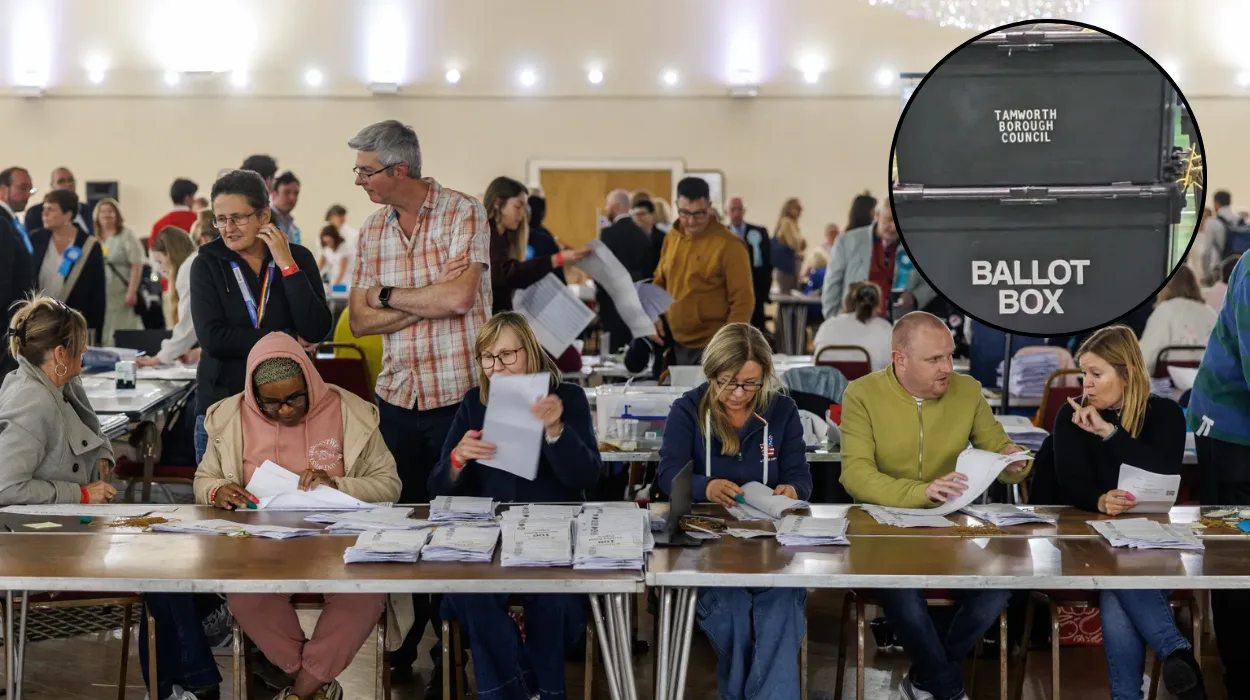
Tamworth (Britain Today News) May 12, 2026 — Police are investigating whether electoral law was breached after a Reform UK social media page allegedly published the result of Tamworth’s local election before it was formally declared. The row centres on a since-deleted post on the Wilnecote Reform – Stonydelph/Quarry Hill/Hockley Facebook page, which reportedly said the party had won all nine seats in the Tamworth Borough Council election ahead of the official announcement.
The allegation has drawn attention because election counts are tightly regulated, and premature publication of results can raise questions about secrecy, fairness and procedure. Tamworth Borough Council said the matter was serious enough to be reported to police, while Staffordshire Police confirmed it was aware of reports involving the “early publishing of information” relating to the result.
Why is police investigating?
The issue is being treated as a possible breach of electoral law rather than a routine social media mistake. According to returning officer Stephen Gabriel, the post appeared before the result had been officially confirmed or announced, which is why the council moved quickly to respond.
Mr Gabriel said section 66 of the Representation of the People Act 1983 sets out secrecy requirements during the count, and that a fine or prison sentence of up to six months could be ordered if someone is found guilty of an offence. That detail is central to the police review because the law is designed to protect the integrity of the count process and prevent unauthorised disclosure of results before the proper declaration.
What did the council say?
Mr Gabriel said council staff took “immediate action” after becoming aware of the post. He said the current Reform councillor was called forward to discuss the matter, asked to remove the post, and reminded of the secrecy requirements during the count.
He also described the issue as “very serious” and said the council would report it to the single point of contact at Staffordshire Police. That response suggests the local authority wanted to ensure the issue was handled formally rather than informally, especially given the sensitivity around election timing and public disclosure.
What did police say?
Staffordshire Police said it was aware of reports involving the “early publishing of information” linked to election results in Tamworth. The force added that it was working with Tamworth Borough Council and the Electoral Commission, indicating that the case is being reviewed through the standard electoral-compliance channels.
At this stage, police have not publicly confirmed any arrests, charges or disciplinary action. The statement points to an active inquiry, but not yet to a conclusion, which means the allegation remains under investigation.
How did the election go?
The election in Tamworth covered nine wards and took place on Thursday. Labour lost its majority on the council, and the authority moved into no overall control, meaning no single party now holds clear working control of the chamber.
That broader political shift matters because it gives the election result wider significance than the alleged social media post alone. A change in control or the loss of a majority can affect how the council is run, how decisions are negotiated, and how power is shared between groups after the vote.
What law is involved?
Section 66 of the Representation of the People Act 1983 is the key legal provision mentioned by the returning officer. It deals with secrecy requirements during the count, and in this case it is being cited as the basis for concern about publishing an outcome before the formal declaration.
The law exists to preserve confidence in the electoral process by making sure results are announced properly and in the correct order. When that process is interrupted by an early leak or post, even on a local social media page, it can trigger scrutiny from election officials and police.
Who are the main figures?
Stephen Gabriel, the borough council’s returning officer, is the main official speaking publicly about the incident. He confirmed the council had been made aware of the post and said it had been removed after direct action was taken.
Staffordshire Police are the other key authority involved, alongside Tamworth Borough Council and the Electoral Commission. Reform UK has been approached for response, but no statement from the party is included in the report currently available.
Why does this matter?
Election counts depend on trust, timing and transparency, so even a post that appears on a small local page can become a serious issue if it is published before an official declaration. The concern is not only whether the result was accurate, but whether it was shared in a way that could undermine the count process.
The case also highlights how quickly social media can complicate electoral procedures. A deleted post may disappear from public view, but it can still leave behind questions about who published it, when it was shared, and whether the rules were followed.
What happens next?
The immediate next step is for police and electoral authorities to review what happened and decide whether further action is needed. If investigators conclude that an offence may have been committed, the matter could move beyond an internal council concern into a formal legal process.
For now, the official position is that the incident is under investigation and no final finding has been announced. The focus remains on whether the early publication breached electoral secrecy rules and whether anyone is liable under the law.