Key Points
- John Swinney will demand immediate talks with Downing Street on a second independence referendum if the SNP wins a Holyrood majority.
- He said the talks should begin within days of a fresh five-year term for the party, arguing Scotland’s democratic will must be recognised.
- Swinney said he would bring a Section 30 motion to the Scottish Parliament on the first sitting day of the next term.
- He also said a draft referendum Bill would be published within the first 100 days of the parliamentary term.
- The SNP leader said government could pursue independence policy at the same time as action on the cost of living.
- He argued that a strong Reform UK showing could threaten the “survival” of the Scottish Parliament, and said he would work with Labour to isolate Nigel Farage’s party.
- Unionist politicians hit back, saying independence was not a priority compared with health, schools, jobs and public services.
- Stephen Flynn said Westminster was facing a “constitutional shock” after the Scottish and Welsh elections.
- Swinney also pointed to the need for a constitutional convention and the devolution of more powers, including energy.
What is Swinney demanding?
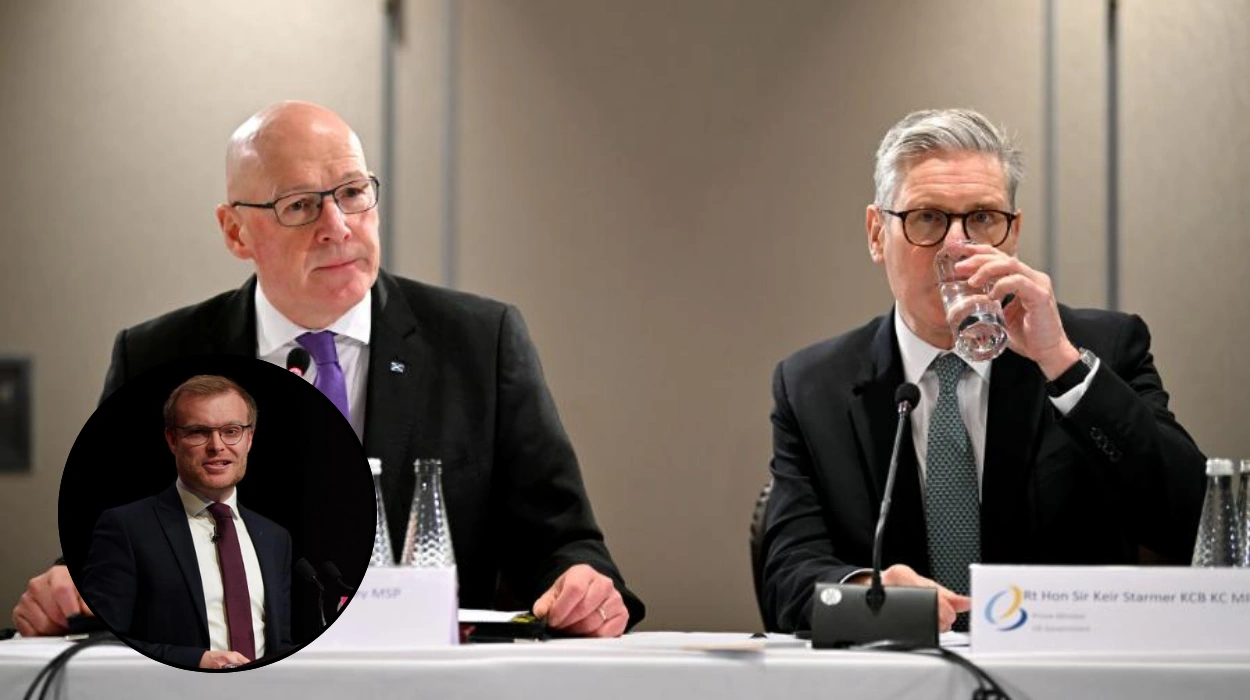
GLASGOW (Britain Today News) – May 4, 2026, John Swinney is set to demand immediate talks with Number 10 on a second independence referendum if the SNP secures a majority at the next Holyrood election.The First Minister said he wanted a summit with the UK Government within days of the party securing another five-year term, insisting that Scotland’s democratic wishes must be acknowledged.
Swinney’s remarks place independence at the centre of the SNP’s election pitch. He said the next government should not wait before opening talks with Downing Street, and he framed a majority as a direct mandate for a fresh push on the issue. The message is intended to tell pro-independence voters that an SNP victory would trigger immediate action rather than a period of hesitation.
Why now?
The intervention comes as the SNP seeks to turn the Holyrood election into a clear statement on Scotland’s constitutional future. Several polls have suggested the party could win a majority, although some still point to a result short of the 65 seats needed for one. Swinney has repeatedly argued that a majority would provide the political basis to seek another referendum.
He also insists that independence policy can run alongside day-to-day government responsibilities. In his view, a government can act on living costs, public services and constitutional change at the same time. That line is designed to counter criticism that the SNP is focusing too heavily on the constitution.
What would happen first?
Swinney has already said the first sitting day of the next Scottish Parliament would see a vote to begin the Section 30 process. That route would seek the transfer of powers from Westminster to Holyrood so that a legally recognised referendum could be held. He has also said the SNP would publish a draft referendum Bill within the first 100 days.
The SNP’s longer-term plan also includes a constitutional convention and a push for more powers to be devolved, including energy policy. Those measures are intended to show that the party is not relying on a single gesture, but on a wider constitutional strategy. In practical terms, the party is setting out both the immediate procedural step and the broader political case for another vote.
How did Labour react?
Labour figures have made clear they would not permit a second independence referendum, even if the SNP wins a majority. That stance creates the central clash in the story:
“Swinney is promising talks, while Labour is signalling a refusal to open the door”.
Senior Labour voices have argued that the issue should not be revisited, and they have framed the SNP’s emphasis as a distraction from public services.
The political argument is likely to harden as polling day approaches. Swinney is betting that independence supporters want a government prepared to act quickly, while Labour will argue that Scotland needs a focus on practical delivery rather than another referendum battle. That divide is now one of the defining features of the campaign.
What did critics say?
Unionist politicians reacted sharply to Swinney’s comments on social media. Energy Minister Michael Shanks said
“independence was being placed ahead of urgent domestic priorities such as NHS waiting lists, housing for children in temporary accommodation, classroom violence and the attainment gap”.
He said the SNP did not deserve another five years in power.
Murdo Fraser, the Scottish Tory candidate for Perthshire North, also said the SNP’s number one priority was independence rather than jobs, wages, schools, the NHS, police, roads, ferries or women’s rights. Those criticisms are aimed at portraying the SNP as a party more focused on constitutional argument than everyday governance. Swinney’s team, by contrast, is trying to present independence as a democratic issue that can be advanced alongside other concerns.
What is Stephen Flynn saying?
SNP Westminster leader Stephen Flynn has added to the pressure by saying Westminster is heading for a “constitutional shock” after the Scottish and Welsh elections. He suggested that the UK Government would eventually have to allow a referendum to take place. Flynn also joked that Keir Starmer would not even be in office to refuse it, reflecting the SNP’s confidence that the political landscape could change quickly.
Flynn’s intervention matters because it broadens the party’s message beyond Swinney’s direct comments. It suggests the SNP is trying to create momentum across both Holyrood and Westminster ahead of the election. The party is also trying to link the Scottish contest with developments in Wales, where Plaid Cymru is being tipped for power and has promised to seek more constitutional powers.
What does this mean for the election?
The SNP is making independence the centrepiece of its pitch, and Swinney is telling voters that a majority would trigger immediate action. That gives the party a clear dividing line with Labour and the Conservatives, who want the campaign to focus more on public services and the cost of living. It also raises the stakes for voters who support independence but may be uneasy about another referendum fight.
At the same time, Swinney is trying to reassure voters that domestic government will not be neglected. He has said that work on living costs, public services and constitutional change can proceed together, and that the next administration should move quickly on all fronts. Whether that message persuades undecided voters will be one of the key questions of the campaign.