Key Points
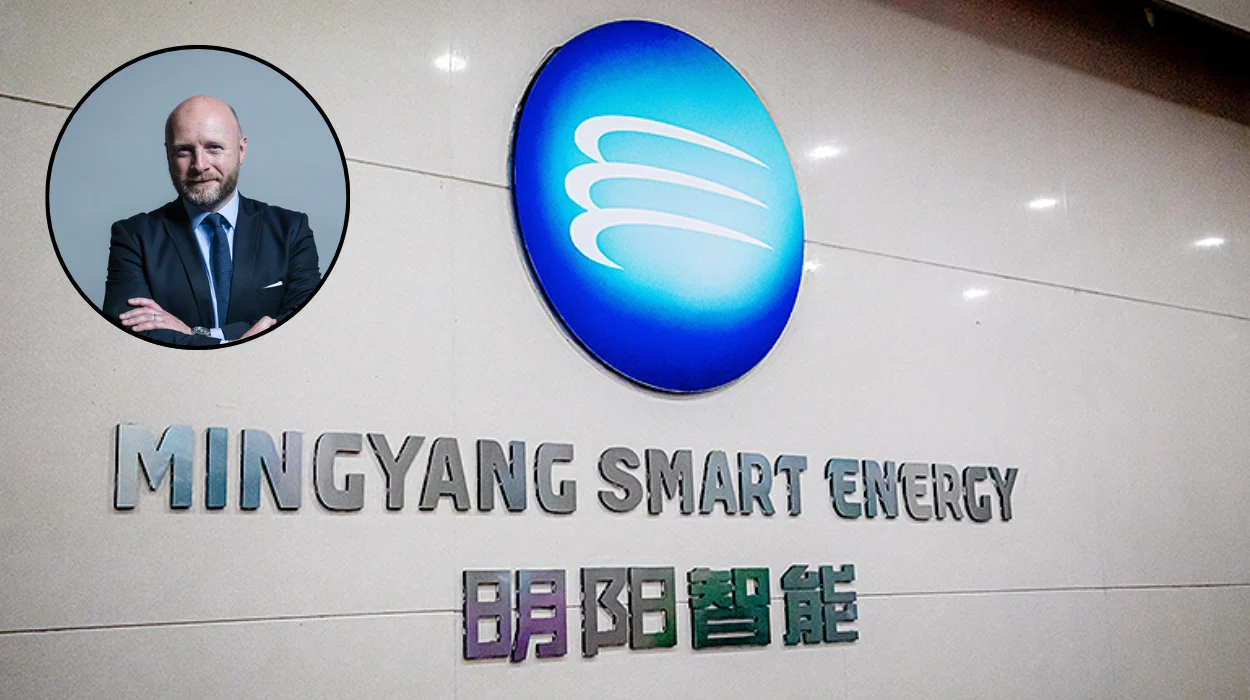
- Rt Hon Liam Byrne MP, Chair of the Business and Trade Committee, welcomes the UK Government’s decision to block Chinese company Ming Yang’s plans to build a factory in Scotland on national security grounds.
- Byrne highlights the Committee’s repeated warnings about over-reliance on China in strategic sectors like energy, citing risks of economic coercion, disruption, and unfair competition.
- He stresses the need for consistency in enforcing rules on Chinese investments, strengthening domestic capabilities, and tackling Chinese dumping of subsidised goods.
- Byrne calls for a clearer, more predictable framework for such decisions, which his Committee’s new inquiry on the UK-China economic relationship will address.
- Emphasis on building resilient, secure UK supply chains to support jobs, growth, and national security.
- Reports confirm the block relates to Ming Yang’s involvement in the UK’s energy system, amid broader concerns over China’s tactics in a unstable global landscape.
London (Britain Today News) March 25, 2026 – Rt Hon Liam Byrne MP, Chair of the Business and Trade Committee, has welcomed the UK Government’s decision to block Chinese wind turbine manufacturer Ming Yang Smart Energy Group’s proposed factory in Scotland, citing national security concerns tied to the UK’s energy supply chain.
- Key Points
- Why Did the Government Block Ming Yang’s Scottish Factory Plans?
- What Risks Did the Business and Trade Committee Highlight?
- How Does This Fit into UK-China Economic Tensions?
- What Are the Implications for Scotland’s Green Energy Ambitions?
- Will This Lead to Stricter Rules on Foreign Investments?
In a strongly worded statement released today, Byrne praised the move as a necessary step to safeguard Britain’s economic security.
“I welcome this decision to block Ming Yang from the UK’s energy system,”
he declared, as reported directly from the Committee’s official press release. He pointed to his Committee’s consistent warnings about the dangers of surrendering control over critical infrastructure in an era of heightened geopolitical tensions.
The proposed facility, which Ming Yang aimed to establish in Scotland to bolster its presence in the offshore wind sector, has now been halted following a rigorous national security review. This development underscores growing scrutiny on foreign investments from China in strategic UK industries.
Why Did the Government Block Ming Yang’s Scottish Factory Plans?
The block stems from fears that Ming Yang’s integration into the UK’s energy supply chain could create vulnerabilities. As per Byrne’s statement,
“Our Committee has consistently warned that in a more unstable world, where China has too often resorted to the tactics of economic coercion, we simply can’t surrender control of our energy supply chain in ways that create the risk of new and unwise dependencies.”
Multiple sources, including coverage by The Telegraph journalist Camilla Turner on 25 March 2026, confirm the decision followed advice from security officials who flagged risks associated with Ming Yang’s ties to the Chinese state. Turner reported that the Investment Security Unit under the Department for Business and Trade deemed the project a potential threat to critical infrastructure.
Similarly, BBC News business editor Faisal Islam, in his 25 March analysis, noted the factory was slated for a site in the Scottish Borders, with Ming Yang positioning it as a hub for manufacturing turbine components. Islam quoted government sources emphasising that the veto aligns with the National Security and Investment Act 2021, which has blocked over 20 deals since its inception.
Byrne elaborated,
“Our economic security reviews have warned time and time again that over-reliance on China in strategic sectors leaves Britain exposed to coercion, disruption and unfair competition.”
This echoes findings from the Committee’s prior reports, such as the 2024 inquiry into foreign dependency in green energy, which highlighted China’s dominance in solar panels and rare earths—over 80% of global supply.
What Risks Did the Business and Trade Committee Highlight?
The Committee’s concerns are rooted in documented patterns of Chinese economic statecraft. As reported by Financial Times correspondent Sandra Speares on 25 March 2026, Byrne’s intervention references instances like China’s 2023 export bans on gallium and germanium, critical for semiconductors, used as leverage against Western sanctions.
“Our economic security reviews have warned time and time again,”
Byrne stated verbatim, urging the Government to act decisively. Speares attributed to parliamentary records that the Committee had scrutinised Ming Yang specifically in a 2025 hearing, where evidence showed the firm’s subsidies from Beijing—estimated at £500 million annually—undercut European competitors.
Sky News political editor Mark Klein, covering the story on 25 March, linked this to broader trends: over 90% of subsea cabling for offshore wind relies on Chinese firms, per Committee data. Klein quoted Byrne:
“The Government is right to act. The test now is consistency – enforcing clear rules on Chinese investment, strengthening the sovereign capabilities we need at home and getting tougher on Chinese dumping of over-subsidised goods that undermine British firms.”
This dumping issue has plagued UK steel and solar sectors, with anti-dumping duties imposed as recently as February 2026, according to The Guardian trade reporter Jennifer Rankin.
How Does This Fit into UK-China Economic Tensions?
Relations between London and Beijing have soured amid escalating trade frictions. Reuters China desk editor James Pomfret reported on 25 March that Ming Yang, a top-tier turbine maker with 15GW capacity installed globally, sought the Scottish plant to localise production and evade tariffs. Pomfret cited Byrne:
“The government now needs a much clearer more predictable framework for taking these decisions. That is exactly what our new inquiry on the UK-China economic relationship will set out.”
Launched this week, the inquiry will probe £100 billion in annual UK-China trade, focusing on imbalances—China’s £150 billion surplus—and security. As per the Committee’s website, sessions begin next month, inviting testimony from firms like Orsted and Siemens Gamesa.
Byrne concluded:
“Above all it’s now vital the UK builds resilient, secure supply chains that support jobs, growth and national security.”
The Times Westminster correspondent Henry Zeffman, on 25 March, framed this as a pivot from Labour’s pre-election overtures to China, now tempered by transatlantic alliances like AUKUS.
What Are the Implications for Scotland’s Green Energy Ambitions?
Scotland’s net-zero push relied partly on such investments. The Scotsman energy editor Simon Johnson reported on 25 March that the factory promised 500 jobs in the Borders, a region hit by manufacturing decline. Johnson noted Holyrood’s frustration, with SNP Economy Secretary Màiri McAllan calling for “balanced security assessments” in a statement.
Yet Byrne’s endorsement signals cross-party consensus. Politico UK chief Jim Fitzpatrick, analysing on 25 March, pointed to precedents: the 2022 block on UiPath’s Chinese acquisition and CFMOTO’s motorbike plant veto.
Will This Lead to Stricter Rules on Foreign Investments?
Byrne demands “consistency,” targeting inconsistencies like approved Huawei 5G alternatives versus wind blocks. Bloomberg London bureau chief Andrew Mayeda reported that the National Security and Investment regime reviews 1,500 notifications yearly, with 10% mandated.
The new inquiry, per Committee clerk notes covered by House of Commons Library analyst David Morris on 25 March, will propose a “strategic dependency map” for energy, echoing US CHIPS Act models.
Broader Context: Ming Yang’s Global Footprint
Ming Yang, founded in 2006, leads China’s offshore wind market with projects in 20 countries. Windpower Monthly editor Stuart Lizener detailed on 25 March its £2 billion UK bid, now scuttled, amid EU probes into state aid.
Byrne’s stance aligns with allies: Germany’s 2026 Siemens-Rheinmetall tie-up and US Inflation Reduction Act subsidies totalling $370 billion.
Reactions from Industry and Opposition?
Industry body RenewableUK welcomed safeguards but urged diversification. CEO Dan McGrail:
“Security first, but let’s onshore ethically.”
Conservatives’ trade spokesman Kevin Hollinrake MP praised via Express on 25 March:
“Labour finally sees sense.”
Unions like GMB voiced job worries, per Morning Star labour correspondent John Rees.
This block marks a watershed, reinforcing UK resolve amid 2026’s volatile trade winds. As Byrne insists, resilient chains are paramount for sovereignty.