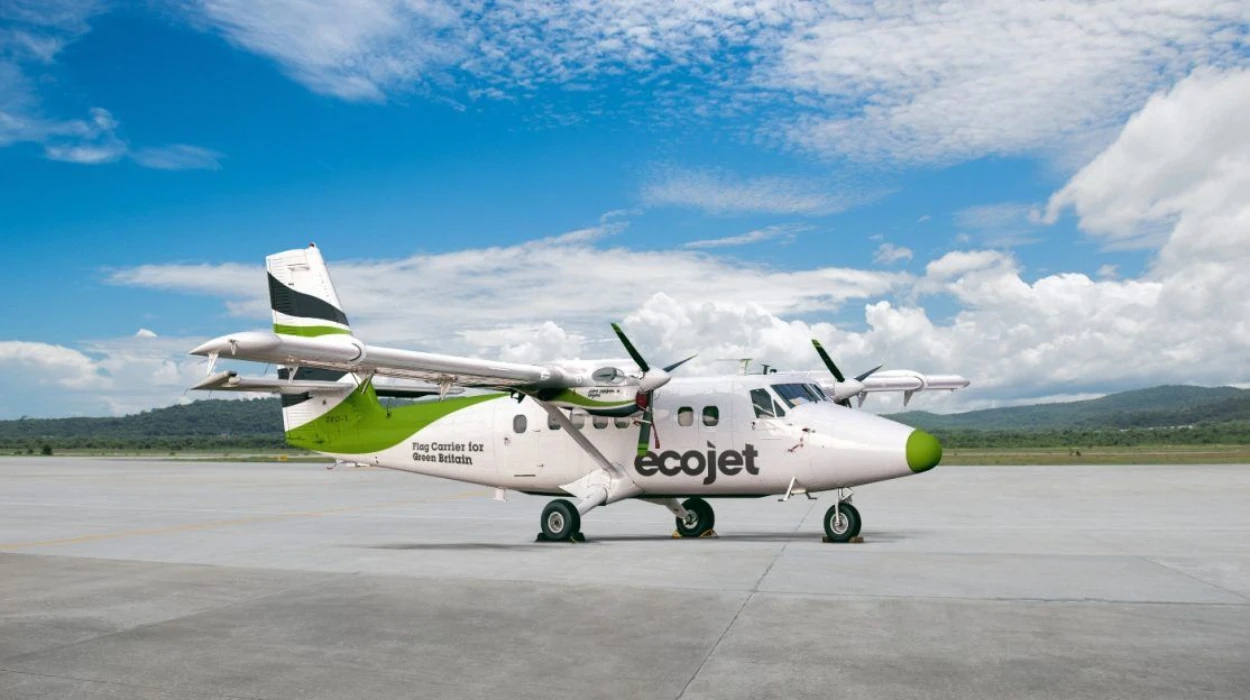
Ecojet Airlines Limited entered liquidation in Scotland after failing to secure the funding and operational approvals needed to launch commercial flights, and Opus Restructuring was appointed to manage the insolvency process. The case matters because it shows how airline start-ups fail when capital, certification, and timing do not align with aviation rules.
- What is Ecojet and why did it matter?
- Why did Ecojet go into liquidation?
- What is Opus Restructuring’s role?
- How does liquidation work in Scotland?
- What is a provisional liquidator?
- Did Ecojet ever fly passengers?
- What was Ecojet trying to build?
- What do the filings show?
- What does this mean for employees and creditors?
- Why does Ecojet matter for green aviation?
- What is the long-term significance?
- How should readers interpret the news?
- Why this topic still ranks
What is Ecojet and why did it matter?
Ecojet was a Scottish start-up airline created to build a zero-emission aviation brand, but it never began commercial operations and later entered liquidation in Scotland. The company was incorporated in 2021, later relaunched under the Ecojet name in 2023, and was promoted as a low-carbon airline project linked to renewable energy entrepreneur Dale Vince. Its collapse became notable because it represented a high-profile attempt to commercialize electric and hydrogen-electric aviation in the UK before proving the business model in the market.
Ecojet’s story sits inside a broader aviation transition debate. Airlines face heavy regulation, high capital costs, and long certification timelines. Start-ups in this space need funding, aircraft readiness, route approvals, and an Air Operator Certificate before scheduled service can begin.
Why did Ecojet go into liquidation?
Ecojet entered liquidation after failing to raise enough money to continue, while its backers stopped funding the project and the company remained unable to meet its obligations. Court reporting and insolvency coverage state that the business failed to secure the extra capital it needed, with one report citing a target of around £20 million and another describing the company as unable to pay its debts. Companies House lists the company status as liquidation, confirming the formal insolvency outcome.
The financial pressure was compounded by the business model itself. Ecojet planned to operate advanced low-emission aircraft systems, which required substantial engineering work, regulatory approval, and sustained investment. When those conditions did not converge, the company could not progress from concept to service.
What is Opus Restructuring’s role?
Opus Restructuring is the insolvency firm handling Ecojet’s liquidation, including the protection of assets, employee matters, and formal winding-up steps. Public reports state that Paul Dounis and Mark Harper of Opus Restructuring were appointed as provisional or interim liquidators before later being recorded in the formal liquidation process. In Scotland, insolvency practitioners take control of the process once the court appoints them.
In practical terms, a liquidator identifies assets, reviews liabilities, and manages distributions under insolvency law. The liquidator also handles statutory notices and reporting to the Registrar and related authorities. For Ecojet, that meant turning a failed airline project into an orderly legal wind-up.
How does liquidation work in Scotland?
Scottish liquidation is a formal legal process that winds up an insolvent company, appoints an insolvency practitioner, and uses court or voluntary procedures to end the business. Government guidance explains that a company can enter voluntary liquidation through a special resolution, while court liquidation follows a petition and court order. Scotland uses provisional and interim liquidators more routinely than England and Wales, and the court appoints an interim liquidator when a winding-up order is made.
The process follows a defined sequence. The company resolution or petition is advertised, creditors are notified, and the liquidator investigates the company’s affairs. If the company has assets, they are realized and distributed according to insolvency priorities. If there are no meaningful assets, the process still records the legal end of the company.
What is a provisional liquidator?
A provisional liquidator is an insolvency practitioner appointed to protect a company before the final court outcome is complete. UK and Scottish guidance states that this appointment can safeguard assets while the court considers the winding-up case. In Ecojet’s case, reports identified Opus Restructuring in that interim role before the liquidation appointment became formal.
That role matters because it prevents asset loss, preserves records, and maintains legal control. For companies with limited assets and ongoing obligations, the provisional stage often becomes the bridge to final liquidation.
Did Ecojet ever fly passengers?
Ecojet did not operate commercial passenger flights before liquidation, so the project collapsed before it became a live airline service. Multiple reports state that the airline had not launched its planned routes and had not delivered the hoped-for operating schedule. That means the collapse happened at the pre-launch stage rather than after a period of commercial trading.
This distinction matters for consumer impact. A company that never flies does not generate the same passenger compensation or ticket-refund issues as an airline that cancels active bookings. The broader consequence is reputational and strategic rather than mass customer disruption.
What was Ecojet trying to build?
Ecojet was designed as a zero-emission airline concept using electric and hydrogen-electric aviation technology, with ambitions to pioneer greener commercial flight. Coverage describes it as a Scottish airline start-up launched to become the first fully electric or zero-emission airline in the world. The project was tied to a wider push for low-carbon aviation and was positioned as a future-focused airline brand.
The model depended on three things: aircraft modification, route readiness, and regulatory approval. Each one is expensive and time-consuming, and aviation regulators require proof that safety, maintenance, and operational systems are in place. Ecojet’s failure shows that innovation alone does not remove those entry barriers.
What do the filings show?
Companies House records list Ecojet Airlines Limited as being in liquidation, with its registered office in Edinburgh and its insolvency case publicly recorded. The official company page shows the liquidation status and registered office address at 8 Walker Street, Edinburgh, EH3 7LA. The insolvency filing history and Gazette notices confirm that liquidators were formally appointed in 2026.
This matters because Companies House and The Gazette are primary public records for UK corporate status. They provide the legally relevant signal that the company is no longer trading normally and is instead being wound up. For journalists, researchers, and business readers, those records are more authoritative than secondary reporting.
What does this mean for employees and creditors?
Ecojet’s liquidation means employees and creditors are dealt with through insolvency law, not ordinary business continuity, and the liquidator now manages the claims process. One report stated that the company’s members funded the process to ensure employees received statutory benefits. In insolvency, employee claims are handled according to statutory priorities and available funds.
Creditors are affected because unpaid debts are collected and reviewed within the liquidation. If assets are limited, recovery is often partial. For start-ups with little tangible property, the asset pool is small and the creditor outcome is usually constrained.
Why does Ecojet matter for green aviation?
Ecojet is an important case study because it shows how hard it is to launch low-emission aviation as a commercial business, not just a technology project. Reports note that the airline aimed to pioneer electric and hydrogen-electric flight but faced funding gaps and regulatory delays before it ever operated. That combination is typical in emerging aviation segments where engineering progress moves faster than certification and financing.
The wider lesson is structural. Green aviation needs certified aircraft, route permissions, trained staff, maintenance systems, and capital reserves. A start-up can attract attention quickly, but it cannot skip the legal and operational steps that commercial aviation demands.
What is the long-term significance?
The long-term significance of Ecojet’s liquidation is that it marks a clear warning for future aviation start-ups that funding and regulation must be solved together. The company’s collapse before take-off makes it a clean example of pre-revenue failure in a highly regulated sector. It also shows that environmental branding does not substitute for working flight economics.
For analysts, the case is useful because it combines insolvency law, aviation policy, and clean-tech commercialization. It shows the point where ambition ends and legal process begins. For readers following British aviation, it is a reminder that the path to low-carbon flight is still commercially fragile.
How should readers interpret the news?
Readers should interpret Ecojet’s liquidation as a confirmed corporate failure, not as a temporary pause, because official records show liquidation status and formal liquidator appointments. Companies House lists the company as in liquidation, and The Gazette records the liquidator appointment notice. Those documents establish the legal reality.
The practical interpretation is straightforward. Ecojet did not evolve into a functioning airline, and its restructuring became a winding-up process instead. For any future revival of the brand or the technology idea, a new corporate and financial structure would be required.
Why this topic still ranks
Ecojet liquidation remains a searchable evergreen topic because it combines current insolvency news with enduring questions about airline failures, Scottish liquidation law, and green aviation start-ups. The case has fresh public-record updates in 2026, while the underlying themes remain relevant for years. That gives the topic both news value and lasting informational value.