Key Points
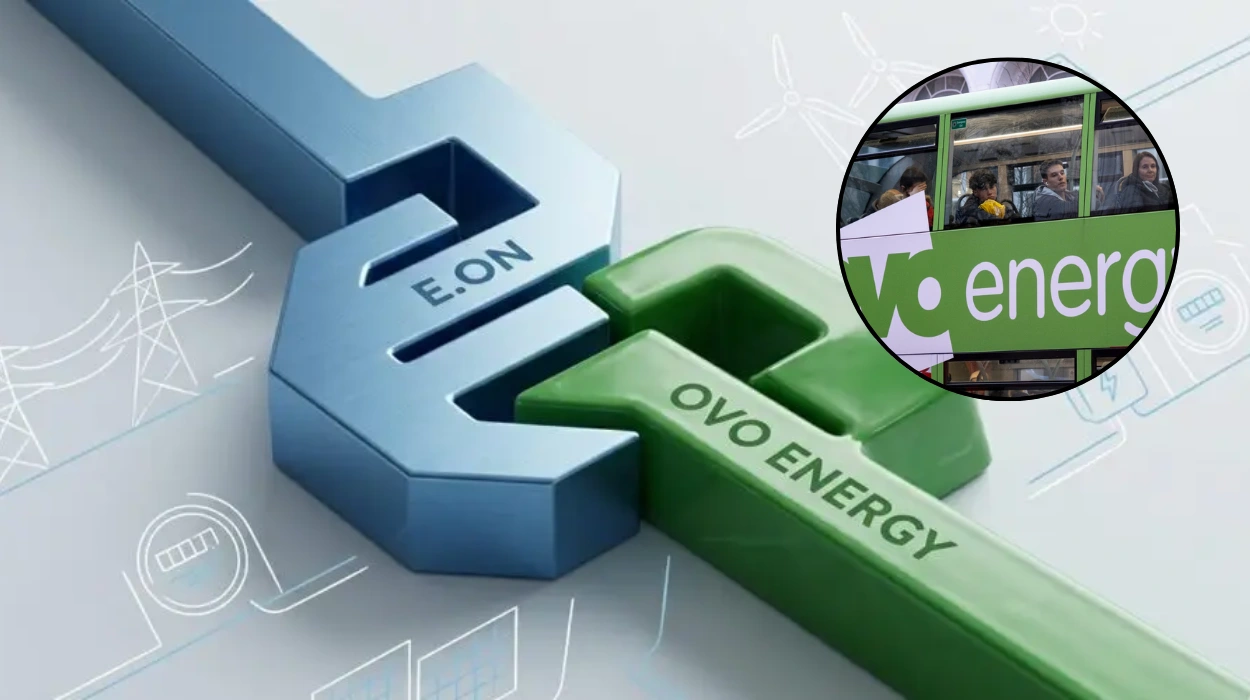
- OVO Energy, a major British supplier, is in advanced sales talks with German rival E.ON for a potential takeover within weeks.
- The merger would create the UK’s largest household energy supplier by customer numbers, with around 9.7 million accounts, surpassing Octopus Energy.
- OVO, founded by billionaire Stephen Fitzpatrick in 2009, acquired SSE’s retail business for £400m in 2020 but reported a £135m net loss in 2024.
- Financial woes include a “material uncertainty” over future viability due to failing Ofgem’s financial resilience targets and £17m in fines over the past decade, including £2.7m this year for delayed government support payments.
- OVO has struggled to secure cash injections or sell its retail business; CEO David Buttress stepped down last year, and hundreds of jobs were cut to reduce costs.
- Fitzpatrick’s bid to regain control with a £200m injection failed to win shareholder support.
- Combined, E.ON (5.7m customers) and OVO (4m customers) would lead in domestic electricity (28% market share) but rank third in gas (23%).
- Analyst Ashley Kelty of Panmure Liberum calls it the biggest deal in a generation.
- Deal occurs amid looming £280 energy bill surge due to Iran war; Ofgem price cap expected to rise 18% in July to £1,929 annually.
- Previous interest from EDF Energy and Telecom Plus, but EDF has stepped back; potential customer losses warned by Martin Young of Aquaicity due to integration fears.
- Unclear if OVO brand will survive post-deal.
London (Britain Today News) April 25, 2026 – OVO Energy, one of Britain’s leading energy suppliers, stands on the verge of acquisition by German powerhouse E.ON amid escalating financial pressures that have cast doubt over its survival.
- Key Points
- Why Is E.ON Poised to Acquire OVO Energy?
- What Financial Troubles Plagued OVO Energy Recently?
- Who Expressed Interest in Buying OVO Before E.ON?
- How Might This Merger Impact UK Energy Customers?
- What Does This Mean for Britain’s Big Six Suppliers?
- Broader Implications for UK Energy Sector in 2026
The potential deal, accelerating in recent weeks, could reshape the UK’s energy landscape by merging two of the Big Six providers into the nation’s largest household supplier by customer base. Sources close to the negotiations indicate a formal agreement might materialise within weeks, though nothing is guaranteed.
Founded in 2009 by billionaire entrepreneur Stephen Fitzpatrick, OVO shot to prominence in 2020 by snapping up SSE’s retail arm for £400m. This propelled it into the elite tier of suppliers. Yet, persistent troubles have eroded its position. In 2024, the company posted a stark £135m net loss. Last year, it flagged a “material uncertainty” over its ongoing concerns, stemming from struggles to meet financial resilience benchmarks imposed by regulator Ofgem.
Regulatory penalties have compounded the woes, totalling £17m over the past decade. This year alone, Ofgem levied a £2.7m fine for OVO’s sluggish rollout of government support payments to vulnerable customers. Efforts to stabilise the firm have included slashing hundreds of jobs and the abrupt exit of chief executive David Buttress last year, all in a bid to trim costs and inject vital cash.
Why Is E.ON Poised to Acquire OVO Energy?
As detailed in reporting by The Telegraph’s business team, the talks have gained momentum as OVO desperately seeks a lifeline, either through fresh capital or a retail business sale. A merger with E.ON promises scale unmatched in the sector. The combined entity would boast approximately 9.7 million customer accounts, eclipsing Octopus Energy’s more than eight million and claiming the top spot for household supply.
E.ON brings 5.7 million customers to the table, complementing OVO’s four million. In domestic electricity, the duo would command 28% of the market, cementing dominance. Domestic gas would see them at 23%, trailing Octopus (27%) and British Gas (25%). Ashley Kelty, analyst at Panmure Liberum, hailed the prospect in The Telegraph coverage:
“It would be the biggest deal in at least a generation. There hasn’t been consolidation on that scale for a long time.”
Such synergies could yield hefty cost savings for the enlarged group. However, Kelty cautioned that slim profit margins mean households are unlikely to enjoy lower bills from these efficiencies. The timing is grim, coinciding with forecasts of a £280 hike in typical annual energy costs, pushing the Ofgem price cap from £1,641 to £1,929—a 18% jump set for July, driven by the Iran conflict inflating oil and gas prices. Ofgem will confirm the new cap by May 27.
What Financial Troubles Plagued OVO Energy Recently?
OVO’s descent into crisis traces back through multiple setbacks. As per Sky News investigations, sales discussions have intensified, but the firm’s instability traces to deeper issues. The 2024 accounts revealed that £135m loss, prompting the “material uncertainty” warning tied to Ofgem’s stringent checks.
Fines have been a recurring sting. The £2.7m penalty earlier this year highlighted failures in promptly passing on state aid. Over ten years, £17m in such charges have drained resources. Internally, cost-cutting measures were ruthless: hundreds of positions eliminated, and David Buttress, the CEO, departed amid the turmoil.
Stephen Fitzpatrick, OVO’s founder, faced his own setbacks. His ambition to reclaim the reins via a £200m personal injection crumbled without shareholder backing. Fitzpatrick’s other venture, the upscale Kensington Roof Gardens club, mirrored the pain with a £26m loss reported in December.
The Telegraph noted OVO’s frantic hunt for rescue funding or a buyer for its retail operations, underscoring months of desperation.
Who Expressed Interest in Buying OVO Before E.ON?
Competition for OVO was once keen, though the field has narrowed. French giant EDF Energy and London-listed Telecom Plus surfaced as suitors in earlier reports by Sky News. Yet, EDF has withdrawn, with no discussions since the start of the year, effectively sidelining itself.
E.ON now appears unopposed, positioning it to clinch the deal. The opacity around the OVO brand’s fate persists—whether it endures or folds into E.ON’s portfolio remains speculative.
How Might This Merger Impact UK Energy Customers?
Customer reactions could prove pivotal. Martin Young, founder of utility policy consultancy Aquaicity, raised alarms in The Telegraph:
“A decent chunk of Ovo’s customers will have been with SSE and might be apprehensive about going through another integration, given that these aren’t necessarily straightforward. There is a possibility of customer loss, particularly at this time of energy market volatility, where the summer price cap could be a trigger point for customer switching.”
Many OVO clients stem from the SSE acquisition, fostering wariness of further upheaval. Amid volatile markets and impending bill shocks, switches to rivals like Octopus or British Gas could accelerate.
The broader sector braces for transformation. This would mark the most significant consolidation in decades, potentially stabilising OVO while amplifying E.ON’s UK footprint. Regulators like Ofgem will scrutinise for competition impacts, though the focus on resilience amid rising global tensions may expedite approvals.
What Does This Mean for Britain’s Big Six Suppliers?
The Big Six—once dominant—have fragmented, but an E.ON-OVO union revives consolidation dreams. Octopus Energy’s ascent has pressured incumbents, yet 9.7 million accounts would restore a heavyweight. Electricity leadership at 28% market share underscores the prize, even if gas lags.
As The Telegraph’s analysis from Sky News inputs highlights, savings from overlap in operations, procurement, and back-office functions could fortify the survivor against price cap squeezes. Yet, with margins razor-thin, consumer relief seems distant.
Geopolitical headwinds, including the Iran war, exacerbate pressures. Households face the stark reality of £1,929 average bills by summer, amplifying scrutiny on suppliers’ stewardship.
Stephen Fitzpatrick’s saga adds human drama. From 2009 upstart to near-loss of his creation, his £27m payout amid doubts—as covered by The Telegraph last October—stirs debate on founder accountability.
Broader Implications for UK Energy Sector in 2026
This saga encapsulates the UK’s energy sector turbulence. Post-energy crisis, suppliers grapple with Ofgem’s oversight, volatile wholesale costs, and net-zero mandates. OVO’s plight mirrors smaller players’ struggles, where scale becomes salvation.
A successful E.ON deal could spur further M&A, redrawing maps. Investors eye stability; customers, reliability. As negotiations hurtle forward, the coming weeks hold destiny for 9.7 million homes.