Key Points
- The UK will pay France an additional £16.2 million for continued Channel patrols.
- The two-month stopgap deal prevents a lapse in operations as long-term talks stall.
- Home Secretary Shabana Mahmood signed off the temporary agreement before the midnight deadline.
- French negotiators rejected UK calls for more patrols and maritime interventions.
- The UK currently covers nearly two-thirds of the total cost of Channel policing.
- Nigel Farage criticised the deal, claiming it would not stop illegal crossings.
- Mahmood’s team argued the temporary funding was vital to prevent a surge in arrivals.
- France insists that UK demands could endanger lives at sea.
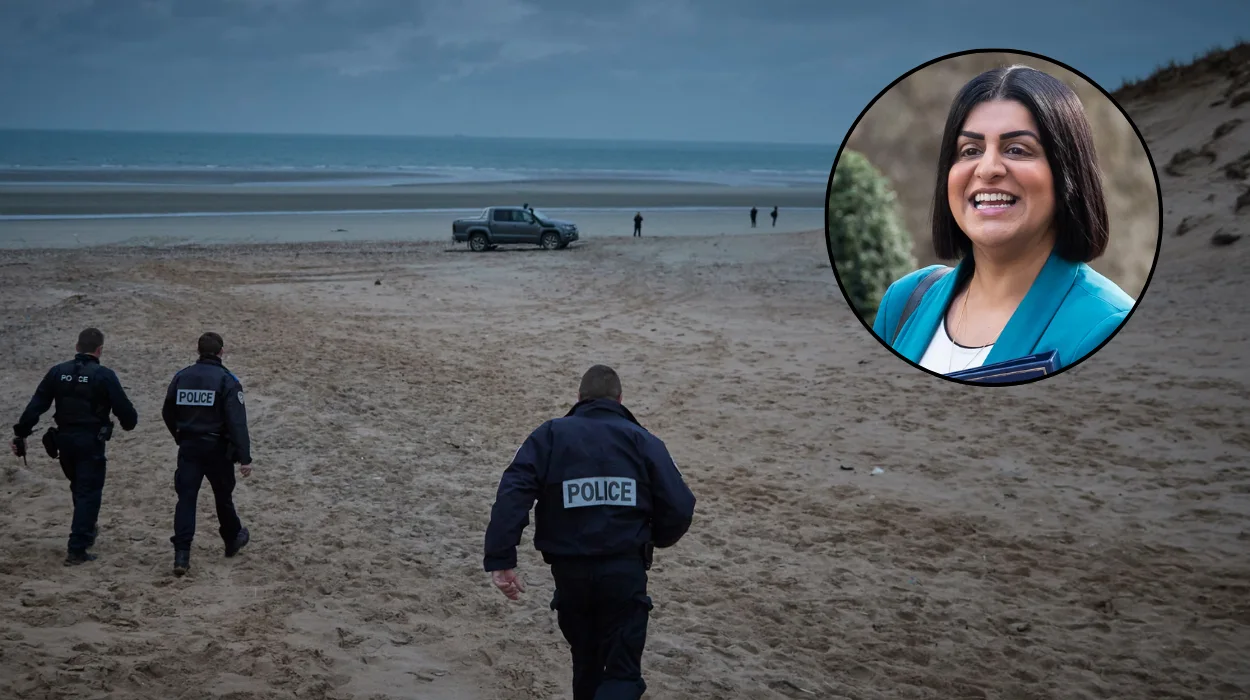
- About 700 officers will continue beach patrols using vehicles and surveillance equipment.
- The 2023 £478m deal originally aimed to build a French detention centre and boost enforcement.
London (Britain Today News) March 31, 2026 — The United Kingdom has agreed to pay France an extra £16.2 million under a temporary two-month arrangement designed to keep patrols active on Channel beaches following a breakdown in negotiations for a long-term border security deal.
The new agreement was finalised hours before the existing three-year, £478 million deal expired at midnight on Tuesday. Home Secretary Shabana Mahmood approved the short-term funding package amid fears of a surge in small-boat crossings during the negotiation gap.
According to Home Office sources, the stopgap measure ensures that nearly 700 French officers continue their patrols along northern beaches, using vehicles, surveillance technology, and coastal monitoring to intercept migrants attempting to cross the English Channel.
Why was a new stopgap deal needed?
The need for last-minute intervention arose after French officials reportedly refused several British demands, including increases in patrol numbers and maritime interventions. British negotiators had pushed for an expanded enforcement presence and a guarantee that the French government would sustain patrols even without further UK financial assistance.
French authorities, however, declined to proceed without additional funds. They argued that the UK’s proposed conditions could strain resources and pose safety risks for both security personnel and asylum seekers.
The impasse led to the emergency two-month funding plan, providing a narrow window for both governments to revisit terms before establishing a new multi-year arrangement.
Home Office negotiators described the temporary payout as essential to prevent “a spike in illegal crossings.” A government spokesperson said Mahmood was
“driving a hard bargain with the French to deliver the best deal for the British people, prevent migrants boarding boats, and save lives.”
The spokesperson added:
“We don’t want a surge in crossings during ongoing talks. We’re demanding stronger enforcement and better value for money.”
What does the stopgap deal include?
Details of the temporary agreement indicate that France will deploy approximately 700 officers from coastal enforcement units to monitor and intercept unauthorised boats. Equipment such as all-terrain vehicles, vans, and drones will continue to support patrolling activities along the French coastline.
The UK’s funding, amounting to £16.2 million, will help ensure that existing operations remain uninterrupted until a full agreement is reached. The British contribution remains substantial — covering nearly two-thirds of annual patrol costs in northern France.
Mahmood’s department has also sought to link future funding to measurable outcomes, such as increased small-boat interceptions and regular performance reports from French authorities.
The temporary deal aims to avoid a sudden stop in enforcement at a time when nearly 42,000 people have already crossed the Channel since the last general election, according to government figures.
How has France responded to UK demands?
French junior minister for the sea, Xavier Ducept, has publicly voiced concern regarding British proposals. During a parliamentary inquiry in France, Ducept warned against “turning funding into a pressure tool” that might compromise safety.
He stated that while France seeks continued British support to cover operational expenses, London’s insistence on linking funding to interception rates could
“prove extremely dangerous for migrants, for the [security] services, and for France.”
Ducept added:
“Rescue comes first — and the law.”
The French stance highlights an emphasis on humanitarian obligations under maritime law, contrasting with the UK’s emphasis on enforcement and deterrence.
What are the political reactions in the UK?
The agreement has sparked mixed reactions across Britain’s political spectrum. Reform UK leader Nigel Farage dismissed the move as ineffectual, describing it as
“throwing millions at France without results.”
Speaking at Heathrow Airport, Farage told reporters,
“Even if the French stop boats one day, the same people try again the next time calm weather returns. The real issue is pull factors — a 97.5% chance of staying in the UK once you’ve made it across.”
A senior Home Office source criticised Farage’s remarks as “reckless,” asserting that halting the funding could result in
“42,000 more migrants arriving in Britain.”
The source said,
“Farage fails to recognise the deterrent value of our partnership with France. Without these patrols, crossings would multiply significantly.”
Mahmood’s allies maintain that while the temporary funding may appear costly, it is a necessary measure to maintain operational continuity until a long-term arrangement is finalised.
How does this deal relate to past migration agreements?
The current stopgap follows a previous three-year UK-French cooperation framework established in 2023. That agreement, valued at £478 million, promised to build a migrant detention centre in northern France and provided funding for hundreds of additional officers to patrol Channel beaches.
Despite this investment, the number of small-boat crossings continued to rise, with 41,472 people arriving in the UK via the Channel in 2025 alone.
The ongoing discussions are separate from a second bilateral accord known as the “one in, one out” migrant returns deal, which allows for the repatriation of asylum seekers between the two countries. That deal is set to expire in June, adding another layer of pressure on both governments to find common ground on migration cooperation.
Sources close to the Home Office have signalled that the UK seeks a firmer, more enforceable partnership under which France agrees to use its updated maritime authority to intercept small boats at sea where safe to do so.
Could the stopgap prevent an increase in Channel crossings?
Officials from both sides remain cautious but hopeful that continued patrols will limit immediate surges. British authorities fear that any lull in French operations could quickly lead to more crossings, particularly with improving spring weather conditions.
The Home Office estimates that each day without coordinated patrols could result in several hundred additional attempts. Mahmood’s department hopes that continuity, even under an interim deal, will deter smuggling networks from exploiting potential enforcement gaps.
French officials echoed the sentiment, noting that coordinated measures, intelligence-sharing, and consistent presence on coastal routes have proven among the most effective deterrents.
What happens next?
Negotiations for a longer-term agreement are expected to resume immediately. British policymakers hope to finalise a renewed multi-year plan by June, coinciding with the expiration of the separate returns agreement.
A senior government source suggested that future funding may depend on more transparent data-sharing and accountability mechanisms between the two governments.
“In the next deal, the goal is not just maintaining patrols, but making sure every pound counts,”
the source said.
Until that happens, both London and Paris appear committed to preserving operational stability — even if the current arrangement represents only a temporary patch over deeper political disagreements about responsibility, funding, and humanitarian obligations in the Channel.