


Key Points
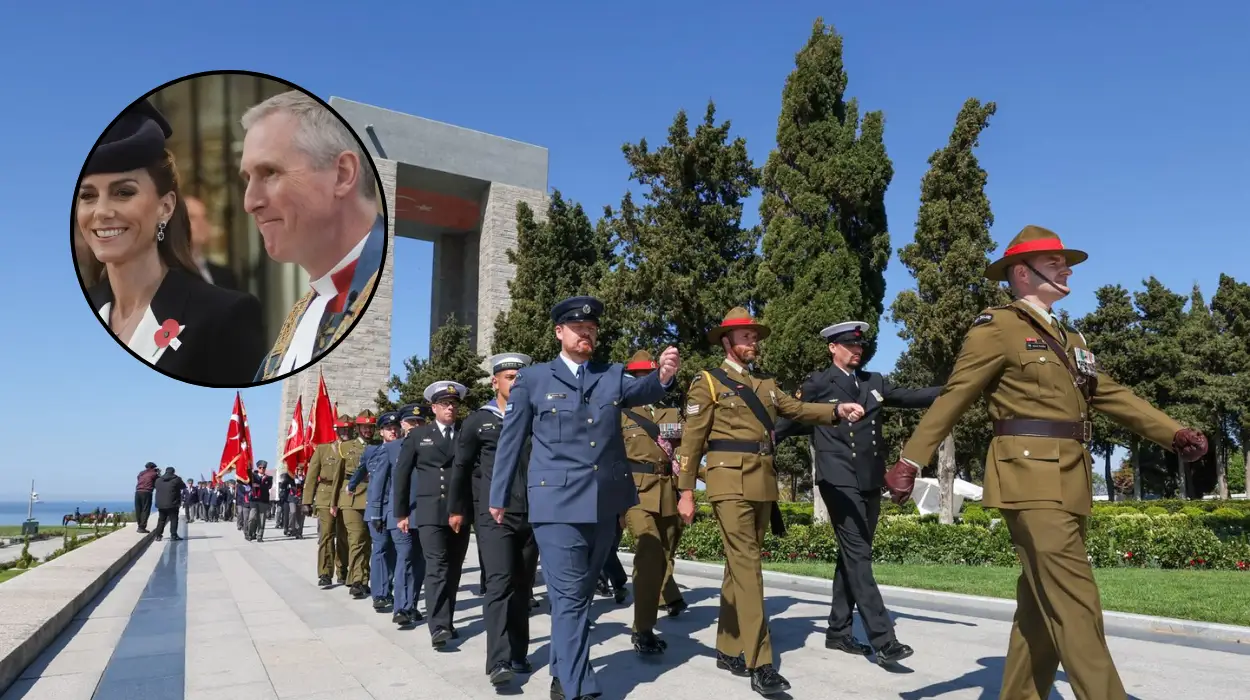
- The Princess of Wales laid a wreath at the Cenotaph in London to commemorate Anzac Day, honouring Australians and New Zealanders who died in conflicts.
- A message attached to the wreath read: “In memory of the Australian and New Zealand soldiers who made the ultimate sacrifice for our freedom.”
- She joined a service of commemoration and thanksgiving at Westminster Abbey as part of UK events on Saturday.
- The Princess Royal attended a dawn service in London, laying a wreath at Wellington Arch, Hyde Park Corner, at 5am, which included a reading of the John McCrae poem In Flanders Fields.
- In Australia, small groups disrupted services in Melbourne, Perth, and Sydney with booing during Welcome to Country ceremonies, met with applause from larger crowds.
- In Sydney, a 24-year-old man was arrested for an alleged act of nuisance, with police noting the disruptors were a small handful compared to about 11,000 attendees.
- Australia’s Defence Minister Richard Marles condemned the disruptions as “deeply disgraceful,” stating they went completely against the spirit of the day.
- The Royal Family’s official X account shared a tribute image of ANZAC troops heading to Gallipoli with the caption “Lest we forget.”
- Anzac Day, held annually on 25 April, marks the 1915 Gallipoli landings by ANZAC troops in northwest Turkey.
- Ceremonies also occurred in Gallipoli and Villers-Bretonneux, France, where Australian units defended during the First World War.
London (Britain Today News) April 25, 2026 – The Princess of Wales has laid a wreath at the Cenotaph in central London to mark Anzac Day, a solemn occasion commemorating the sacrifices of Australians and New Zealanders in conflicts throughout history. This poignant gesture underscored the strong ties between the United Kingdom and its Commonwealth partners Down Under, drawing attention to the shared legacy of remembrance.
- Key Points
- What Role Did the Princess Royal Play in London’s Dawn Service?
- Why Were Anzac Day Ceremonies Disrupted in Australia?
- What Is the Historical Significance of Anzac Day?
- Where Else Were Anzac Day Services Held Around the World?
- How Did the Public and Officials Respond to Disruptions?
- What Message Did the Royal Family Convey?
- Why Does Anzac Day Matter to the Commonwealth?
- How Have Past Anzac Days Faced Similar Challenges?
- What Lies Ahead for Anzac Commemorations?
The wreath bore a heartfelt message signed by the Princess of Wales, reading:
“In memory of the Australian and New Zealand soldiers who made the ultimate sacrifice for our freedom.”
Her attendance highlighted the Royal Family’s enduring commitment to honouring military service, particularly on a day steeped in the history of the Australia and New Zealand Army Corps (ANZAC).
Following the Cenotaph ceremony, the Princess of Wales participated in a service of commemoration and thanksgiving at Westminster Abbey. This gathering brought together dignitaries, veterans, and members of the public to reflect on the profound losses endured in wars past and present.
What Role Did the Princess Royal Play in London’s Dawn Service?
Earlier that morning, at the crack of dawn, the Princess Royal led proceedings at Wellington Arch in Hyde Park Corner. As reported by Sky News correspondents covering the event, she laid a wreath at precisely 5am during a service that evoked the original ANZAC landings. The ceremony featured a poignant reading of John McCrae’s famous poem In Flanders Fields, a staple of First World War remembrance that captures the enduring call to “take up our quarrel with the foe.”
The Princess Royal’s presence at this pre-dawn event set a tone of quiet reverence, mirroring the traditional dawn services held across Australia and New Zealand. Her involvement ensured that London’s commemoration aligned seamlessly with global observances, fostering a sense of unity across hemispheres.
Why Were Anzac Day Ceremonies Disrupted in Australia?
Across the globe in Australia, the day’s events faced stark contrasts with interruptions from small groups during so-called Welcome to Country ceremonies. These rituals, led by indigenous leaders to welcome visitors to traditional lands, saw booing in major cities including Melbourne, Perth, and Sydney.
Local media accounts detailed how the outbursts, though from a minority, were countered by applause and cheering from the vast majority of attendees gathered to pay respects. In Sydney, the disruption escalated to the point where police intervened, arresting a 24-year-old man for an alleged act of nuisance. Authorities described the agitators as “a small handful of people” amid roughly 11,000 present, emphasising the overwhelming support for peaceful commemoration.
Australia’s Defence Minister Richard Marles addressed the incidents directly on ABC News Breakfast, labelling them “deeply disgraceful.” He stated:
“To boo in that way goes completely against that. It is deeply disgraceful.”
His remarks echoed concerns over similar disruptions in previous years, often linked to anti-indigenous rights protesters, though he focused squarely on the affront to Anzac values.
What Is the Historical Significance of Anzac Day?
Anzac Day falls every year on 25 April, pinpointing the 1915 landing of ANZAC troops on the beaches of Gallipoli in northwest Turkey. The assault on Turkish defences commenced at dawn, a moment forever etched in history as a defining trial by fire for the fledgling forces from Australia and New Zealand.
What began as a tribute to that specific campaign has evolved into a broader remembrance of all service personnel from the two nations who perished in conflicts worldwide. Ceremonies emphasise mateship, courage, and sacrifice—themes that resonate deeply in national psyches.
Where Else Were Anzac Day Services Held Around the World?
Beyond London and Australia, commemorations unfolded in the spiritual heart of Anzac lore: Gallipoli itself. Thousands gathered on the peninsula’s shores to retrace the steps of those who landed over a century ago, with services mirroring the dawn timing of the original operation.
In France, Villers-Bretonneux—a village staunchly defended by Australian units during the First World War—hosted moving tributes. These events drew expatriates, descendants, and officials, reinforcing the global footprint of Anzac memory. The Royal Family’s official X account amplified this worldwide observance by posting a historic image of ANZAC troops en route to Gallipoli, captioned simply: “Lest we forget.”
How Did the Public and Officials Respond to Disruptions?
Public reaction in Australia leaned heavily towards condemnation of the boo-ers. Large crowds at disrupted services responded with cheers, signalling broad rejection of the interruptions. Police statements in Sydney underscored the minimal scale of the troublemakers, with several others moved on without further incident.
Defence Minister Marles’ forthright criticism set the official tone, framing the acts as antithetical to Anzac Day’s ethos of respect and unity. His ABC News Breakfast appearance provided a platform for veterans and families to voice similar dismay, though he avoided inflaming divisions.
What Message Did the Royal Family Convey?
The Royal Family’s X post served as a digital cornerstone of the day’s tributes. The black-and-white photograph depicted soldiers embarking for Gallipoli, evoking the raw determination of 1915. “Lest we forget” encapsulated the imperative to honour the fallen, a phrase synonymous with Anzac observances.
This social media gesture from the royals bridged generational and geographical gaps, ensuring younger audiences engaged with the history. It complemented the Princess of Wales’ physical presence at the Cenotaph, blending tradition with modernity.
Why Does Anzac Day Matter to the Commonwealth?
Anzac Day binds the United Kingdom, Australia, and New Zealand in shared grief and pride. The Princess of Wales’ wreath-laying at the Cenotaph symbolises this enduring alliance, one forged in the trenches of Gallipoli and tempered across subsequent wars.
In London, the dawn service at Wellington Arch and Westminster Abbey proceedings drew parallels to Antipodean rituals, adapting them to British soil. Meanwhile, disruptions in Australia highlighted tensions over contemporary issues clashing with hallowed remembrance, yet failed to overshadow the day’s core purpose.
How Have Past Anzac Days Faced Similar Challenges?
Previous years have seen analogous protests, often tied to debates on indigenous rights. Defence Minister Marles referenced this pattern implicitly, focusing on the disgrace of booing at sacred moments. Police efficiency in Sydney—arresting one and dispersing others—prevented escalation, maintaining the focus on tribute.
What Lies Ahead for Anzac Commemorations?
As Anzac Day 2026 recedes, reflections linger on unity amid discord. The Princess of Wales’ graceful participation, the Princess Royal’s dawn vigil, and global services affirm the day’s resilience. Minister Marles’ words remind all: disrespect dishonours the ultimate sacrifice.
In total, these events wove a tapestry of memory, from London’s solemnity to Australia’s spirited defences of tradition.