Key Points
- US-based anti-Islam influencer Valentina Gomez, aged 26, has been banned from entering the UK ahead of her planned speech at the Unite the Kingdom rally on 16 May 2026.
- The rally is organised by far-right activist Tommy Robinson in London.
- Gomez’s UK electronic travel authorisation (ETA) was initially approved, but the government revoked it following backlash from MPs and campaigners.
- The ban cites that her presence “would not be conducive to the public good”, the same reason used to block Kanye West from entering the UK for the Wireless festival.
- After the ban, Gomez posted on X (formerly Twitter) that she would come to England “on a boat” and cannot be stopped from sharing “the TRUTH”, adding a video racially abusing Home Secretary Shabana Mahmood and claiming the ban is “because I’m not coming to rape or kill little girls”.
- Gomez is known for sharing anti-Islam views on social media, including a video of herself burning a Koran with a flamethrower.
- She previously spoke at a Unite the Kingdom rally in September 2025, attended by 110,000 to 150,000 people, where she warned the crowd: “If these rapist Muslims take over they will not only rape your women, they will behead your sons.”
- The UK government has discretion to ban foreign nationals on grounds including national security, extremism, or if their presence promotes hatred.
- The Muslim Council of Britain wrote to Home Secretary Shabana Mahmood, warning that allowing Gomez entry would “lead to less safety and security on the streets of Britain”.
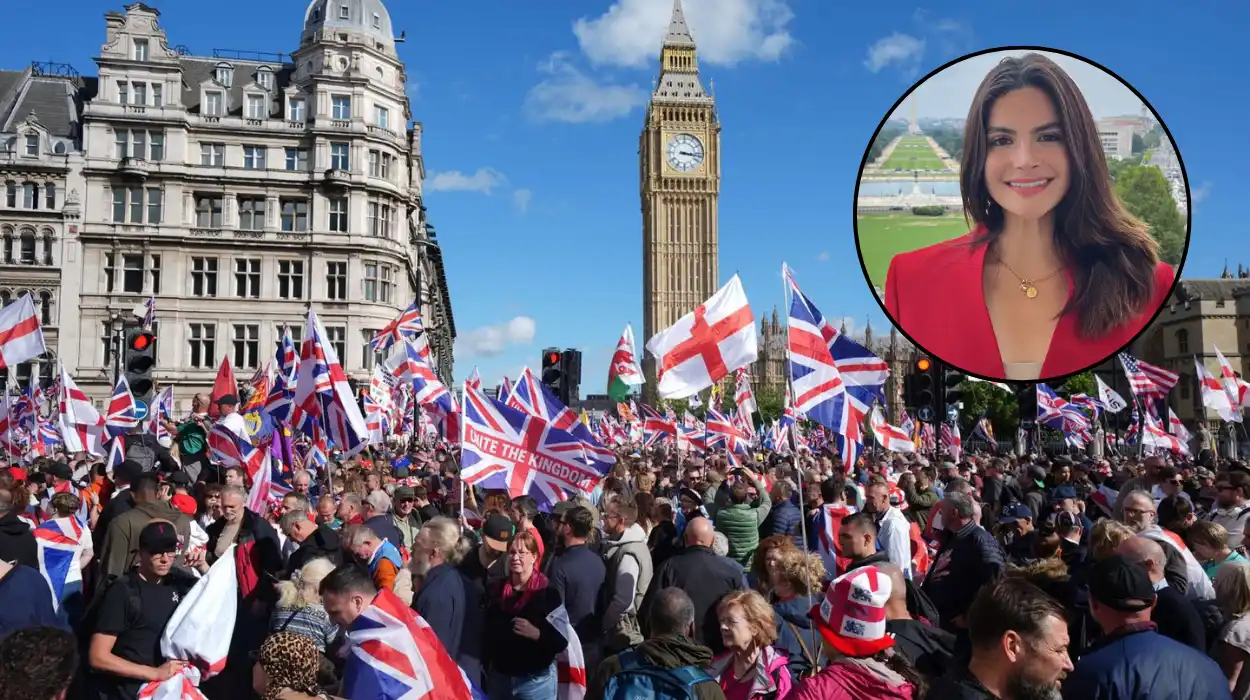
London (Britain Today News) – April 20, 2026 – Anti-Islam influencer Valentina Gomez has been barred from entering the United Kingdom over her extremist views, just weeks before she was set to address the Unite the Kingdom rally organised by far-right activist Tommy Robinson on 16 May.
- Key Points
- Why Was Valentina Gomez Banned from the UK?
- What Powers Does the UK Government Have to Issue Such Bans?
- How Did Valentina Gomez Respond to the Ban?
- Who Organised the Unite the Kingdom Rally and What Is Its Purpose?
- What Backlash Led to the Government’s Intervention?
- Which MPs and Groups Opposed Her Entry?
- How Does This Ban Compare to Other High-Profile Exclusions?
- What Is the Broader Context of Anti-Islam Influencers in the UK?
- What Happens Next for the Unite the Kingdom Rally?
The US-based Christian influencer, who boasts a significant online following for her provocative anti-Islam content, saw her UK electronic travel authorisation (ETA) approved initially. However, following intense backlash from Members of Parliament and campaigners, the government intervened. The exclusion was deemed necessary because her presence
“would not be conducive to the public good”.
This mirrors the reasoning applied to rapper Kanye West, whose entry was blocked ahead of headlining the Wireless festival in London. West faced criticism for past antisemitic remarks, leading to the event’s cancellation.
Why Was Valentina Gomez Banned from the UK?
The decision hinges on the Home Office’s statutory powers to exclude foreign nationals whose presence is not in the public interest. Government guidance specifies this applies to serious issues like national security, war crimes, corruption, or extremism. In Gomez’s case, officials determined her democratic right to free expression does not extend to promoting hatred.
As reported by Sky News political correspondent Beth Rigby, the 26-year-old influencer’s social media activity played a central role. She has shared videos espousing extreme anti-Islam rhetoric, including one where she burns a Koran using a flamethrower. Such content, authorities argue, crosses into extremism.
Gomez previously attended and spoke at an earlier Unite the Kingdom rally in September 2025, drawing crowds estimated between 110,000 and 150,000. There, she addressed the audience directly:
“If these rapist Muslims take over they will not only rape your women, they will behead your sons,”
as documented in rally footage widely circulated online.
What Powers Does the UK Government Have to Issue Such Bans?
Under the Immigration Act 1971, the Home Secretary holds personal discretion to ban individuals. This “conducive to the public good” clause has been invoked in high-profile cases, from terrorists to hate preachers. No appeal process applies immediately, though affected parties can challenge via judicial review.
How Did Valentina Gomez Respond to the Ban?
Defiant in the face of rejection, Gomez took to X shortly after learning of the ban.
“I’m coming to England on a boat. They can try to ban me, but they cannot ban the TRUTH. See you May 16th,”
she declared in a post viewed thousands of times.
In an accompanying video, she launched a racially charged attack on Home Secretary Shabana Mahmood, accusing her of bias. Gomez claimed: “because I’m not coming to rape or kill little girls.” The remarks drew swift condemnation from anti-hate groups, who labelled them inflammatory and divisive.
The home affairs editor Lisa O’Carroll, Gomez’s response amplified concerns about her potential to incite unrest at the rally.
Who Organised the Unite the Kingdom Rally and What Is Its Purpose?
The event on 16 May falls under the banner of Unite the Kingdom, spearheaded by Tommy Robinson, real name Stephen Yaxley-Lennon, a prominent far-right activist. Robinson has a history of organising anti-immigration protests, often framed around opposition to Islam and multiculturalism.
Previous iterations, like the September 2025 gathering, saw massive turnouts, fuelling debates on public order. Authorities are already preparing for heightened security in London, with Metropolitan Police monitoring for potential violence.
What Backlash Led to the Government’s Intervention?
Pressure mounted rapidly after Gomez announced her ETA approval on X. MPs across parties voiced alarm. Labour MP Zarah Sultana tweeted:
“The government must act decisively against those who peddle hate,”
urging an immediate ban.
Campaigners piled on. The Muslim Council of Britain (MCB) penned a formal letter to Shabana Mahmood. As stated in the MCB correspondence: allowing Ms Gomez to enter
“would lead to less safety and security on the streets of Britain.”
Tell Mama, a group tracking anti-Muslim hate, echoed this. Director Imran Mahmudul told:
“Her rhetoric normalises violence against Muslims, and her presence risks real-world harm.”
Sky News reported that cross-party concern, combined with Gomez’s track record, tipped the scales. Even some conservatives, wary of free speech limits, prioritised public safety.
Which MPs and Groups Opposed Her Entry?
- Labour’s Shabana Mahmood received the MCB letter directly.
- Conservative MP Suella Braverman, a former Home Secretary, warned of “importing American-style culture wars.”
- Hope Not Hate’s Nick Lowles described Gomez as a “dangerous provocateur” in a statement to Reuters.
How Does This Ban Compare to Other High-Profile Exclusions?
Gomez’s case parallels Kanye West’s 2025 rebuff. The rapper’s antisemitic outbursts prompted the same “public good” rationale, scuttling Wireless festival plans. Similarly, in 2019, extremist preacher Anjem Choudary faced lifelong bans post-conviction.
Security editor Tom Whitehead, these exclusions underscore a hardening UK stance on imported extremism, regardless of ideology.
What Is the Broader Context of Anti-Islam Influencers in the UK?
Gomez operates in a crowded online space. Figures like Tommy Robinson have faced repeated legal challenges, including contempt convictions. Her flamethrower Koran video, viewed millions of times, exemplifies tactics blending shock value with ideology.
Critics argue platforms like X enable such reach, while supporters claim it’s protected speech. UK regulators, via Ofcom, are probing social media’s role in amplification.
The MCB’s intervention highlights community fears amid rising Islamophobia incidents, per Home Office stats showing a 13% uptick in 2025.
What Happens Next for the Unite the Kingdom Rally?
Organisers press on without Gomez. Tommy Robinson confirmed via Telegram:
“The show must go on; truth speakers will still rally.”
Police expect thousands, with contingency for unrest akin to 2024 riots.
Gomez vows defiance, teasing alternative entry. Border Force remains vigilant at ports and airports.
Home Secretary Mahmood defended the ban in Parliament:
“We protect free speech but draw the line at hate that endangers lives.”
This saga tests UK’s balancing act: safeguarding democracy while curbing extremism. As rallies loom, tensions simmer in a polarised landscape.