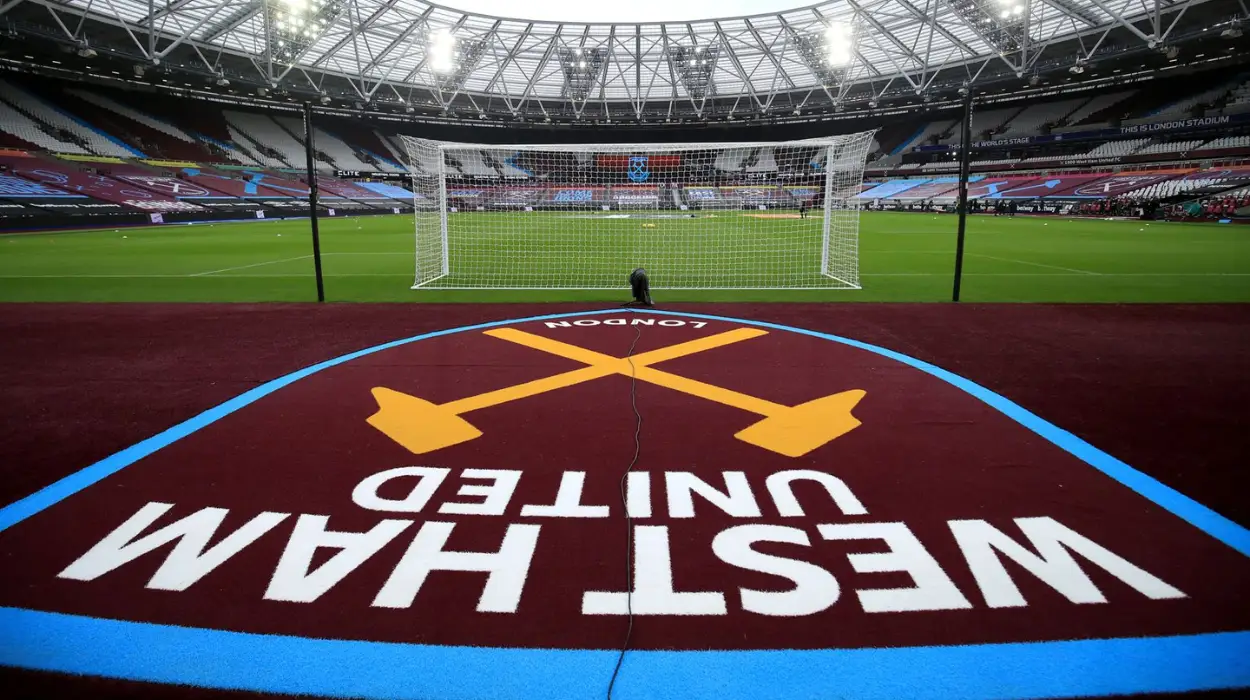
West Ham United F.C. is a major English football club from East London, founded in 1895 as Thames Ironworks and renamed West Ham United in 1900. It has a long history in English football, a strong academy tradition, and a record book shaped by league success, cup wins, and famous players.
- What is West Ham United F.C.?
- How did West Ham United begin?
- Which trophies has West Ham United won?
- Who are West Ham United’s most important players?
- Which West Ham players hold major records?
- What are West Ham United’s most notable team stats?
- How important is West Ham’s academy?
- How has West Ham performed in modern football?
- Why does West Ham United matter in English football?
- What should readers remember about West Ham United?
What is West Ham United F.C.?
West Ham United F.C. is a professional football club based in London, England, competing in the English football system with a history that began in 1895 and a modern identity built on youth development, fan culture, and top-flight football. The club’s origins, home base, and long record of first-team players define its identity and its place in English sport.
West Ham United began as Thames Ironworks FC, a works team linked to the Thames Ironworks and Shipbuilding Company. The club adopted the West Ham United name in 1900. Its traditional base is East London, and its modern home ground is the London Stadium in Stratford, within the London Borough of Newham. That location matters because the club represents a dense urban football community with deep local support.
The club is known for a strong academy system and for producing players who became part of English football history. West Ham’s identity also includes competitive cup runs, league survival battles, and periods of strong top-flight performance. This mix gives the club a broad appeal for readers searching for history, player records, and statistical context.
How did West Ham United begin?
West Ham United began in 1895 as Thames Ironworks, a club created from an industrial workplace team, and it became West Ham United in 1900 after restructuring and rebranding. The club’s early years established the foundations for its later professional status, local support, and competitive growth in English football.
Thames Ironworks FC formed in the late Victorian era, when workplace teams were common in England’s industrial towns and districts. The move to West Ham United marked a shift from a company team to a broader community club. That change gave the club a more permanent identity and helped it grow beyond its original industrial roots.
West Ham’s early decades created a long connection between football and East London civic life. The club’s history fits the broader development of English football from local, semi-organized competition into a national professional sport. That historical context is essential for understanding why West Ham remains significant in British sport today.
Which trophies has West Ham United won?
West Ham United has won major domestic and European honours, with the 1964 FA Cup, 1965 European Cup Winners’ Cup, 1980 FA Cup, 1981 Second Division title, 2005 and 2012 Championship play-off wins, and the 2023 UEFA Europa Conference League standing out. These trophies show the club’s success across different eras and competitions.
The 1964 FA Cup final and the 1965 European Cup Winners’ Cup final established West Ham as a club capable of winning elite knockout competitions. The 1980 FA Cup added another major domestic honour. The 2023 Europa Conference League title gave the club a modern European trophy and renewed its place in continental football discussion.
West Ham has also achieved promotion success in the league system. The club won the second tier in 1957–58 and 1980–81, then returned to the top level through the Championship play-offs in 2004–05 and 2011–12. These outcomes show repeated movement between divisions and underline the competitive demands of English football.
Who are West Ham United’s most important players?
West Ham United’s most important players include Billy Bonds, Bobby Moore, Trevor Brooking, Geoff Hurst, Mark Noble, and Jarrod Bowen, because they define the club’s appearance records, goal records, leadership, and modern performance. Their influence covers different eras, from pre-television football to the current Premier League age.
Billy Bonds holds the club record for league appearances with 663, making him the clearest symbol of longevity and consistency at West Ham. Bobby Moore made 544 league appearances, Trevor Brooking made 528, and Frank Lampard made 551. Mark Noble made 414 league appearances, and Jarrod Bowen had 208 league appearances in the current record set, showing the ongoing importance of long-serving players.
Goalscoring records show a different side of club history. Vic Watson leads West Ham’s first-class goalscoring list with 326 goals, followed by Geoff Hurst with 252. John Dick and Jimmy Ruffell each scored 166, while Tony Cottee scored 146. These numbers place the club’s attackers within a clear historical hierarchy.
Which West Ham players hold major records?
West Ham’s major records are held by players whose careers spanned long periods, with Billy Bonds leading league appearances and Vic Watson leading all-time goalscoring in the club’s historical record books. These records provide a statistical map of club greatness across generations.
Billy Bonds is the clearest appearance leader with 663 league games, ahead of Frank Lampard on 551, Bobby Moore on 544, and Trevor Brooking on 528. That ranking shows the importance of durability, selection consistency, and long service in West Ham’s history. It also shows the club’s tendency to reward players who stayed central to the squad for many seasons.
In goalscoring, Vic Watson’s 326 total goals remain the standout club mark in the historical record list. Geoff Hurst follows on 252, a total linked to one of the most famous periods in English football. John Dick and Jimmy Ruffell each reached 166, while Tony Cottee reached 146 across two spells. These figures give West Ham a deep scoring tradition rather than reliance on a single era.
What are West Ham United’s most notable team stats?
West Ham United’s notable team stats include its biggest competitive win, biggest league wins, and historical defeats, all of which show the club’s extreme results across more than a century of football. These records help define the scale of West Ham’s match history.
West Ham’s biggest victory was 10–0 against Bury in the Football League Cup on 25 October 1983. Its biggest league wins were 8–0 against Rotherham United on 8 March 1958 and 8–0 against Sunderland on 19 October 1968. Those scores remain reference points for the club’s strongest attacking performances.
The club’s biggest defeats were 0–7 losses to Barnsley on 1 September 1919, Everton on 22 October 1927, and Sheffield Wednesday on 28 November 1959. These results belong to different football eras and show how club records preserve both success and failure. Such statistics matter because they reveal long-term performance patterns rather than isolated headlines.
How important is West Ham’s academy?
West Ham’s academy is highly important because it has produced elite players who shaped both the club and English football, including Bobby Moore, Geoff Hurst, and Trevor Brooking. The academy gives West Ham a clear identity rooted in player development rather than transfer spending alone.
The academy’s value comes from the number of homegrown players who became first-team regulars and, in some cases, international stars. Bobby Moore became England’s World Cup-winning captain in 1966. Geoff Hurst scored a hat-trick in the 1966 World Cup final. Trevor Brooking became one of the club’s most respected midfielders and a long-term figure in the game.
This development model matters because it connects local talent to first-team success. West Ham’s academy tradition gives the club a reputation for technical education, positional understanding, and early pathway opportunities. In football terms, that means the club contributes to the national talent pool as well as its own squad strength.
How has West Ham performed in modern football?
West Ham’s modern football profile includes Premier League stability, European competition, and a player record set that features leaders such as Jarrod Bowen, Aaron Cresswell, and Michail Antonio. The club remains relevant in the present era through both squad quality and continental results.
Recent appearance figures show the modern core of the squad and recent departures. Jarrod Bowen reached 208 league appearances in the record set, while Aaron Cresswell reached 312 and Michail Antonio reached 268. Mark Noble’s 414 appearances place him as the key bridge between older and newer West Ham squads.
Current seasonal stats also show the club’s evolving squad structure. In the 2025–26 season data, Lucas Paquetá led with 18 goals and 4 assists in the cited dataset, while Mateus Fernandes and Konstantinos Mavropanos also contributed offensively. These figures show how the modern squad spreads responsibility across several players rather than relying on a single scorer.
Why does West Ham United matter in English football?
West Ham United matters because it combines a deep historical record, strong player development, notable trophies, and a clear East London identity that continues to shape English football culture. The club is significant as a league participant, a talent producer, and a historical institution.
West Ham’s importance is not limited to trophies. The club’s record books, appearances list, and goalscoring list show continuity across different generations. That continuity is valuable for search users because it connects club history with player biographies and statistical milestones in one place.
The club also matters because it sits inside the wider story of English football’s evolution. From a workplace team to a major professional club, West Ham reflects the social history of the sport. Its modern presence in London and its continued Premier League visibility keep it relevant for fans, researchers, and general readers.
What should readers remember about West Ham United?
Readers should remember West Ham United as a historic East London club founded in 1895, renamed in 1900, and known for trophies, academy graduates, record-setting players, and long-term statistical significance. Its history is broad, its player tradition is strong, and its records remain useful for understanding English football.
The club’s core identity comes from three linked themes: origin, development, and performance. Its origin is industrial and local. Its development is shaped by youth production and long-serving players. Its performance includes league wins, cup wins, European success, and distinctive record books.
For SEO and evergreen publishing, West Ham United is a strong entity because it supports related searches around club history, famous players, trophies, appearances, goals, and statistics. That makes it suitable for a comprehensive article that serves both casual readers and search engines looking for structured, factual football content.