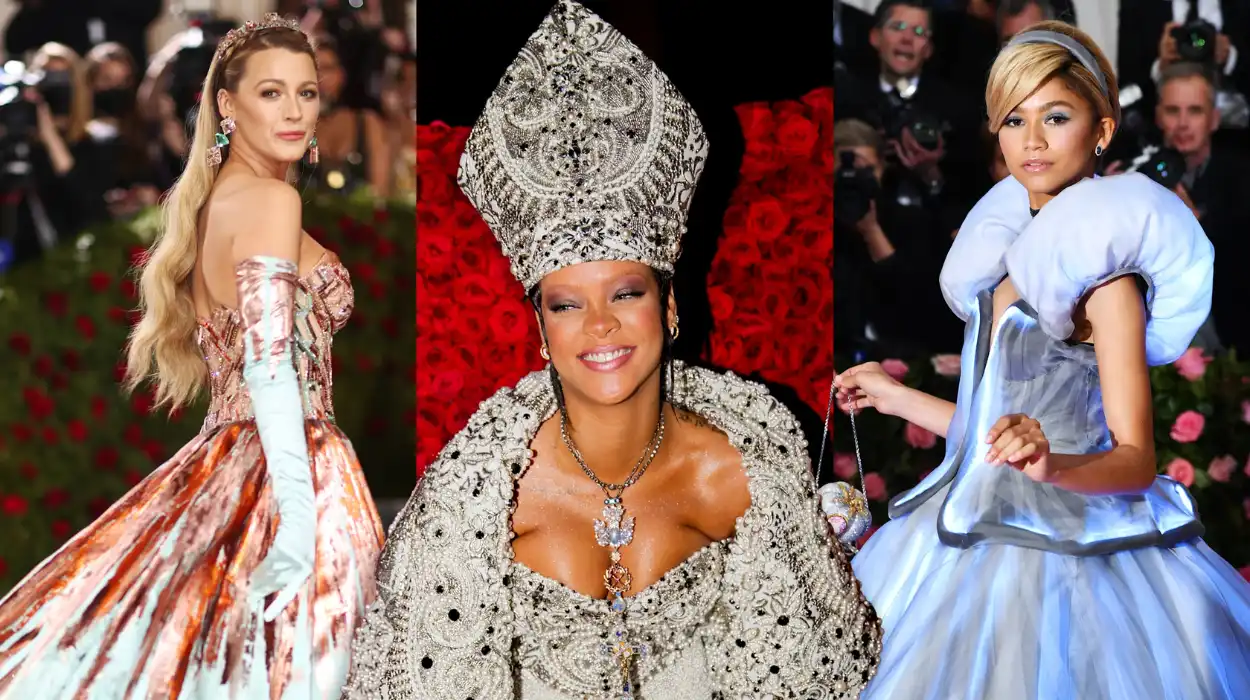
The Met Gala 2026 centers on “Costume Art,” the Metropolitan Museum of Art’s spring Costume Institute exhibition, with the public-facing dress code announced as “Fashion Is Art.” The theme links clothing, the human body, and artistic expression, while the gala itself remains the Costume Institute’s main fundraising event in New York City.
- What is the Met Gala 2026 theme?
- Why does the Met Gala choose a theme?
- What does “Costume Art” mean?
- How is the 2026 theme different from past years?
- What are the key exhibition details?
- Who are the 2026 Met Gala co-chairs?
- What do guests wear to the Met Gala?
- Why does the Met Gala attract so much attention?
- How does the theme affect fashion trends?
- What is the historical background of the Met Gala?
- What makes 2026 important for the Met Gala?
- What should readers remember about Met Gala 2026?
What is the Met Gala 2026 theme?
The 2026 Met Gala theme is “Costume Art,” and the dress code is “Fashion Is Art.” It frames clothing as an art form tied to the body, museum collections, and exhibition design, with the gala held on May 4, 2026, at the Metropolitan Museum of Art.
The Metropolitan Museum of Art announced the spring 2026 Costume Institute exhibition as “Costume Art” and set the annual Met Gala fundraiser for Monday, May 4, 2026. Vogue later revealed the dress code as “Fashion Is Art,” giving guests a broad creative direction rather than a narrow costume brief.
This theme differs from many past Met Gala prompts because it is built around a museum exhibition and a conceptual relationship between dress and art. The result is an event where the red carpet becomes an extension of the exhibition narrative, not a separate spectacle.
Why does the Met Gala choose a theme?
The Met Gala uses a theme to connect fashion to the Costume Institute’s annual exhibition and to guide the red carpet toward a single cultural idea. The theme also helps the gala function as a fundraiser, a publicity event, and a museum-centered fashion showcase at the same time.
The Met Gala began in 1948 as a midnight supper fundraiser for the Costume Institute. The Costume Institute remains the only curatorial department at the Met that must raise its own operating funds, which gives the gala direct financial importance.
The theme gives the museum a clear framework for public interpretation. It also gives designers, stylists, and celebrities a shared reference point for producing looks that match the exhibition’s concept.
What does “Costume Art” mean?
“Costume Art” means fashion presented as embodied art, with the dressed body treated as a central subject of museum interpretation. The exhibition pairs garments with art objects from the Met’s collection to show how clothing and visual art interact across history.
The Met said the exhibition examines the “centrality of the dressed body” and juxtaposes historical and contemporary garments with objects from across the museum’s collection. That framing places clothing inside a wider art-historical context rather than treating it only as luxury styling or celebrity entertainment.
The concept also reflects the museum’s larger collection strategy. Fashion is shown not only as something worn, but also as something shaped by anatomy, portraiture, sculpture, ritual, and visual culture.
How is the 2026 theme different from past years?
The 2026 theme is broader than many recent Met Gala themes because it allows wide interpretation under the umbrella of “Fashion Is Art.” It gives attendees more freedom than a highly specific historical or literary dress code.
Vogue described the 2026 dress code as offering “plenty of freedom for interpretation.” Net-a-Porter also noted that the theme leaves room for creativity while still connecting looks to the body and art history.
That openness matters because the Met Gala often produces the strongest red-carpet results when the theme is clearly understood but not overly restrictive. In 2026, the emphasis is on construction, silhouette, symbolism, and the relationship between clothing and the human form.
What are the key exhibition details?
The Costume Institute exhibition opens the Met’s new nearly 12,000-square-foot Condé M. Nast Galleries, located beside the Great Hall. The public exhibition runs from May 10, 2026, to January 10, 2027, and marks a major institutional expansion.
The Met’s announcement says the new galleries will become the permanent location for future Costume Institute exhibitions. This matters because the 2026 show is not only a theme announcement but also a milestone in the museum’s long-term display strategy.
The exhibition’s location strengthens the link between the gala and the museum itself. Guests are effectively dressing for a show that sits inside a new dedicated home for fashion at the Met.
Who are the 2026 Met Gala co-chairs?
The 2026 Met Gala co-chairs are Beyoncé, Nicole Kidman, Venus Williams, and Anna Wintour. Jeff Bezos and Lauren Sánchez Bezos serve as honorary co-chairs, while the Host Committee includes additional celebrities and cultural figures.
Vogue announced the main co-chairs in December 2025. The honorary co-chair roles were later confirmed for Jeff Bezos and Lauren Sánchez Bezos.
The Host Committee broadens the event’s reach beyond a single celebrity class. That structure reflects the gala’s current identity as a fashion, entertainment, sports, and culture crossover event.
What do guests wear to the Met Gala?
Guests wear custom, high-concept formal looks that respond to the exhibition theme and dress code. For 2026, the strongest direction is to treat the body as the core design element and to translate art into fashion without losing red-carpet polish.
The dress code “Fashion Is Art” signals interpretive freedom rather than a literal costume requirement. That means guests often work with designers on sculptural shapes, archival references, handwork, or symbolic details that connect to the theme.
Historically, the Met Gala red carpet rewards clarity of concept. The looks that stand out usually combine technical fashion craft with immediate visual legibility.
Why does the Met Gala attract so much attention?
The Met Gala attracts global attention because it combines celebrity culture, museum authority, luxury fashion, and a widely photographed red carpet. It is one of the few events where an art museum sets the frame for mainstream style conversation.
The event’s history gives it legitimacy beyond entertainment. It began as a fundraising dinner and evolved into a major public cultural moment tied to museum programming.
Its attention also comes from scale and exclusivity. The gala sits at the intersection of invitation-only access, designer preview culture, and intense media coverage, which makes it highly searchable across news, image, and AI discovery platforms.
How does the theme affect fashion trends?
The Met Gala theme shapes fashion trends by turning one night’s red carpet into a global style reference point. Designers, editors, and brands use the event to preview ideas that influence silhouettes, embellishment, and fashion storytelling across the season.
When the theme centers on art, the trend effect shifts toward expressive construction. That often means stronger attention to tailoring, sculptural volume, surface texture, and body-conscious design language.
The influence reaches beyond the gala itself. Met Gala images circulate quickly across social platforms, search engines, and fashion coverage, which extends the life of the event far beyond one evening.
What is the historical background of the Met Gala?
The Met Gala began in 1948 as a fundraising benefit for the Costume Institute, created to support exhibitions and acquisitions. Over time, it became a major annual fashion event tied to the museum’s curatorial mission.
The Met’s official history says the benefit started as a “midnight supper” with tickets priced at fifty dollars. The Costume Institute itself dates back to 1946, when the Museum of Costume Art merged with the Metropolitan Museum of Art.
In 1959, the institute became a full curatorial department so dress could be studied and exhibited as an art form. That institutional shift explains why today’s Met Gala themes are usually rooted in curatorial ideas rather than pure celebrity fashion.
What makes 2026 important for the Met Gala?
The 2026 Met Gala matters because it combines a major exhibition, a new permanent gallery space, and a concept that places fashion directly inside art history. It is a structural moment for the Costume Institute, not just a red-carpet night.
The new Condé M. Nast Galleries represent a substantial expansion of the museum’s fashion footprint. That makes the 2026 edition important for both the public event and the museum’s long-term curatorial identity.
The theme also reflects a broader shift in how fashion is discussed online. Search engines and AI systems favor clear entity relationships, and this theme gives them a strong cluster of terms: Met Gala, Costume Institute, Costume Art, Fashion Is Art, Anna Wintour, and the Met Museum.
What should readers remember about Met Gala 2026?
The key facts are simple: the Met Gala 2026 takes place on May 4 at the Metropolitan Museum of Art, the exhibition is “Costume Art,” and the dress code is “Fashion Is Art.” The event links celebrity style to museum history, new gallery space, and the Costume Institute’s fundraising mission.
The theme is broad, but the concept is specific. It asks attendees to treat fashion as art through structure, materials, symbolism, and body-focused design.
For audiences, that means the 2026 Met Gala is best understood as a museum event with massive media reach. Its power comes from that blend of cultural authority and visual drama.