Key Points
- The 2026 Met Gala carried the theme “Fashion is Art,” linked to the Costume Institute exhibition “Costume Art.”
- The night focused on how celebrities translated artworks, sculpture and classical imagery into red-carpet fashion.
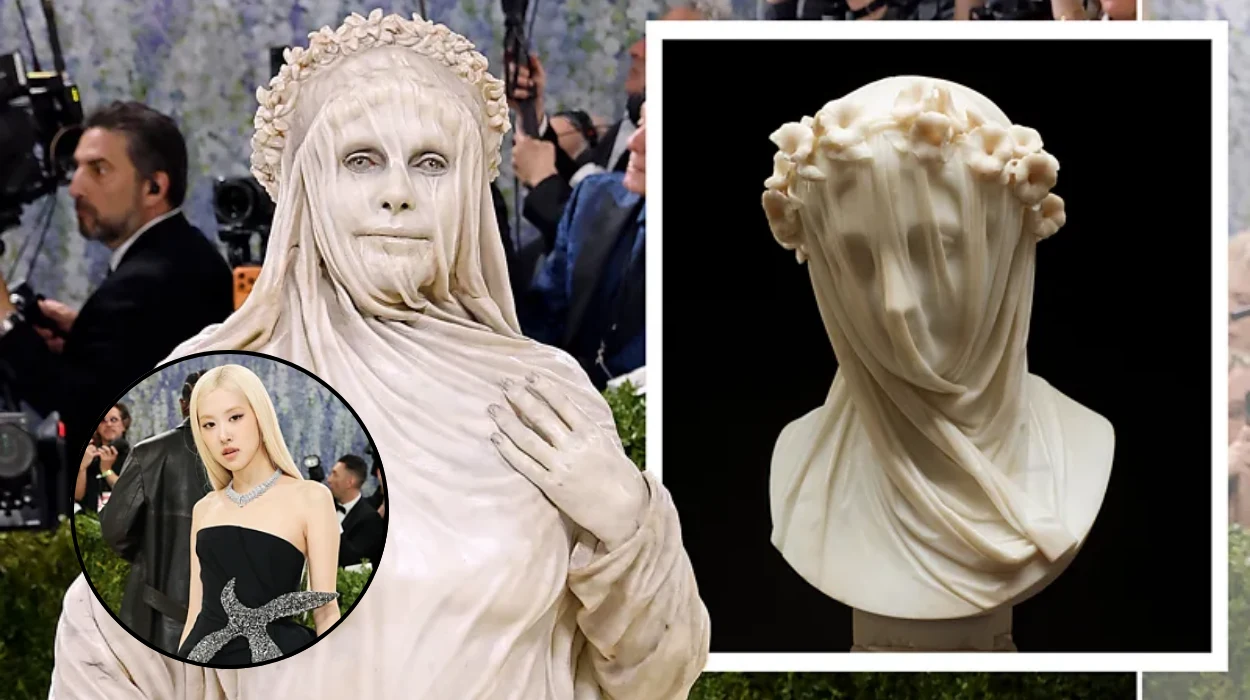
- Rosé’s Saint Laurent look drew inspiration from Georges Braque’s The Birds.
- Lena Dunham’s red Valentino gown referenced Artemisia Gentileschi’s Judith Slaying Holofernes.
- Julianne Moore’s black Bottega Veneta dress echoed John Singer Sargent’s Madame X.
- Hunter Schafer’s Prada look was inspired by Gustav Klimt’s Mäda Primavesi.
- Dree Hemingway’s Valentino gown evoked Sir Peter Paul Rubens’ Portrait of Marchesa Brigida Spinola-Doria.
- Anne Hathaway’s Michael Kors dress referenced a terracotta bell-krater and John Keats’s Ode on a Grecian Urn.
- Heidi Klum dressed as Raffaelle Monti’s Veiled Vestal.
- Ciara’s gold look was inspired by the Bust of Nefertiti.
New York (Britain Today New) May 5, 2026 – The 2026 Met Gala turned the Metropolitan Museum of Art’s red carpet into a moving exhibition of living references, with stars using fashion to echo paintings, sculpture and ancient artefacts. The event’s “Fashion is Art” brief encouraged guests to present
“their own relationship to fashion as an embodied art form”
while celebrating the many ways art has depicted the dressed body across history.
Why did the Met Gala 2026 lean so heavily on art?
The Met Gala is always tied to the Costume Institute’s latest exhibition, but this year’s theme made the artistic connection especially direct. The accompanying exhibition, Costume Art, was built around the relationship between fashion and the human body, giving guests a clear invitation to turn references into spectacle.
The result was a red carpet where visual storytelling mattered as much as silhouette. Many of the most talked-about looks were not merely decorative; they were deliberate nods to specific works, with designers and stylists translating paintings, sculpture and classical motifs into couture.
Which looks were inspired by famous paintings?
Rosé wore a largely understated black Saint Laurent dress, but the detail that made it memorable was a brick-sized bird brooch inspired by Georges Braque’s The Birds series. The singer and her stylist, Law Roach, also looked to Saint Laurent collections from spring 1998 and spring 2002 couture while developing the outfit.
Lena Dunham arrived in a dramatic all-red Valentino look that referenced Artemisia Gentileschi’s Judith Slaying Holofernes. The design centred on the blood spatter in the painting rather than on Renaissance costume details, with Alessandro Michele taking that single visual element and building the gown around it.
Julianne Moore’s elegant black one-shoulder Bottega Veneta dress drew on John Singer Sargent’s Madame X. The painting caused scandal in Paris in 1884, and that the same off-the-shoulder mood still carries a sense of tension and refinement in modern fashion.
Hunter Schafer’s custom Prada look was inspired by Gustav Klimt’s Mäda Primavesi. The outfit echoed the dress worn by the young girl in the painting, while also reproducing the blue eyeshadow seen in the artwork.
Which designs referenced sculpture and antiquity?
Dree Hemingway’s custom Valentino gown by Alessandro Michele was linked to Sir Peter Paul Rubens’ The Portrait of Marchesa Brigida Spinola-Doria. The look used silver lurex, embroidery, feathers and a theatrical collar to mirror the rich pleats and grandeur associated with 17th-century portraiture.
Anne Hathaway’s custom Michael Kors dress, made with artist Peter McGough, drew inspiration from a terracotta bell-krater attributed to the Chevron Group, while also nodding to John Keats’s Ode on a Grecian Urn. The gown included hand-painted imagery of a dove of peace and a goddess of peace on the train, giving the look a political edge as well as an artistic one.
Heidi Klum took the idea of costume literally by dressing as Raffaelle Monti’s Veiled Vestal. She went further than the sculpture itself by adding grey contact lenses and painting her hands, face and teeth to complete the transformation.
Ciara’s look was based on the Bust of Nefertiti, with the singer telling Vogue Arabia that she was wearing “gold on gold on gold” to embody the ancient Egyptian queen’s power. The reference suited the Met Gala’s taste for grand historical imagery, especially given Nefertiti’s lasting influence on art and fashion.
Why did these references stand out?
These outfits worked because they did more than quote art; they translated it into red carpet language. The BBC’s reporting shows that each celebrity or designer chose a different route, from direct visual reproduction to a looser emotional or thematic interpretation.
The common thread was precision. Whether it was a brooch shaped by Braque, a blood-red dress linked to Gentileschi, or a sculptural veil echoing Monti, the best looks were the ones that made the source material instantly recognisable without feeling like costume drama.
What did the red carpet reveal about fashion?
The 2026 Met Gala reinforced how fashion can operate as interpretation rather than imitation. The BBC’s coverage framed the event as a dialogue between clothing and art history, with celebrities using tailoring, colour, texture and symbolism to position themselves as part of that conversation.
It also showed the power of a clear theme. When guests commit to a concept as specific as “Fashion is Art,” the red carpet becomes more than celebrity spectacle; it becomes a curated cultural event where visual references invite viewers to look up the original works.
How did the theme shape the evening?
The Costume Institute’s exhibition and the gala’s dress code gave the night a scholarly frame, even when the results were playful or theatrical. That balance is what made the event memorable:
“the looks were glamorous, but they also carried art-historical meaning that rewarded closer inspection”.
In that sense, the Met Gala achieved exactly what it set out to do. It turned the idea of fashion into a museum-worthy conversation, and the BBC’s selection of eight looks showed how broad that conversation could be, from ancient Egypt to 20th-century modernism.