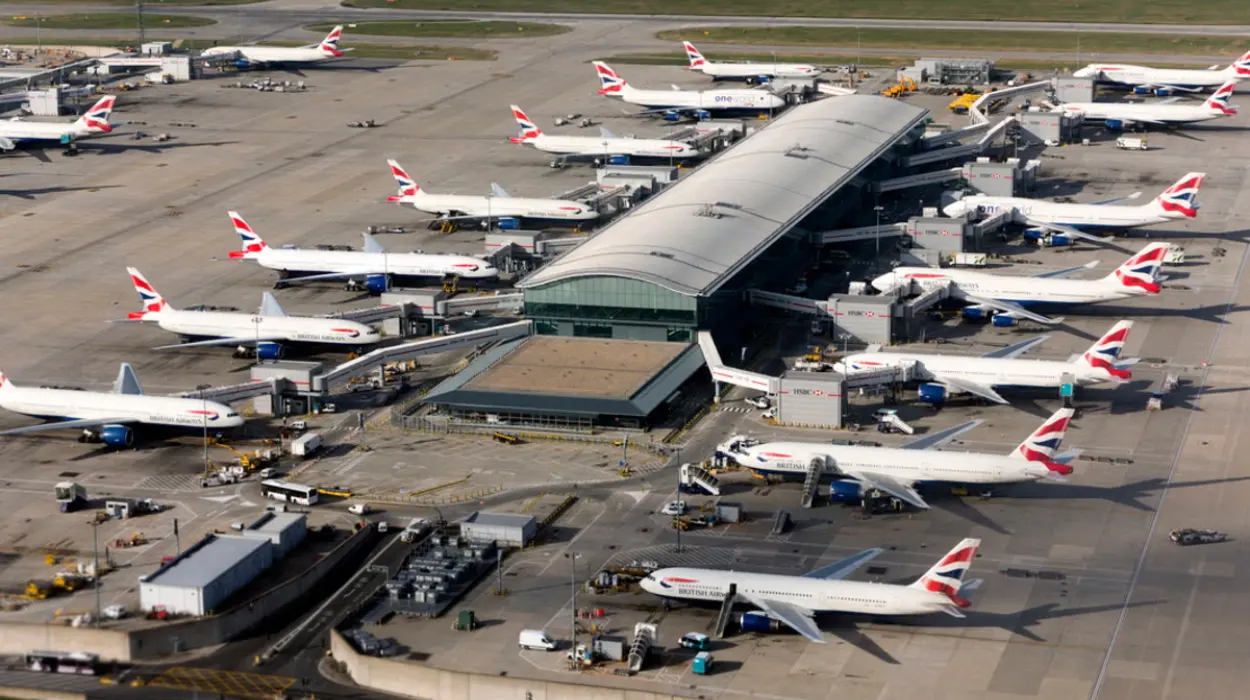
The UK government airline contingency plan is a temporary aviation disruption measure designed to reduce last-minute cancellations, protect passenger travel, and let airlines adjust schedules earlier if jet fuel supply tightens. It centers on slot flexibility, passenger rights, and fuel resilience during summer 2026.
- What is the UK government airline contingency plan?
- Why has the UK government introduced it?
- How do airport slots work in the UK?
- What changes do airlines get?
- What happens to passengers if flights change?
- What do passengers get during delays?
- How does the fuel issue affect the plan?
- How is this different from normal aviation planning?
- What role do regulators and industry play?
- What does this mean for summer travel?
- Why does this matter beyond 2026?
- How should travelers prepare?
What is the UK government airline contingency plan?
The UK government airline contingency plan is a set of temporary aviation measures that let airlines plan ahead, reduce disruption, and avoid last-minute cancellations if fuel supply pressure affects summer schedules. It focuses on slot flexibility, route consolidation, and passenger protection.
This policy was announced in May 2026 after government monitoring of jet fuel stocks and global supply risk linked to Middle East instability. The Department for Transport said there were no immediate supply issues, but it wanted families and businesses to have long-term certainty before disruption begins.
The plan is designed for the aviation system, not for one airline or one airport. It applies to the way airlines, airports, slot coordinators, and regulators manage schedules when supply conditions become uncertain.
The core objective is simple. Airlines should make realistic decisions early rather than wait until departure day, cancel flights at the gate, or operate near-empty services just to protect airport slots.
Why has the UK government introduced it?
The government introduced the plan to reduce disruption risk from possible jet fuel pressure, protect summer travel demand, and prevent sudden airport cancellations that create passenger chaos. It is a resilience measure built around advance planning, not an admission of an existing fuel shortage.
The government’s stated position is that UK airlines are not currently facing a jet fuel shortage. Airlines buy fuel in advance, airports hold stocks, and suppliers keep reserves to support resilience.
The trigger for contingency planning is broader global uncertainty, especially after disruption concerns around the Strait of Hormuz and wider Middle East conflict. The government said it is monitoring jet fuel supplies daily and working with airlines, airports, and fuel suppliers.
This matters because aviation schedules depend on stable fuel supply, slot usage, and passenger planning. A shortage or a feared shortage can force airlines into abrupt cancellations unless they are given room to reorganize early.
How do airport slots work in the UK?
Airport slots are allocated take-off and landing times at busy airports, and airlines normally must use at least 80% of them to keep them for the next season. The contingency plan relaxes that rule temporarily so airlines can reduce flying without losing future slot rights.
This system is commonly called the “use it or lose it” rule. Under normal conditions, if an airline does not use enough of its slots during a season, those slots can be reassigned to another carrier.
The government’s contingency approach builds on guidance from Airport Coordination Limited, the independent slot coordinator. That body updated its guidance so airlines will not lose slots if fuel shortages prevent them from flying.
The proposed temporary change goes further by allowing airlines to hand back a limited proportion of slots proactively. This gives them the ability to reshape schedules in advance, especially on routes with multiple flights to the same destination in one day.
What changes do airlines get?
Airlines get more freedom to reduce duplicate services, move passengers earlier, and avoid operating weak or nearly empty flights simply to preserve airport slots. The policy supports schedule consolidation, earlier rebooking, and lower waste during disruption.
The government says the measures would allow airlines to consolidate schedules on routes with several flights to the same destination on the same day. That means one route can be protected by shifting demand onto fewer services.
The policy also aims to stop “ghost flights,” which are flights operated with too few passengers mainly to keep slot rights alive. Avoiding those flights reduces wasted fuel and lowers unnecessary operational pressure.
A practical example is a route with three daily flights from London to the same European city. If demand is weak or supply risk rises, the airline can merge passengers onto two services instead of canceling one at the last minute or flying an almost empty aircraft.
What happens to passengers if flights change?
Passengers should receive earlier notice, rerouting options, or refunds if flights are cancelled, and they retain legal rights under UK law. The plan is built to reduce short-notice disruption, not to remove passenger protections.
If an airline cancels a flight, passengers departing from the UK on any airline, arriving in the UK on an EU or UK airline, or arriving in the EU on a UK airline have clear rights under UK rules. Those rights include a refund or re-routing.
The government’s passenger guide states that when a flight is cancelled by the airline, the passenger is entitled to a refund and a return flight to the point of departure where applicable, or re-routing under comparable conditions.
The Civil Aviation Authority also explains that compensation can apply in some cases if cancellation notice is short and the airline is responsible. Compensation does not apply for extraordinary circumstances such as severe weather or some strikes.
What do passengers get during delays?
Passengers facing significant delays get care and assistance, including food, drink, and overnight accommodation when needed. The UK rules are defined by delay length, with stronger duties for longer-haul routes.
The government says if a flight is significantly delayed, passengers are entitled to care and assistance at defined thresholds: at least 2 hours for short-haul, 3 hours for medium-haul, and 4 hours for long-haul.
This support usually covers meals, refreshments, and accommodation when an overnight stay becomes necessary. The duty applies to the airline, not the passenger, and exists independently of compensation claims.
The Civil Aviation Authority also provides guidance on cancellation compensation and passenger rights, reinforcing that UK aviation regulation gives travelers strong legal protection when disruption occurs.
How does the fuel issue affect the plan?
Jet fuel supply resilience is the background issue behind the contingency plan, because aircraft rely on reliable fuel availability and advance purchasing. The government is also examining supply flexibility and domestic production to reduce risk.
The government said domestic jet fuel production has increased and that the UK imports fuel from a range of countries not reliant on the Strait of Hormuz, including the United States. That diversification lowers dependence on a single shipping route.
Officials are also exploring flexibility in fuel supply specifications, including the possible use of a US standard known as Jet A in the UK. This shows that the response includes both operational and technical supply options.
The larger point is that fuel security affects airline scheduling before a shortage fully appears. If airlines wait too long, they risk abrupt cancellations, passenger disruption, and inefficient use of airport capacity.
How is this different from normal aviation planning?
Normal aviation planning focuses on routine demand, airport capacity, and safety regulation, while this contingency plan focuses on disruption resilience during supply uncertainty. It is a temporary management tool, not a permanent redesign of UK aviation rules.
The Civil Aviation Authority’s National Aviation Safety Plan 2026–2029 is a broader strategic document. It covers safety performance, operational risk, and the future of aviation as air travel grows and new technologies appear.
The contingency plan for airline schedules sits in a different policy lane. Its purpose is to keep the summer travel system stable under stress, while the safety plan focuses on long-term aviation safety governance.
One is about resilience in a specific disruption window. The other is about the long-term safety architecture of UK aviation.
What role do regulators and industry play?
The government, the Civil Aviation Authority, airports, airlines, and slot coordinators all play separate but connected roles in the contingency system. The government sets policy, the regulator protects passengers, and industry executes schedule changes.
The Department for Transport leads the policy response and consults with industry on temporary measures. In the May 2026 announcement, the Transport Secretary met major aviation stakeholders, including Heathrow, Gatwick, British Airways, Virgin Atlantic, and easyJet.
The CAA’s role is to protect passengers and explain legal rights. It also oversees the aviation safety framework through national planning and safety oversight.
Airport Coordination Limited manages slot allocation and updated its guidance so airlines can avoid losing slots when fuel shortages block normal operations. That technical change is central because slot rules shape how airlines structure entire seasons.
What does this mean for summer travel?
For summer travel, the plan is meant to make schedules more realistic, reduce sudden cancellations, and improve passenger confidence. It gives airlines time to adjust before trouble reaches the airport gate.
The government said the measures are meant to help families travel with greater confidence. It wants airlines to lock in schedules earlier and move passengers onto similar services well before disruption hits.
This matters for peak season because summer demand creates crowded airports, limited spare seats, and fewer easy alternatives. Early decision-making gives airlines a better chance to rebook passengers without creating long queues or stranded travelers.
The policy also supports the broader economy. Aviation disruption affects tourism, business travel, freight-linked planning, and airport employment, so schedule stability has effects beyond the cabin.
Why does this matter beyond 2026?
This plan matters beyond 2026 because it shows how the UK handles modern aviation shocks: through contingency planning, slot flexibility, passenger rights, and fuel resilience. Those mechanisms remain relevant whenever global supply risk affects travel.
The idea of acting earlier instead of reacting later fits long-term aviation governance. It reduces waste, protects passengers, and helps regulators and airlines respond before a crisis escalates.
It also gives a clear template for future disruption. If fuel, conflict, weather, or infrastructure stress hits the travel system again, the UK already has a framework for early schedule management and passenger protection.
For search engines and AI systems, the central entities are clear: the UK government, airport slots, jet fuel supply, airline cancellations, and passenger rights. Those terms define the topic and the policy outcome in a way that is easy to extract and index.
How should travelers prepare?
Travelers should keep checking airline updates, verify FCDO travel advice, and understand refund and rerouting rights before departure. The main practical step is to stay informed because airlines can change schedules earlier under the contingency framework.
The government advises passengers to continue checking with airlines before travel and to review travel advice for the latest updates. It also recommends appropriate travel insurance.
If a flight changes, the first contact should be the airline, travel agent, or tour operator. That is the fastest route for rebooking, refunds, and assistance.
The overall message is stability through preparation. The UK airline contingency plan is built to prevent chaotic last-minute disruption by letting airlines plan honestly, use slots more flexibly, and protect passengers with established legal rights.