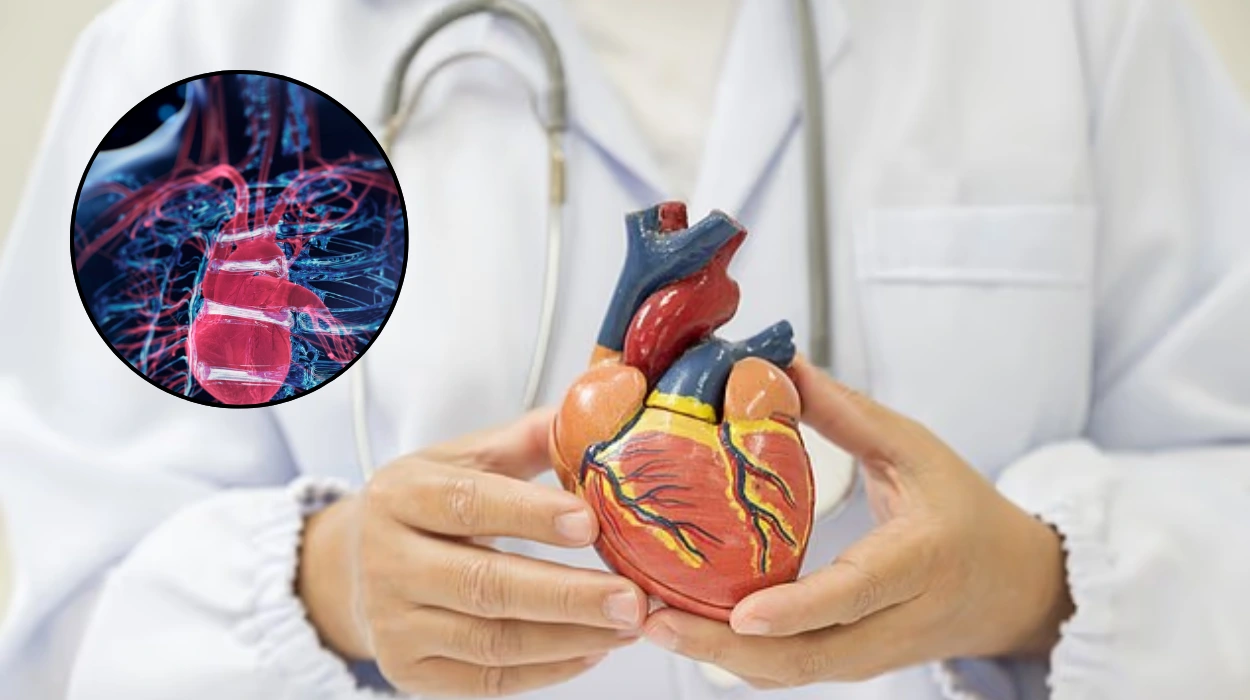
Key Points
- Oxford University scientists have created an AI tool that predicts heart failure risk up to five years before onset with 86% accuracy.
- The tool analyses fat around the heart in routine cardiac CT scans for invisible signs of inflammation and unhealthiness.
- Developed and validated using data from 72,000 patients across nine NHS trusts in England, followed for a decade.
- Patients in the highest risk group are 20 times more likely to develop heart failure than the lowest risk group, with a one-in-four chance within five years.
- Results published on Wednesday in the Journal of the American College of Cardiology.
- Led by Professor Charalambos Antoniades, professor of cardiovascular medicine at the University of Oxford.
- Tool provides an absolute risk score without human input, aiding doctors in monitoring and treatment decisions.
- Oxford team seeking regulatory approval for NHS rollout and expansion to any chest CT scans.
- Funded by the British Heart Foundation (BHF); BHF clinical director Dr Sonya Babu-Narayan praises potential for earlier diagnosis.
- Heart failure affects over 60 million people worldwide; early detection could prevent severe damage.
- Experts recommend lifestyle measures like eating fruit and vegetables, staying active, maintaining healthy weight, quitting smoking, limiting alcohol, and controlling blood pressure to boost heart health.
England (Britain Today News) – April 8, 2026 – A groundbreaking AI tool developed by researchers at the University of Oxford can now predict the risk of heart failure up to five years in advance, offering a potential game-changer in cardiovascular care. The technology analyses routine cardiac CT scans to detect subtle signs of unhealthy fat around the heart, invisible to the human eye, with an impressive 86% accuracy rate. This innovation, validated in a large-scale study of 72,000 patients from nine NHS trusts in England, identifies those at highest risk—20 times more likely to develop the condition than low-risk individuals—paving the way for earlier interventions that could prevent or mitigate heart failure entirely.
- Key Points
- What Is This AI Tool and How Does It Work?
- How Was the AI Tool Tested and Validated?
- Why Is Early Detection of Heart Failure So Crucial?
- What Are the Next Steps for Rolling Out This Technology?
- Who Is at Risk and How Can Heart Health Be Improved?
- How Does This Fit into Broader Advances in Cardiovascular AI?
The tool’s development addresses a critical gap in medical diagnostics. Heart failure, which impacts more than 60 million people globally, occurs when the heart cannot pump blood effectively around the body. Spotting it early allows doctors to manage or even avert the condition, yet until now, routine cardiac CT scans lacked the precision to forecast it reliably.
What Is This AI Tool and How Does It Work?
The AI system, honed by a team at the University of Oxford, zeroes in on the epicardial adipose tissue—the fat surrounding the heart. It detects inflammation and other unhealthy markers that signal future heart failure risks. As reported by sources covering the study, the tool processes CT scan data autonomously to generate a precise risk score for each patient, eliminating the need for manual interpretation.
Professor Charalambos Antoniades, who led the research as professor of cardiovascular medicine at Oxford, explained the breakthrough’s significance.
“We have used developments in bioscience and computing to take a big step forward in treating heart failure,”
he stated.
“Our new AI tool is able to take cardiac CT scan data and produce an absolute risk score for each patient without any need for human input. Although this study used cardiac CT scans, we are now working towards applying this method to any CT scan of the chest, performed for any reason. This will allow doctors to make more informed decisions about the best way to treat patients, giving the most intensive treatment to those at the highest risk.”
This risk stratification is stark: those in the top risk category face about a one-in-four probability of developing heart failure within five years, compared to minimal odds for the lowest group.
How Was the AI Tool Tested and Validated?
The study’s robustness stems from its scale and methodology. Researchers trained and validated the AI using anonymised data from 72,000 patients across nine NHS trusts in England. These individuals underwent cardiac CT scans and were monitored for a full decade afterwards. The tool accurately predicted heart failure onset in the subsequent five years with 86% precision, as detailed in the peer-reviewed findings.
The results, unveiled on Wednesday, appear in the Journal of the American College of Cardiology, underscoring the tool’s reliability in real-world NHS settings. This large cohort—from diverse hospitals—ensures the findings reflect everyday clinical practice, not just controlled trials.
Why Is Early Detection of Heart Failure So Crucial?
Heart failure often strikes late, sometimes only revealing itself during emergency hospital admissions. By then, irreversible damage to the heart muscle may have occurred, limiting treatment options and prognosis.
Dr Sonya Babu-Narayan, clinical director at the British Heart Foundation—which funded the research—highlighted this urgency.
“Heart failure is consistently diagnosed too late, sometimes only when a patient is admitted to hospital. Late diagnosis may mean patients already have severe damage to their heart muscle which might have been avoided,”
she said.
“This tool could help doctors spot heart failure earlier, by monitoring more closely those at highest risk. Early heart failure diagnosis is crucial – it means doctors can better manage someone’s condition which gives them a fighting chance of living longer in better health. This study demonstrates the power of harnessing technology to unlock improvements in cardiovascular care.”
Experts agree that proactive monitoring via this AI could transform outcomes, enabling tailored care plans like intensified lifestyle advice or medications for high-risk patients.
What Are the Next Steps for Rolling Out This Technology?
The Oxford team now pursues regulatory approval to integrate the tool into healthcare systems, starting with the NHS. They envision embedding it in hospital radiology departments for seamless analysis of routine cardiac CT scans.
Future expansions aim broader: adapting it for any chest CT scan, regardless of original purpose, such as those for lung issues or cancer screening. Professor Antoniades noted this versatility could democratise risk prediction across millions of scans performed annually.
Regulatory green lights would mark a swift path to clinical adoption, potentially saving lives by flagging risks years ahead.
Who Is at Risk and How Can Heart Health Be Improved?
While the AI identifies individuals via scans, population-wide prevention remains key. Heart failure risk escalates with factors like high blood pressure, obesity, smoking, excessive alcohol, and inactivity.
Health authorities emphasise proven strategies: consume plenty of fruit and vegetables, engage in regular physical activity, maintain a healthy weight, quit smoking, cut alcohol intake, and control blood pressure. These habits, combined with AI-driven early warnings, could drastically reduce the global burden of heart failure.
The study’s implications extend beyond England. With 60 million sufferers worldwide, scalable tools like this promise equitable access to predictive care, especially in overburdened systems.
How Does This Fit into Broader Advances in Cardiovascular AI?
This Oxford innovation builds on AI’s rising role in cardiology. Past tools have analysed scans for blockages or arrhythmias, but predicting heart failure from fat tissue marks novel territory. Its 86% accuracy surpasses many existing models, validated in a decade-long NHS dataset.
Professor Antoniades’ leadership underscores interdisciplinary progress, blending bioscience, computing, and clinical insight. The British Heart Foundation’s backing highlights philanthropic commitment to tech-driven heart research.
In summary, this AI tool stands poised to redefine heart failure prevention. By empowering doctors with forward-looking risk scores, it shifts care from reactive to preventive, potentially sparing countless patients from debilitating illness.