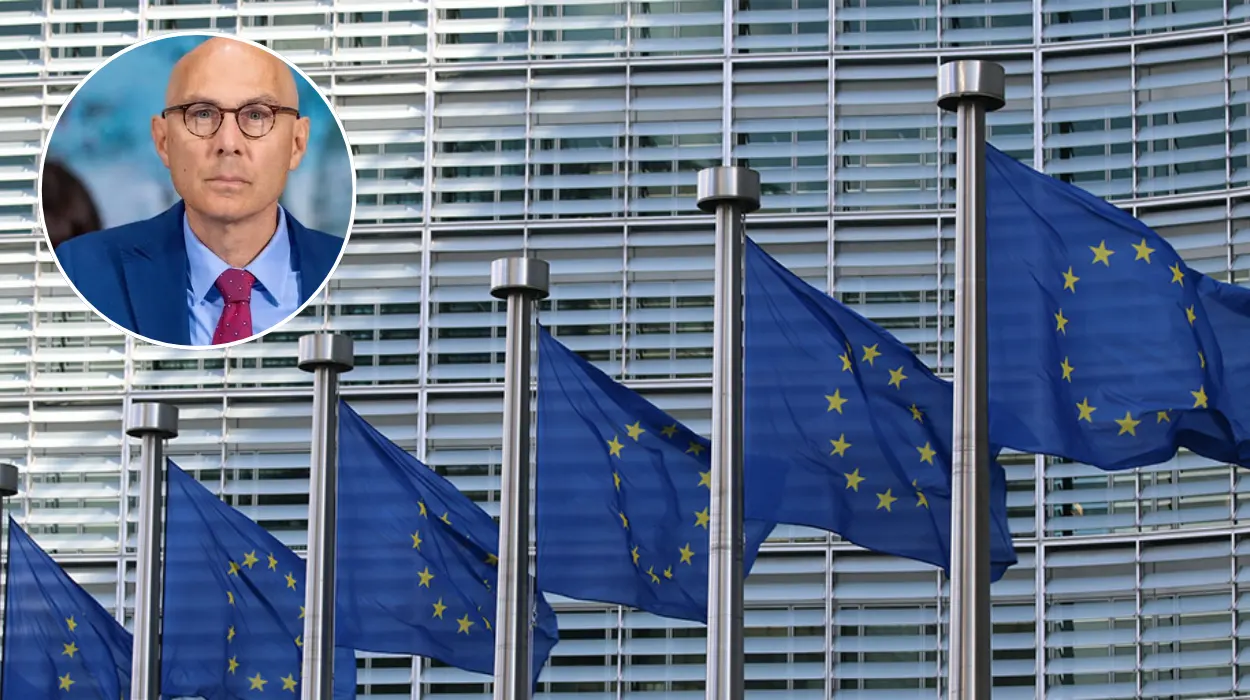
Key Points
- The United Nations human rights chief Volker Türk has warned that new European Union migration laws risk violating migrants’ human rights.
- The European Parliament recently approved stricter return policies to increase deportations of rejected asylum seekers.
- The new rules allow EU member states to transfer migrants to non-EU countries through “return centres.”
- Türk stressed that outsourcing migration management to third countries does not absolve EU states of their human rights obligations.
- Concerns have been raised about the detention and transfer of vulnerable groups, including children.
- Only around 20% of deportation orders issued to irregular migrants in the EU are currently enforced.
- Critics argue the policy could undermine international legal protections for asylum seekers.
- Türk reiterated the principle of non-refoulement, prohibiting the return of individuals to places where they risk serious harm.
- Deportation decisions, he said, must be based on individual assessments and only after appeal procedures are completed.
- The UN has called for a more balanced approach recognising migrants’ contributions to European societies.
Brussels (Britain Today News) June 20, 2026 — The United Nations human rights chief has issued a stark warning that newly approved European Union migration rules could lead to serious violations of migrants’ fundamental rights, particularly as the bloc moves towards stricter deportation policies and offshore processing arrangements.
- Key Points
- How Do the New EU Migration Rules Work?
- Why Has the UN Raised Concerns About Human Rights?
- What Is the Principle of Non-Refoulement and Why Is It Important?
- What Do Supporters of the Policy Argue?
- How Has the Debate Over Migration Evolved in Europe?
- What Safeguards Has the UN Recommended?
- How Do Migrants Contribute to European Societies?
- What Lies Ahead for EU Migration Policy?
Volker Türk, the UN High Commissioner for Human Rights, expressed “strong concerns” over the legislation, which permits EU member states to transfer rejected asylum seekers to countries outside the European Union while they await deportation. His remarks come at a time of intensifying debate across Europe over migration enforcement and border control.
“EU States cannot simply outsource their human rights obligations to third States in this context,”
Türk said in an official statement issued this week, underlining the legal and moral responsibilities that remain with European governments regardless of where migrants are processed or held.
How Do the New EU Migration Rules Work?
The newly adopted European Union migration framework introduces a significant shift in how rejected asylum seekers are handled. Approved by the European Parliament, the legislation allows member states to establish agreements with non-EU countries to create what are described as “return centres.”
These facilities would serve as holding locations where migrants whose asylum claims have been denied can be transferred before being deported to their countries of origin. The aim, according to policymakers, is to streamline deportation procedures and address inefficiencies that have long plagued the EU’s migration system.
Currently, enforcement remains a major challenge. Statistics indicate that only about 20% of deportation orders issued to irregular migrants are actually carried out. This low rate has been frequently cited by proponents of stricter migration controls as evidence of systemic weakness.
Supporters of the new policy argue that externalising parts of the deportation process could increase efficiency and reduce the burden on EU member states. However, critics contend that such measures risk shifting responsibility away from European jurisdictions and into regions where legal protections may be weaker.
Why Has the UN Raised Concerns About Human Rights?
The United Nations’ concerns centre primarily on the potential human rights implications of transferring migrants to third countries. Volker Türk emphasised that such actions represent a “highly sensitive exercise of state power,” particularly when vulnerable populations are involved.
He warned that the detention and relocation of individuals—including children—could expose them to risks of abuse, inadequate living conditions, and lack of legal safeguards.
“There must be front-and-centre emphasis on human rights protection and dignity throughout – in fact and in law,”
Türk stressed, highlighting the need for comprehensive oversight and adherence to international standards.
The UN’s position reflects longstanding principles within international law, particularly the obligation of states to ensure that individuals under their jurisdiction are treated with dignity and fairness, regardless of their migration status.
What Is the Principle of Non-Refoulement and Why Is It Important?
A central issue raised by Türk is the principle of non-refoulement, a cornerstone of international refugee and human rights law. This principle prohibits states from returning individuals to countries where they face a real risk of persecution, torture, or other serious harm.
Türk reiterated the importance of this obligation, stating:
“This is the fundamental principle of non-refoulement. It must be fully respected by all countries and all territories under all circumstances.”
The concern is that transferring migrants to third countries—particularly those with weaker asylum systems—could indirectly lead to violations of this principle. If adequate safeguards are not in place, individuals could ultimately be sent back to dangerous situations without proper assessment.
The UN has therefore called on European authorities to ensure that all migration policies are fully aligned with international legal standards, including refugee conventions and human rights treaties.
Are Vulnerable Groups at Greater Risk Under the New Policy?
One of the most pressing concerns highlighted by the United Nations relates to the treatment of vulnerable groups, including children, families, and individuals with special needs.
Türk warned that the detention and transfer of such individuals to third countries could have severe consequences, particularly if appropriate protections are not guaranteed.
The relocation process, he noted, must take into account the specific circumstances of each individual, ensuring that their rights are not compromised at any stage.
Human rights advocates have echoed these concerns, arguing that offshore detention facilities often lack the infrastructure and oversight necessary to safeguard vulnerable populations.
What Do Supporters of the Policy Argue?
Despite criticism, supporters of the new EU migration rules maintain that stronger enforcement measures are necessary to address ongoing challenges in managing irregular migration.
They point to the low rate of deportation enforcement—currently around 20%—as evidence that existing systems are ineffective. According to this perspective, stricter return policies and external processing arrangements could serve as deterrents and improve overall efficiency.
Advocates also argue that the policy could help restore public confidence in migration systems across Europe, where political pressure has been mounting in recent years.
However, critics counter that efficiency should not come at the expense of fundamental rights, and that any reforms must be carefully balanced with legal and ethical obligations.
How Has the Debate Over Migration Evolved in Europe?
Migration has been a highly contentious issue across Europe for several years, with governments facing increasing pressure to control borders and manage asylum applications more effectively.
The European Commission’s proposal, introduced last year, aimed to address these challenges by increasing the number of returns of irregular migrants. However, the plan quickly drew criticism from left-wing lawmakers and human rights organisations.
Opponents argued that the measures could weaken protections for migrants and asylum seekers, potentially leading to violations of international law.
The approval of the new rules by the European Parliament marks a significant step in this ongoing debate, signalling a shift towards stricter enforcement policies within the EU.
Explore More about World:
France Bans Alcohol at Music Festivals Amid Red Heatwave Alert
Moroccan Researchers Win Top Honors at Innovation Week Awards 2026
What Safeguards Has the UN Recommended?
In response to the new legislation, the United Nations has outlined several key recommendations to ensure that migrants’ rights are protected.
Türk emphasised that deportation decisions should always be based on individual assessments, taking into account the specific circumstances and risks faced by each person.
He also stressed that removals should not be carried out until all appeal procedures have been completed, ensuring that individuals have access to due process and legal remedies.
Furthermore, the UN has called for robust monitoring mechanisms to oversee the operation of return centres, particularly those located outside the European Union.
How Do Migrants Contribute to European Societies?
In his concluding remarks, Volker Türk highlighted the importance of recognising the positive contributions that migrants make to European societies and economies.
He called for a more balanced approach to migration policy—one that not only addresses enforcement challenges but also acknowledges the value of diversity and inclusion.
Migrants, he noted, play a crucial role in various sectors, contributing to economic growth, cultural enrichment, and social development across the continent.
This perspective underscores the need for policies that are not only effective but also humane and forward-looking.
What Lies Ahead for EU Migration Policy?
The adoption of the new migration rules marks a pivotal moment in the European Union’s approach to migration management. While the policy aims to address longstanding inefficiencies, it has also raised significant concerns about human rights and legal compliance.
The coming months are likely to see continued debate and scrutiny, as governments, international organisations, and civil society groups assess the impact of the new measures.
The United Nations has made it clear that any migration policy must prioritise human dignity and adhere to international legal standards.
As Europe navigates these complex challenges, the balance between enforcement and human rights will remain at the forefront of the discussion.