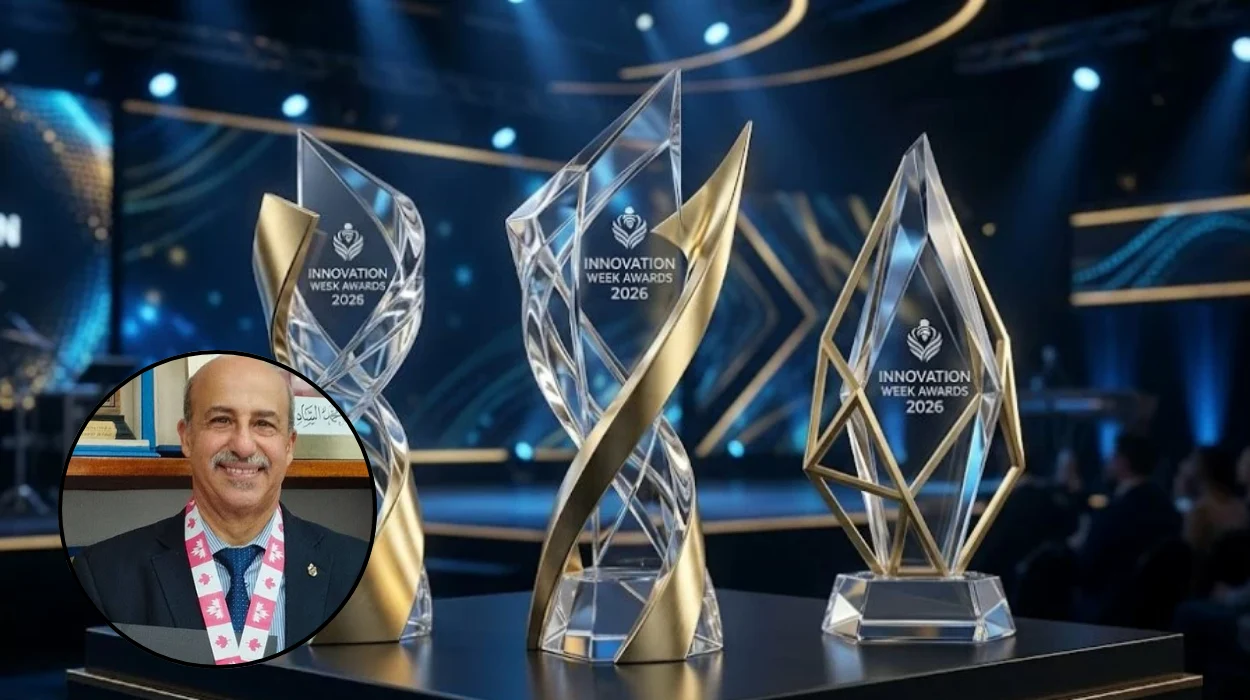
Key Points
- Several Moroccan inventors earned top honors at the Innovation Week Awards 2026, an international online competition featuring an AI-assisted judging system
- The event was organised by OFEED, a Moroccan platform promoting innovation, marking its 10th anniversary and the eighth edition of the Awards
- Hassan Ammor, professor at Mohammed V University in Rabat, received the Academic Grand Prize for an AI-based exam cheating detection solution
- Ammor, alongside researchers Jalal Baayer and Zakaria Er-Reguig from the Mohammadia School of Engineers, ranked among Top 20 Gold Medal Winners globally
- Awarded projects span healthcare (breast cancer early detection) and telecommunications (microstrip antenna for GSM systems)
- The new AI-assisted jury model analysed submissions during interactive video presentations to improve transparency and consistency
- Moroccan researchers’ success reflects growing activity in applied scientific research with technology transfer opportunities
Rabat (Britain Today News) June 19, 2026 — Several Moroccan inventors have secured top honors at the Innovation Week Awards 2026, an international online competition that introduced an AI-assisted judging system this year, marking a significant milestone for Morocco’s scientific research community on the global stage.
- Key Points
- What Made Innovation Week Awards 2026 Unique?
- Who Won the Academic Grand Prize?
- How Does the Breast Cancer Detection Technology Work?
- What Is the Microstrip Antenna Innovation?
- Why Does AI-Assisted Judging Matter for Future Competitions?
- What Does This Success Mean for Morocco’s Research Community?
- How Will These Technologies Be Deployed?
- What Are the Future Implications for Innovation Competitions?
What Made Innovation Week Awards 2026 Unique?
This year’s competition stood out for testing a new AI-assisted jury model that transformed how participants’ projects were evaluated. Participants defended their projects through interactive video presentations, while AI tools helped analyse submissions according to competition criteria. Organisers said the system was designed to improve transparency and make comparisons between projects more consistent, representing a significant shift from traditional judging methods.
The event was organised by OFEED, a Moroccan platform dedicated to promoting innovation and supporting inventors. The latest edition marked both the platform’s 10th anniversary and the eighth edition of the Innovation Week Awards, according to the official announcement. The event drew attention not only for the projects recognised but also for its new evaluation process, which relied on AI-assisted live assessments.
Who Won the Academic Grand Prize?
Among the biggest winners was Hassan Ammor, a professor at Mohammed V University in Rabat, who received the Academic Grand Prize for a project designed to combat cheating during exams. As reported in the official announcement from OFEED, the solution combines artificial intelligence, cybersecurity, and embedded systems technologies to detect unauthorized electronic devices in exam halls.
Ammor’s innovation addresses a critical challenge in educational institutions worldwide, where electronic device misuse during examinations has become increasingly sophisticated. The system represents a convergence of multiple advanced technologies working together to maintain academic integrity.
Morocco’s success extended beyond the grand prize. Ammor, alongside researchers Jalal Baayer and Zakaria Er-Reguig from the Mohammadia School of Engineers, was also ranked among the competition’s Top 20 Gold Medal Winners, a group made up of the highest-rated projects from around the world. This dual achievement underscores the strength of Morocco’s academic research infrastructure.
How Does the Breast Cancer Detection Technology Work?
The Moroccan researchers were recognised for work spanning several sectors, from healthcare to telecommunications. One of the awarded projects focuses on the early detection of breast cancer through a smart scanner that uses microwave imaging and radiofrequency technologies. The portable device aims to make screening more accessible and affordable, particularly in regions where access to conventional diagnostic tools remains limited.
Researchers behind the project said early detection plays a crucial role in improving survival rates and that the technology could eventually be deployed on a large scale. This innovation addresses a critical public health challenge, particularly in developing regions where breast cancer screening facilities are scarce. The portable nature of the device could revolutionise how healthcare systems approach cancer screening in resource-constrained environments.
The use of microwave imaging and radiofrequency technologies represents a significant advancement over traditional X-ray-based mammography, potentially reducing discomfort for patients while maintaining diagnostic accuracy. The affordability aspect makes this technology particularly valuable for healthcare systems operating under budget constraints.
What Is the Microstrip Antenna Innovation?
Another recognised innovation is a microstrip antenna developed for GSM communication systems. The technology seeks to reduce the thermal effects and electromagnetic wave interactions that users experience when using mobile phones. The project falls within the field of telecommunications and electromagnetic compatibility research.
This innovation addresses growing concerns about the health effects of mobile phone usage, particularly regarding thermal effects and electromagnetic exposure. As mobile phone usage continues to increase globally, technologies that minimise these effects become increasingly important for public health.
The microstrip antenna design represents advancements in electromagnetic compatibility research, potentially leading to safer mobile communication devices. This work contributes to the broader field of telecommunications engineering, where reducing electromagnetic interference remains a critical challenge.
Why Does AI-Assisted Judging Matter for Future Competitions?
The introduction of AI-assisted judging represents a significant evolution in how international competitions evaluate innovative projects. By using AI tools to analyse submissions according to competition criteria during live assessments, organisers aimed to create a more objective and consistent evaluation process.
The system’s design prioritises transparency, ensuring that participants understand how their projects are being assessed. This approach could set a new standard for future international competitions, potentially influencing how other organisations structure their evaluation processes.
Interactive video presentations combined with AI analysis create a dynamic evaluation environment where judges can assess both the technical merits of projects and the researchers’ ability to communicate their innovations effectively.
What Does This Success Mean for Morocco’s Research Community?
The strong showing by Moroccan researchers reflects growing activity in applied scientific research, with several projects focused on solving practical challenges while creating opportunities for technology transfer and industrial development. This achievement demonstrates Morocco’s increasing capacity to produce world-class research with real-world applications.
The success of researchers from Mohammed V University and the Mohammadia School of Engineers highlights the strength of Morocco’s academic institutions in producing innovative solutions to global challenges. These achievements could attract further international collaboration and investment in Morocco’s research sector.
The diversity of awarded projects—spanning education technology, healthcare, and telecommunications—demonstrates the breadth of Morocco’s research capabilities. This multidisciplinary success suggests a robust research ecosystem capable of addressing complex challenges across multiple sectors.
Explore More about World:
ICC Prosecutor Karim Khan Suspended from British Bar Amid Sexual Misconduct Allegations
Trump Calls Modi “An Angel” at G7 Meeting, Hints at Upcoming India Visit
How Will These Technologies Be Deployed?
The researchers behind the awarded projects indicated that several innovations could eventually be deployed on a large scale. The breast cancer detection scanner, particularly, was noted for its potential to transform screening accessibility in regions with limited diagnostic resources.
Technology transfer opportunities highlighted by these achievements suggest pathways for converting academic research into commercial products. This alignment between academic innovation and industrial development represents a key goal for Morocco’s research strategy.
The exam cheating detection system developed by Hassan Ammor could see immediate implementation in educational institutions, addressing a pressing need for academic integrity solutions. Similarly, the microstrip antenna technology could influence mobile phone manufacturing standards.
What Are the Future Implications for Innovation Competitions?
The 2026 Innovation Week Awards set a new benchmark for international innovation competitions through its AI-assisted judging system. Other organisations may adopt similar approaches to improve evaluation consistency and transparency in their own competitions.
The success of Moroccan researchers at this international platform demonstrates the global competitiveness of Morocco’s scientific community. This achievement could inspire increased investment in research and development across Moroccan academic institutions.
The eight editions of the Innovation Week Awards, combined with OFEED’s 10-year anniversary, establish the platform as a established forum for showcasing innovative projects. The introduction of AI-assisted judging suggests continued evolution in how the competition adapts to technological advancements.
The Innovation Week Awards 2026 has firmly established Morocco as a rising player in global scientific innovation, with researchers demonstrating that their work can compete successfully against the highest-rated projects from around the world.