Key Points
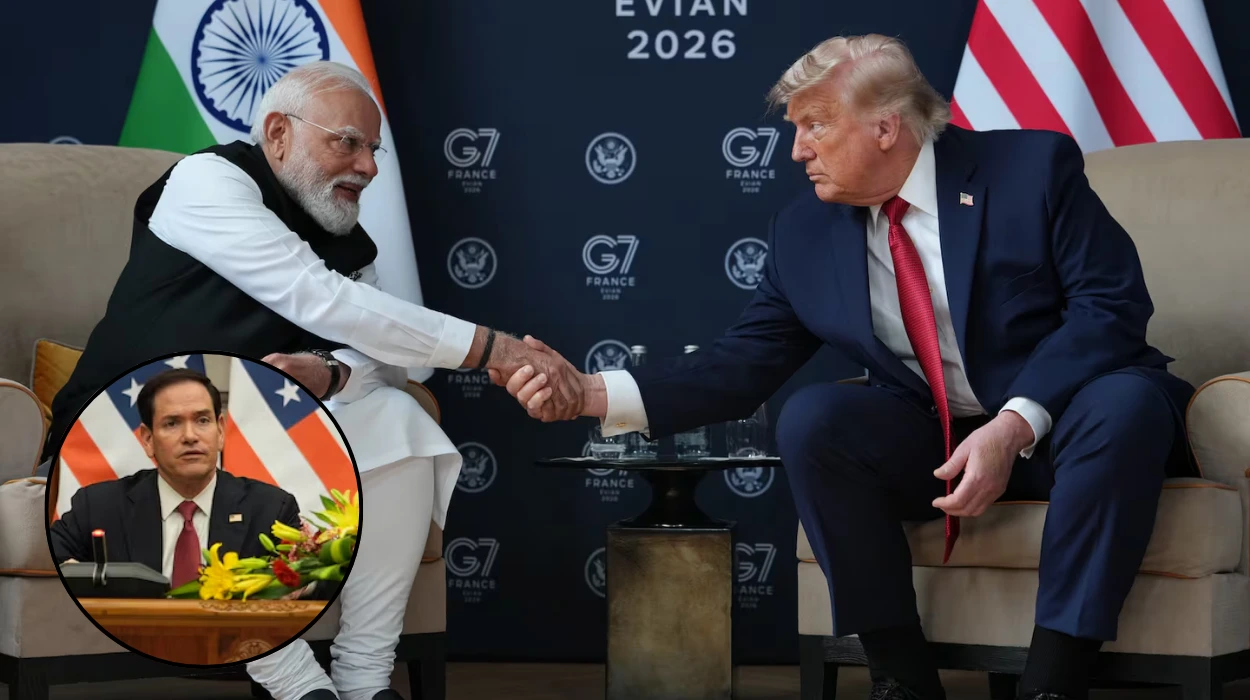
- US President Donald Trump met Indian Prime Minister Narendra Modi on the sidelines of the G7 Summit in France.
- Trump described Modi as “an angel” and a “killer negotiator” during their bilateral interaction.
- Both leaders indicated progress towards a potential US–India trade deal.
- Trump said the United States and India were “close” to finalising a trade agreement.
- Trump confirmed he plans to visit India “sometime in the future.”
- The meeting marked the first encounter between Trump and Modi in around 18 months.
- US Trade Representative Jamieson Greer is expected to travel to India next week to advance negotiations.
- US–India relations have faced strain due to tariffs reaching as high as 50% in recent years.
- Current US tariff levels on Indian goods have reportedly been reduced to around 18%.
- Immigration policies, including H-1B visa reforms and travel restrictions, remain a sensitive backdrop to talks.
- Both leaders exchanged remarks highlighting personal rapport and mutual respect despite geopolitical tensions.
- Trump also referenced ongoing global conflicts, including Ukraine, Iran, and Gaza, in broader diplomatic discussions.
- The meeting also touched indirectly on maritime security and Indian nationals affected in regional incidents.
Paris (Britain Today News) June 18, 2026 – President Donald Trump and Indian Prime Minister Narendra Modi held a high-stakes bilateral meeting on the sidelines of the G7 Summit in France, where both leaders signalled renewed momentum in US–India relations, particularly on trade, diplomacy, and strategic cooperation.
- Key Points
- What Did Trump Say About Narendra Modi During the G7 Meeting?
- Why Have US–India Relations Been Strained in Recent Years?
- What Did Trump and Modi Say About Their Personal Relationship?
- What Role Does Immigration Policy Play in US–India Relations?
- What Was Discussed About Global Conflicts and Security Issues?
- What Happens Next in US–India Relations?
The meeting, which marked the first in-person interaction between the two leaders in nearly 18 months, unfolded against a backdrop of fluctuating tariffs, strained immigration debates, and shifting geopolitical alliances. Despite these complexities, the tone of the engagement was notably warm, with both sides emphasising personal rapport and economic opportunity.
The encounter has been widely interpreted by diplomatic observers as a potential reset in US–India relations, particularly as both nations look to stabilise trade negotiations that have been under pressure since the introduction of multiple tariff measures during the Trump administration’s earlier policy phases.
What Did Trump Say About Narendra Modi During the G7 Meeting?
During the bilateral engagement, US President Donald Trump offered unusually personal praise for Indian Prime Minister Narendra Modi, blending diplomatic commentary with strikingly informal language.
As reported by Reuters, Trump described Modi as both “an angel” and a “killer negotiator,” suggesting admiration for the Indian leader’s diplomatic firmness.
Trump was quoted as saying:
“He’s the most beautiful looking man. He looks so nice. He’s like an angel. But actually, he’s as tough as — he’s a killer.”
The US President further characterised Modi as a “scary negotiator,” underscoring the intensity of ongoing trade discussions between Washington and New Delhi.
The remarks reflect a continuation of the complex personal chemistry between the two leaders, who developed a visible rapport during Trump’s first term in office. Despite policy differences, both leaders have frequently highlighted mutual respect in public forums.
How Close Are India and the US to a Trade Deal?
According to statements made during the summit, both sides are reportedly inching closer to a bilateral trade agreement that has been under negotiation for several months.
Trump indicated that discussions were progressing positively, stating that the two countries were “close to striking a trade deal.” The comments were made during a joint press interaction on the sidelines of the G7 Summit.
The US President also pointed to upcoming diplomatic engagement, noting that US Trade Representative Jamieson Greer would travel to India in the coming week to advance negotiations further.
Trade relations between the two countries have experienced turbulence in recent years, particularly following the imposition of tariffs that at one point reached as high as 50% on certain Indian exports. These measures included a 25% penalty linked to India’s continued purchase of Russian oil amid the Ukraine conflict.
Currently, tariff levels have reportedly eased to around 18%, signalling partial de-escalation but not full resolution.
Why Have US–India Relations Been Strained in Recent Years?
The broader US–India relationship has faced multiple pressure points, ranging from trade disputes to geopolitical disagreements.
One of the central issues has been tariffs imposed by Washington, which affected key Indian export sectors. These measures were justified by the US administration as part of broader economic and geopolitical strategy, including concerns over energy imports from Russia.
In addition, immigration policy has become a recurring point of tension. The Trump administration’s evolving stance on travel restrictions and visa fees—particularly affecting H-1B visa applicants—has drawn concern in India’s technology and skilled labour sectors.
Some of these policies were challenged in US courts, with certain provisions deemed unlawful in recent rulings, adding further complexity to bilateral discussions.
Despite these issues, both governments have repeatedly stated that the strategic partnership remains intact and important for global stability.
What Did Trump and Modi Say About Their Personal Relationship?
The meeting at the G7 Summit was marked by visible displays of cordiality between the two leaders.
Trump emphasised the strength of the bilateral relationship, stating:
“We have the best relationship. We cannot be closer than we are. Would you say that, sir? I don’t think we can be any closer.”
He further added that the relationship was not only between governments but also strongly shaped by personal chemistry.
Prime Minister Narendra Modi echoed similar sentiments, highlighting cooperation on economic and security issues while focusing on long-term partnership goals.
Both leaders’ public remarks suggested an effort to reinforce stability in the relationship despite underlying policy disagreements.
Will Donald Trump Visit India Soon?
One of the most notable announcements from the interaction was Trump’s statement that he intends to visit India in the future.
Although no official date has been confirmed, Trump said:
“I will be going to India sometime in the future.”
The statement has been interpreted as a positive diplomatic signal, especially given the scale and strategic importance of India–US relations in global politics.
A presidential visit would likely focus on trade agreements, defence cooperation, technology partnerships, and regional security coordination.
What Role Does Immigration Policy Play in US–India Relations?
Immigration remains one of the most sensitive aspects of the bilateral relationship.
The Trump administration has implemented stricter immigration policies in recent years, including travel restrictions and increased scrutiny of work visa applications.
A proposed $100,000 fee on H-1B visa applicants was among the most controversial measures, drawing criticism from industry leaders and legal challenges in US courts.
US Secretary of State Marco Rubio has previously defended the policy direction, stating that while the changes may disproportionately affect countries like India, they are not specifically targeted.
Rubio said:
“The changes, while they may be having a disproportionate impact on a place like India that provides so many high-skilled workers to the U.S. economy, are not a system that is targeted at India.”
He further described the policy phase as a “period of transition,” suggesting long-term reforms rather than permanent restrictions.
Explore More about World:
JD Vance Confirms 60-Day Iran Deal Period Begins Thursday with Toll-Free Strait of Hormuz
Lebanon’s Nabatiyeh Sees Limited Returns After US-Iran Ceasefire Amid Ongoing Clashes Nearby
What Was Discussed About Global Conflicts and Security Issues?
Beyond trade and immigration, the leaders also referenced broader geopolitical issues, including conflicts in Ukraine, Iran, and Gaza.
Trump defended recent diplomatic agreements involving Iran, while emphasising the need for coordinated global responses to ongoing conflicts.
Prime Minister Modi, meanwhile, highlighted concerns regarding maritime security and the safety of Indian nationals working in international waters.
Modi specifically raised the issue of seafarers, stating:
“I’m confident that the issue of seafarers will receive the highest priority during the implementation of this agreement.”
Trump acknowledged incidents involving Indian nationals in maritime regions, stating awareness of reported casualties and emphasising continued cooperation.
How Has the Trump–Modi Dynamic Evolved Over Time?
The relationship between Trump and Modi has evolved significantly over multiple years and political cycles.
During Trump’s first term, both leaders frequently exchanged public praise and held large-scale diplomatic events, including rallies and summits highlighting bilateral friendship.
However, during Trump’s second term, relations became more complex due to global conflicts, shifting immigration policy, and renewed trade tensions.
Despite these challenges, the personal rapport between the two leaders appears to remain intact, as evidenced by their latest interaction at the G7 Summit.
What Happens Next in US–India Relations?
Diplomatic analysts suggest that the next phase of negotiations will likely focus on finalising trade terms, resolving tariff disputes, and addressing immigration-related concerns.
The upcoming visit of US Trade Representative Jamieson Greer to India is expected to play a crucial role in determining the direction of negotiations.
If successful, the talks could pave the way for a comprehensive economic agreement, potentially reshaping trade flows between two of the world’s largest economies.