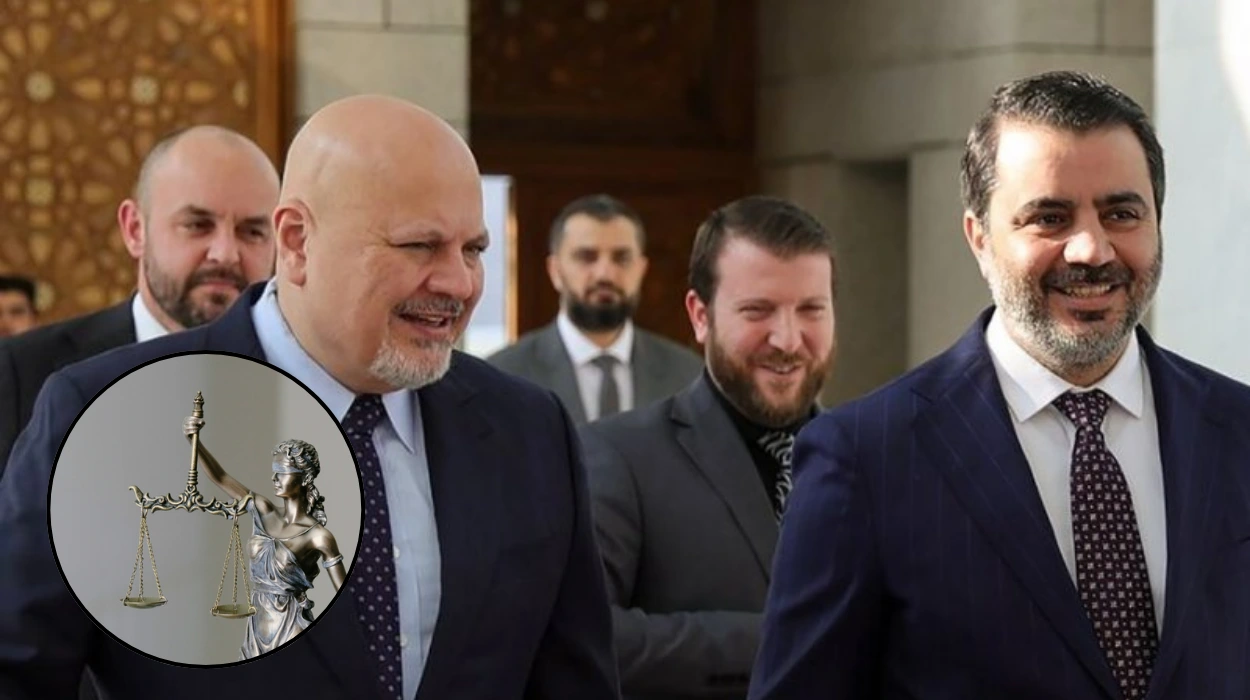
Key Points
- Karim Khan, 56, chief prosecutor for the International Criminal Court (ICC), has been suspended by Britain’s Bar Standards Board for alleged sexual misconduct
- Khan was already suspended from duty by the ICC on June 9, 2026, pending investigation into the allegations
- The accused woman is a former aide, a female attorney in her 30s who worked for Khan at the ICC headquarters in The Hague, Netherlands
- She accuses Khan of forced sexual intercourse multiple times in New York, Colombia, Congo, Chad, Paris, and at Khan’s home in The Hague
- Khan allegedly tried to silence the woman by telling her the case would jeopardize his work for Palestinian victims, including his efforts to arrest Benjamin Netanyahu for war crimes during Israel’s Gaza war
- A Wall Street Journal report revealed Khan said on a call with his alleged victim: “The casualties [of her allegations] will unfortunately be three: you and your family, me and your family and the justice of the victims”
- The alleged victim claimed she was reluctant to complain due to fear of losing her job and worry about paying medical bills for her mother dying of cancer
- The suspension prevents Khan from doing any legal work in Britain and will be reviewed after four weeks
- Khan has unequivocally denied all allegations of impropriety
- London’s Carter-Ruck law firm, representing Khan, stated his legal team is challenging the decision and protecting his rights
- The ICC’s 125 member states will vote on the matter in a special session on July 24, 2026
- Khan is a British citizen who had been working toward arrest warrants for Benjamin Netanyahu for war crimes
The Hague (Britain Today News) June 19, 2026 – Karim Khan, the chief prosecutor of the International Criminal Court, faces professional ruin in Britain after being suspended from the British bar by the Bar Standards Board amid serious allegations of sexual misconduct that have shattered his reputation as a human rights champion.
- Key Points
- What Exactly Happened to Karim Khan?
- What Did Karim Khan Say to His Alleged Victim?
- Why Was The Alleged Victim Reluctant to Complain Initially?
- What Is Karim Khan’s Response to The Allegations?
- When Did The Allegations First Surface?
- What Happens Next at The International Criminal Court?
- What Is The Connection to Benjamin Netanyahu and Gaza?
- What Previous Leave Did Karim Khan Take?
- Why Is This Case Significant for International Justice?
- What Are The Legal Implications of Khan’s Statement?
- What Does The ICC’s Investigation Process Reveal?
- What Are The Broader Implications for International Criminal Court?
- What Is The Status of The Netanyahu War Crimes Case?
- What Does Khan’s British Citizenship Mean for This Case?
- What Support Systems Exists for ICC Staff Reporting Misconduct?
- What Is The Outcome of The July 24 Vote?
- What Lessons Does This Case Offer for International Institutions?
What Exactly Happened to Karim Khan?
Khan, 56, was suspended by Britain’s Bar Standards Board on June 19, 2026, for alleged sexual misconduct that dates back to multiple international locations over several years. The suspension marks a dramatic fall for the British lawyer who had garnered global attention for his aggressive pursuit of war crimes cases, including his efforts to arrest Israeli Prime Minister Benjamin Netanyahu.
“The suspension will prevent him from doing any legal work in Britain,”
according to the official statement from the Bar Standards Board.
“It will be reviewed after four weeks.”
Who Is Accusing Karim Khan and What Are The Allegations?
The accused woman is a former aide to Khan—a female attorney in her 30s who worked for him at the ICC headquarters in The Hague, Netherlands. The assistant took leave in May 2025 after the allegations first surfaced, according to the ICC’s internal records.
The alleged victim accuses Khan of forced sexual intercourse multiple times across five countries and at his residence. The locations include New York, Colombia, Congo, Chad, Paris, and at Khan’s home in The Hague. These allegations span multiple years and demonstrate what prosecutors might call a pattern of conduct.
What Did Karim Khan Say to His Alleged Victim?
A startling revelation emerged from a Wall Street Journal report, as cited by UPI, documenting a call between Khan and his alleged victim. During this conversation, Khan made what critics are calling a chilling threat:
“The casualties [of her allegations] will unfortunately be three: you and your family, me and my family and the justice of the victims.”
This statement has become central to the prosecution’s argument that Khan attempted to silence his accuser through intimidation and appeals to his broader humanitarian mission.
Why Was The Alleged Victim Reluctant to Complain Initially?
The alleged victim expressed profound reluctance about bringing her complaint forward. She stated she didn’t want to lose her job in what she described as “the important human rights law office” at the ICC.
Furthermore, she revealed additional pressure that kept her silent:
“She also said she was worried about paying medical bills for her mother, who was dying of cancer.”
This financial vulnerability, combined with professional fear, created what employment lawyers might call the perfect conditions for workplace abuse to continue unchecked.
How Did Karim Khan Allegedly Try to Silence His Accuser?
Khan allegedly told his former aide that the case against him would jeopardize his critical work for Palestinian victims. This tactic, experts say, represents a classic form of manipulation where the accused leverages their humanitarian credentials to discourage allegations.
The timing is particularly significant. Khan had been actively working toward the arrest of Benjamin Netanyahu for war crimes during Israel’s war in Gaza. By linking the allegations to his broader mission, Khan allegedly created a false equivalence between his personal conduct and international justice.
What Is Karim Khan’s Response to The Allegations?
“As he has consistently made clear, Mr. Khan unequivocally denies all allegations of impropriety,”
stated Carter-Ruck, the London law firm representing Khan, in an official statement released June 19, 2026.
The firm continued:
“He maintains that he has acted at all times fully in accordance with his professional obligations.”
“Mr. Khan’s legal team is taking all necessary steps to challenge the decision of the bureau, protect his rights and ensure that due process is upheld,”
according to Carter-Ruck’s statement.
When Did The Allegations First Surface?
As reported by UPI, the prosecutor took leave in May 2025 after the allegations first surfaced from an assistant who worked for him at the court’s headquarters in The Hague. This means the ICC has been investigating these claims for approximately 13 months before Khan’s suspension from duty on June 9, 2026.
The extended investigation period suggests the ICC took the allegations seriously and conducted thorough due before reaching their decision to suspend Khan from his prosecutorial duties.
What Happens Next at The International Criminal Court?
The ICC’s 125 member states will vote on the matter during a special session scheduled for July 24, 2026, according to UPI’s coverage of the court’s internal procedures. This vote will determine Khan’s future as chief prosecutor and could result in his permanent removal from the position.
The special session represents one of the most significant moments in the ICC’s history, as member states must balance the gravity of the allegations against Khan’s track record as a prosecutor who had garnered international attention for pursuing high-profile war crimes cases.
What Is The Connection to Benjamin Netanyahu and Gaza?
Khan had been working toward the arrest of Benjamin Netanyahu for war crimes during Israel’s war in Gaza before his suspension. This work had garnered significant international attention and positioned Khan as a controversial figure in Middle Eastern politics.
Khan is a British citizen who had built his reputation on pursuing war crimes cases against powerful figures, making his suspension particularly damaging to the ICC’s credibility and future prosecutorial efforts.
How Does The British Bar Suspension Impact Khan’s Career?
The Bar Standards Board’s suspension has immediate and severe consequences for Khan’s professional life. As The Guardian reported,
“The suspension will prevent him from doing any legal work in Britain.”
This British bar suspension is separate from the ICC’s internal suspension but compounds Khan’s professional crisis. Even if the ICC member states vote to keep him as prosecutor, Khan would remain unable to practice law in his home country.
What Previous Leave Did Karim Khan Take?
As documented by UPI, Khan took leave in May 2025 after the allegations surfaced. This initial leave lasted approximately 13 months before the ICC formally suspended him from duty on June 9, 2026.
The extended leave period allowed the ICC to conduct its investigation while Khan remained technically employed but inactive, a common approach in workplace misconduct investigations.
Why Is This Case Significant for International Justice?
This case represents a critical moment for international justice institutions. Khan had built his reputation on pursuing war crimes against powerful figures, including his work on the Netanyahu case. His suspension raises questions about whether international justice institutions can hold their own leaders accountable.
The allegations also highlight the vulnerability of junior staff members working under powerful prosecutors in international institutions, where hierarchical structures and financial pressures can discourage reporting of misconduct.
What Are The Legal Implications of Khan’s Statement?
Khan’s alleged statement about “casualties” has become a focal point for legal experts analyzing whether he attempted to intimidate his accuser. As UPI reported through the Wall Street Journal documentation, this statement could be interpreted as evidence of attempted silencing.
Legal experts suggest that such statements, if proven true, could demonstrate consciousness of guilt and attempts to prevent reporting, which would strengthen the allegations against Khan.
How Has The Carter-Ruck Law Firm Responded?
London’s Carter-Ruck, the law firm representing Khan, issued a comprehensive statement as reported by The Guardian. The firm emphasized Khan’s consistent denial and commitment to challenging the suspension.
The statement from Carter-Ruck reads:
“As he has consistently made clear, Mr. Khan unequivocally denies all allegations of impropriety. He maintains that he has acted at all times fully in accordance with his professional obligations.”
What Does The ICC’s Investigation Process Reveal?
The ICC’s decision to suspend Khan on June 9, 2026, after a 13-month investigation suggests the court followed standard procedural guidelines for workplace misconduct investigations. As UPI documented, the extended investigation period allowed for thorough examination of the allegations across multiple international locations.
The upcoming July 24, 2026 vote by 125 member states represents the ICC’s ultimate decision-making mechanism for removing chief prosecutors, making this a rare moment of institutional accountability.
What Is The Timeline of Events?
The timeline of events reveals a deliberate investigation process:
- May 2025: Allegations first surface, Khan takes leave
- June 9, 2026: ICC suspends Khan from duty after 13-month investigation
- June 19, 2026: Bar Standards Board suspends Khan from British bar
- July 24, 2026: ICC member states will vote on Khan’s future as prosecutor
- Four weeks after June 19: British bar suspension will be reviewed
This timeline, as documented by UPI and The Guardian, shows parallel investigations by both the ICC and British legal authorities.
What Are The Broader Implications for International Criminal Court?
The suspension of Khan raises fundamental questions about the ICC’s ability to maintain credibility while pursuing high-profile war crimes cases. Khan’s work on the Netanyahu case had already positioned the ICC as a controversial player in international politics.
His suspension adds another layer of complexity to the court’s reputation, potentially undermining confidence in its prosecutorial leadership during a critical period of international conflict.
What Is The Status of The Netanyahu War Crimes Case?
Khan had been working toward the arrest of Benjamin Netanyahu for war crimes during Israel’s war in Gaza before his suspension. The status of this case remains uncertain following Khan’s suspension, raising questions about whether the ICC will continue pursuing this high-profile prosecution.
The Netanyahu case had garnered significant international attention, making Khan’s suspension particularly damaging to the ICC’s prosecutorial momentum.
What Does Khan’s British Citizenship Mean for This Case?
Khan’s British citizenship, as noted by UPI, makes the Bar Standards Board’s involvement particularly significant. As a British citizen, Khan is subject to British legal professional standards even while working for an international institution.
This dual accountability—both to the ICC and British legal authorities—creates a unique legal situation where Khan faces potential professional ruin in his home country while also risking removal from international prosecutorial duties.
Explore More about World:
Trump Calls Modi “An Angel” at G7 Meeting, Hints at Upcoming India Visit
JD Vance Confirms 60-Day Iran Deal Period Begins Thursday with Toll-Free Strait of Hormuz
What Support Systems Exists for ICC Staff Reporting Misconduct?
The alleged victim’s reluctance to complain, highlights potential gaps in ICC staff protection systems. Her fear of losing her job and financial concerns about her mother’s medical bills suggest that ICC staff may lack adequate protection when reporting supervisor misconduct.
This case could prompt the ICC to review its internal whistleblower protection policies and staff support systems.
What Is The Outcome of The July 24 Vote?
While no definitive prediction can be made, the upcoming July 24, 2026 vote by 125 ICC member states will determine Khan’s future as chief prosecutor. As UPI reported, this vote represents the ICC’s ultimate accountability mechanism for its leadership.
The outcome will depend on how member states balance the gravity of the sexual misconduct allegations against Khan’s track record as a prosecutor pursuing high-profile war crimes cases.
What Lessons Does This Case Offer for International Institutions?
This case offers critical lessons for international institutions about supervising powerful prosecutors and protecting junior staff. The alleged victim’s financial vulnerability and professional fear, highlight the need for stronger whistleblower protections in international organizations.
International institutions must ensure that hierarchical structures don’t create conditions where staff cannot report misconduct without fear of professional or financial consequences.
The suspension of Karim Khan represents one of the most significant moments in the International Criminal Court’s history, testing whether international justice institutions can hold their own leaders accountable while pursuing war crimes cases against powerful global figures. The upcoming July 24 vote will determine whether Khan remains as chief prosecutor or faces permanent removal from the position he has held since taking leave in May 2025.