Key Points
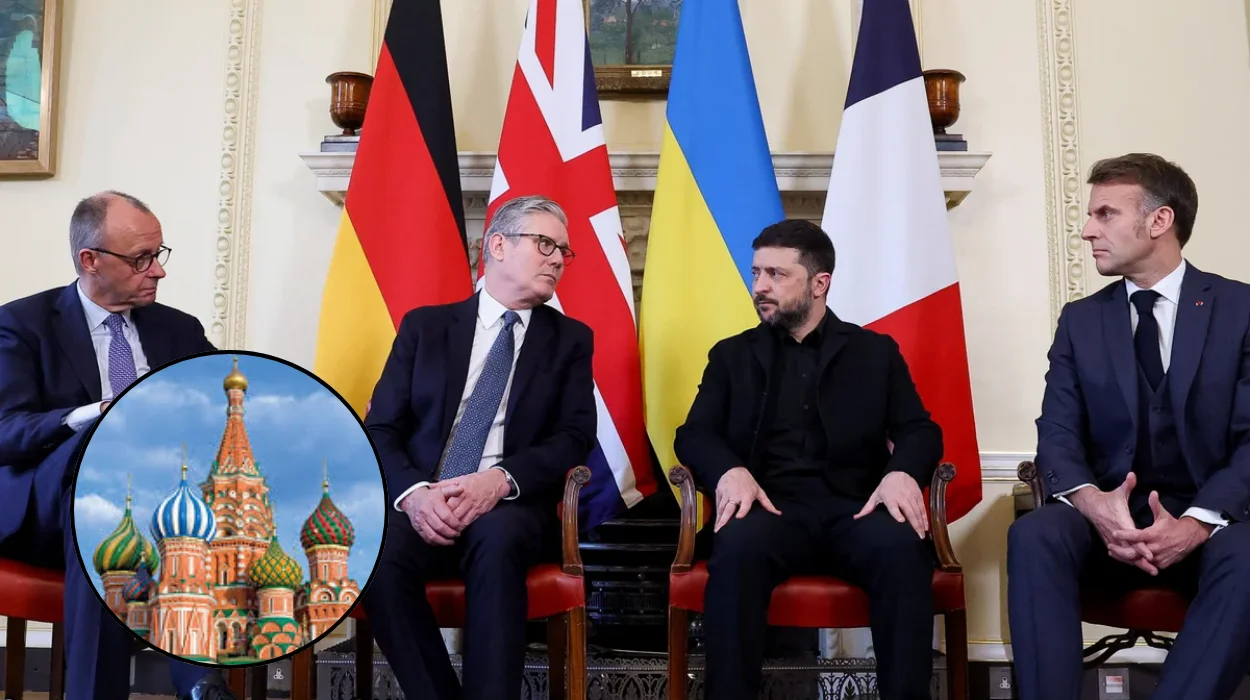
- French President Emmanuel Macron, British Prime Minister Keir Starmer and German Chancellor Friedrich Merz are due to meet Ukrainian President Volodymyr Zelenskiy in London on 7 June, according to the Élysée.
- The French presidency said the talks will focus on close coordination over continued support for Ukraine and increasing pressure on Russia’s war effort.
- The Élysée said Russia is facing “military, economic, and strategic failure” while persisting with its assault on the front lines.
- Zelenskiy has been pushing European leaders to step up efforts to help end the war, amid concern that US President Donald Trump is distracted by tensions involving Iran.
- In an open letter published on Thursday, Zelenskiy urged Russian President Vladimir Putin to meet him to agree an end to the war, which has now lasted more than four years.
- The Kremlin said Putin had been briefed on the letter.
- Macron said he has always supported direct negotiations between Ukraine and the Kremlin, arguing that Ukraine and Russia should build both a ceasefire and a peace plan.
- Merz said Europe is open to dialogue, but that what is missing is Putin’s willingness to engage.
London (Britain Today News) June 5, 2026 — French President Emmanuel Macron, British Prime Minister Keir Starmer and German Chancellor Friedrich Merz are due to hold talks with Ukrainian President Volodymyr Zelenskiy in London on Sunday, the Élysée said in a statement. The meeting is set against the backdrop of a grinding war in Ukraine, renewed diplomatic pressure on Moscow and growing European efforts to keep the conflict at the centre of the world agenda.
The French presidency said the encounter will be used to continue “close coordination” on shared support for Ukraine and to raise the pressure on Russia’s war effort. It added that Russia is facing “military, economic, and strategic failure” and yet continues, unsuccessfully, on the front lines in what it described as a deadly war.
The planned summit brings together three of Europe’s most influential leaders at a moment when Kyiv is trying to sustain Western support and push for a more forceful diplomatic response. Zelenskiy has been urging European partners to take a larger role in trying to end the conflict, amid concern in Kyiv that Donald Trump, the US president, is increasingly distracted by developments involving Iran.
The talks in London are expected to add weight to Europe’s coordinated stance, particularly as the war enters its fifth year. For Zelenskiy, the meeting offers a chance to press again for greater military, economic and diplomatic support, while also keeping open the possibility of talks that could lead to a ceasefire.
Why is Zelenskiy pressing Europe now?
Zelenskiy’s latest diplomatic drive comes as he looks for stronger support from European capitals at a time of uncertainty over Washington’s focus. The Ukrainian president has made clear that he wants Europe to step up efforts to help bring the war to an end, and the London meeting gives him a platform to do exactly that.
His concern, according to the information released, is that Trump’s attention may be shifting because of Iran. That matters because any change in the level of US engagement could affect the wider Western response to Russia’s invasion, including military aid, sanctions and diplomatic pressure.
The summit in London is therefore not just symbolic. It reflects a broader attempt by European leaders to show unity, keep Ukraine on the agenda and avoid any gap in support at a sensitive moment in the war.
What did the Élysée say about Russia?
The Élysée’s statement was unusually blunt in its language about Moscow’s position. It said Russia is facing “military, economic, and strategic failure” and accused it of continuing unsuccessfully on the front lines despite the cost of the war.
That assessment points to the French presidency’s attempt to frame the conflict not only as a battlefield struggle, but also as a long-term contest in which Russia is being weakened in several ways. The statement was also meant to signal confidence that sustained European pressure can still influence the course of events.
At the same time, the wording underlines the hardening tone from Paris as the war drags on. Rather than suggesting compromise from Moscow, the Élysée presented Russia as a power under strain but still intent on continuing the fighting.
What is Zelenskiy asking Putin to do?
Zelenskiy has taken a more direct diplomatic step by publicly calling on Putin to meet him. In an open letter published on Thursday, the Ukrainian leader urged the Russian president to sit down and agree to end the war, which has now lasted more than four years.
That move is significant because it puts the responsibility for any breakthrough squarely on the Kremlin. Zelenskiy is effectively challenging Putin to show whether Moscow is serious about peace or still committed to prolonging the conflict.
The Kremlin said Putin had been briefed on the letter, but there has been no suggestion that a meeting is being prepared. For now, the Ukrainian appeal appears designed to increase pressure rather than signal a near-term diplomatic breakthrough.
Explore More about World:
Paris Peace Forum Opens in Rabat, Urging the World to Turn Crises Into Opportunities
Experts Raise Concerns Over Proposed US-Only Ebola Quarantine Center in Kenya
What did Macron say about talks?
Macron used his comments on Friday to restate a position he has long held: that direct negotiations between Ukraine and the Kremlin are the clearest route to a ceasefire. As reported from the French leader’s remarks, he said,
“We have always advocated for direct negotiations between Ukraine and the Kremlin… I think that it is Ukraine and Russia who can build both a ceasefire and a peace plan. It is the Europeans who can help with this.”
That statement places the French president in the role of facilitator rather than primary negotiator. Macron’s argument is that the two sides in the war must ultimately shape the terms of any ceasefire, while Europe can help create the conditions for it.
His remarks also reinforce the sense that European governments are not simply waiting for outside powers to act. Instead, they are positioning themselves as active participants in any future peace process, even if the path to talks remains blocked.
What did Merz say in Montenegro?
Merz struck a similar note while speaking in Montenegro, where he said,
“we are open to dialogue, what is missing is Putin’s willingness.”
That comment suggests Berlin also sees the obstacle to peace as a lack of political will from Moscow rather than a shortage of diplomatic options.
The German chancellor’s language was careful but firm. By saying Europe is open to dialogue, he signalled support for a negotiated outcome, but by stressing Putin’s unwillingness he placed the burden on the Russian side to change course.
Together with Macron’s comments, Merz’s statement shows a degree of alignment among the three European leaders. All appear to support continued pressure on Russia while keeping the door open to negotiations, provided there is a credible counterpart in Moscow.
Why does the London meeting matter?
The London meeting matters because it gathers together the leaders of France, Britain and Germany at a time when Ukraine needs visible and sustained backing. Their joint appearance sends a message of coordination, not only to Kyiv but also to Moscow and Washington.
It also matters because the talks come after Zelenskiy’s direct appeal to Putin and amid renewed discussion of whether diplomacy can make progress. If the three leaders present a united front, that could strengthen Europe’s bargaining position and help shape the next phase of support for Ukraine.
More broadly, the meeting illustrates how the war has become a long-term European security issue. The leaders are not just reacting to events; they are trying to influence the balance of military aid, sanctions pressure and diplomatic positioning in real time.
What happens next?
The immediate next step is the planned meeting in London on Sunday, where the leaders are expected to discuss continued support for Ukraine and the broader strategy toward Russia. Their discussions are likely to focus on sustaining pressure, coordinating policy and assessing whether there is any realistic opening for negotiations.
For now, the public signals point to unity on Europe’s side and no meaningful sign that Moscow is ready for compromise. Zelenskiy is pushing for a meeting with Putin, Macron is calling for direct talks, and Merz says the missing element is Putin’s willingness.