
Key Points
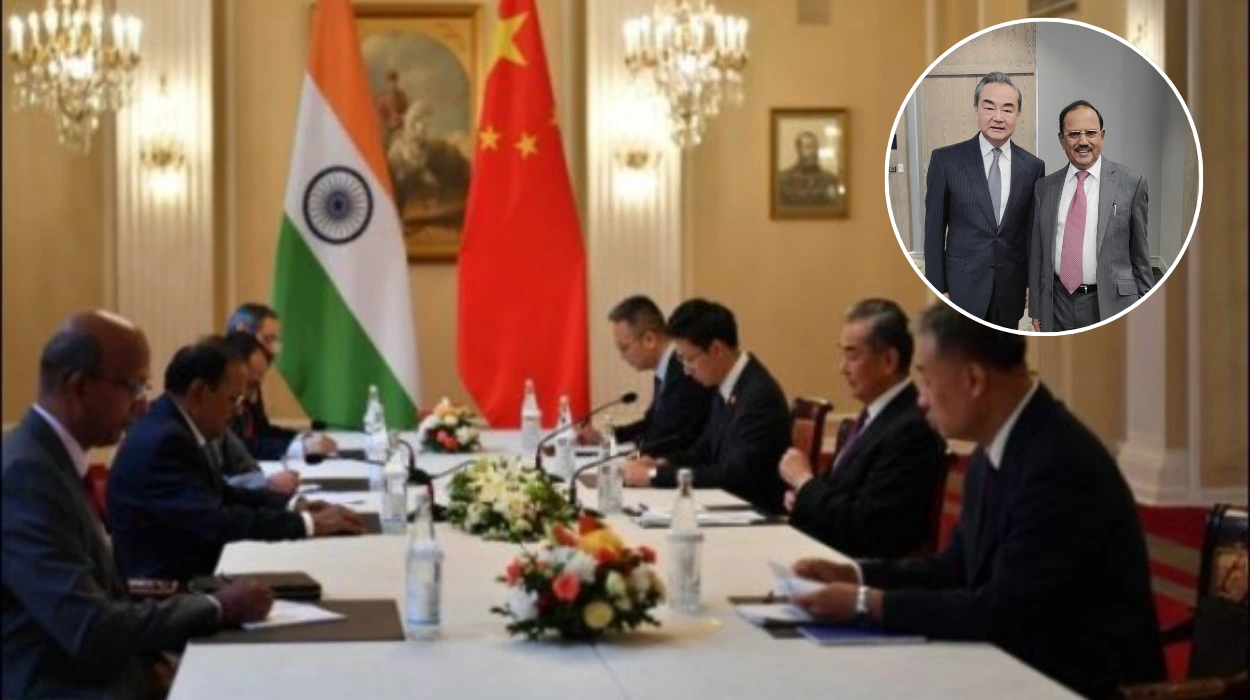
- National Security Adviser Ajit Doval met Chinese Foreign Minister Wang Yi in New Delhi on Monday, 22 June 2026, on the sidelines of the BRICS National Security Advisers’ Meeting.
- Both sides reviewed recent developments in bilateral relations and noted progress towards the gradual normalisation of India-China ties, according to the Ministry of External Affairs (MEA).
- Doval underlined that stable, predictable and constructive bilateral relations help build trust and understanding between the two countries.
- The MEA described the talks between Doval and Wang Yi as constructive and forward-looking.
- Wang Yi, who also serves as a member of the Political Bureau of the Communist Party of China (CPC), travelled to New Delhi to attend the 16th BRICS NSAs’ Meeting.
- Doval separately met Iran’s Deputy Secretary for Defence Affairs at the Supreme National Security Council (SNSC), Ghadir Nezamipour, to discuss the situation in West Asia and India-Iran ties.
- Doval also held talks with Ethiopia’s Executive Director of Analysis at the National Intelligence and Security Service, Million Lema Tadesse, on deepening the India-Ethiopia Strategic Partnership.
- The two-day BRICS NSAs’ Meeting, running from 22 to 23 June 2026, is being chaired by India under the theme “Non-traditional security challenges confronting the world today”.
- Delegates are reviewing the outcomes of recent BRICS Joint Working Groups on Counter-Terrorism and on Security in the Use of Information and Communication Technologies.
- This marks India’s fourth term as BRICS chair, following previous chairships in 2012, 2016 and 2021, with the 2026 presidency guided by the theme “Building for Resilience, Innovation, Cooperation and Sustainability”.
New Delhi (Britain Today News) June 22, 2026 — National Security Adviser Ajit Doval met Chinese Foreign Minister Wang Yi in the capital on Monday, with the two sides taking stock of recent developments in bilateral relations and acknowledging steady progress towards the gradual normalisation of India-China ties. The meeting took place on the sidelines of the 16th BRICS National Security Advisers’ Meeting, which India is hosting on 22–23 June 2026 under its current chairship of the influential 11-nation grouping.
- Key Points
- What did the Ministry of External Affairs say about the Doval-Wang Yi meeting?
- What did NSA Doval emphasise during the talks with Wang Yi?
- Who is Wang Yi and why is his visit significant?
- What is the BRICS National Security Advisers’ Meeting and why is India hosting it?
- Which countries make up the BRICS grouping in 2026?
- What issues are on the agenda at this year’s NSAs’ Meeting?
- What did Doval discuss with Iran’s Ghadir Nezamipour on West Asia?
- What other bilateral meetings did Doval hold on the sidelines of the conclave?
- What happens next at the BRICS NSAs’ Meeting?
What did the Ministry of External Affairs say about the Doval-Wang Yi meeting?
The Ministry of External Affairs confirmed the meeting in a statement posted on X, noting the seniority of both officials involved.
“NSA Ajit Doval, KC met Member of the CPC Political Bureau and FM of China, Wang Yi on 22 June 2026 on the sidelines of the BRICS NSAs’ Meeting in New Delhi,”
the MEA said. The ministry added that the two sides reviewed recent developments in bilateral relations and noted progress towards gradual normalisation.
Describing the broader tone of the discussion, the MEA characterised the engagement as constructive and forward-looking, signalling that both governments view the current phase of dialogue as a continuation of efforts to stabilise the relationship after years of strained ties.
What did NSA Doval emphasise during the talks with Wang Yi?
According to the MEA’s statement, Doval underlined that stable, predictable and constructive bilateral relations contribute to the building of trust and a better understanding between the two sides. This emphasis on predictability reflects New Delhi’s long-stated position that durable normalisation depends on consistent and transparent conduct between the two Asian neighbours, particularly along the disputed border.
The meeting comes against the backdrop of a series of diplomatic exchanges between India and China over recent months, as both sides have sought to ease tensions that have persisted since the 2020 border standoff. Successive rounds of talks at the diplomatic and military level have sought to address outstanding friction points along the Line of Actual Control, even as both governments have simultaneously worked to restore broader people-to-people, trade and connectivity links that were curtailed in the years following the standoff.
Monday’s meeting between Doval and Wang Yi adds a high-level security dimension to this process, given that both men hold direct responsibility for managing the border dispute on behalf of their respective governments. Doval has represented India in the Special Representatives mechanism with China for several years, making his engagement with Wang Yi on the sidelines of the BRICS conclave a continuation of an established channel of communication between the two countries rather than a standalone development.
Who is Wang Yi and why is his visit significant?
Wang Yi is a member of the Political Bureau of the Communist Party of China (CPC) and also serves as Beijing’s Special Representative on the India-China border issue, underscoring the significance of his presence in New Delhi. His dual role means his discussions with Doval carry weight not only on broader bilateral matters but also on the long-running border dispute between the two countries.
Wang Yi’s attendance at the BRICS NSAs’ Meeting was confirmed by China’s Foreign Ministry spokesperson Lin Jian at a briefing in Beijing, who said Wang would attend upon invitation and would exchange views with other BRICS member states on the current international security situation as well as major international and regional issues.
What is the BRICS National Security Advisers’ Meeting and why is India hosting it?
The 16th BRICS NSAs’ Meeting is a high-level platform bringing together the National Security Advisers and heads of delegation from the bloc’s eleven member states to exchange views on pressing security challenges. India is hosting the two-day conclave in New Delhi from 22 to 23 June 2026, marking the country’s fourth stint as BRICS chair after previously holding the position in 2012, 2016 and 2021.
India’s 2026 chairship is guided by the theme
“Building for Resilience, Innovation, Cooperation and Sustainability”,
which reflects a people-centric and humanity-first approach articulated by Prime Minister Narendra Modi at the 2025 Rio Summit. The NSAs’ Meeting itself is being conducted under the overarching theme
“Non-traditional security challenges confronting the world today”.
Which countries make up the BRICS grouping in 2026?
BRICS now comprises eleven major emerging markets and developing economies: Brazil, Russia, India, China, South Africa, Egypt, Ethiopia, Iran, the United Arab Emirates, Saudi Arabia and Indonesia. The grouping has evolved considerably since its founding, expanding its agenda beyond economic cooperation to include political and security matters as well as cultural and people-to-people exchanges.
The bloc’s official 2026 platform notes that BRICS cooperation continues to broaden its scope across a wide range of global issues, including counter-terrorism, climate change, food and energy security, the international economic and financial situation, telecommunications, agriculture, labour, international financial architecture, trade and the World Trade Organization. The grouping’s expanded membership in recent years has been widely seen as reflecting its growing weight in global affairs, with its eleven members together accounting for a substantial share of the world’s population, economic output and trade flows.
The NSAs’ Meeting itself forms part of a broader structure of BRICS engagement this year, sitting alongside ministerial and working-group tracks that feed into the bloc’s overall agenda. India’s role as chair places it at the centre of coordinating this calendar of meetings through 2026, with the security track representing one of the more closely watched strands given the range of geopolitical flashpoints currently affecting member states.
What issues are on the agenda at this year’s NSAs’ Meeting?
During the two-day meeting, the National Security Advisers and heads of delegation of BRICS member countries are exchanging views on the rapidly evolving nature of national security challenges, with particular attention to the role of emerging technologies in new and complex security threats. Delegates are also reviewing the outcomes of the recently held BRICS Joint Working Groups on Counter-Terrorism and on Security in the Use of Information and Communication Technologies.
These working-group reviews are expected to feed into broader discussions on coordinated responses to terrorism financing, cyber threats and digital security risks confronting the bloc’s member states.
Explore More about World:
UN Warns EU Migration Law Could Violate Migrants’ Human Rights
France Bans Alcohol at Music Festivals Amid Red Heatwave Alert
What did Doval discuss with Iran’s Ghadir Nezamipour on West Asia?
Earlier in the day, Doval also held discussions with Ghadir Nezamipour, Iran’s Deputy Secretary for Defence Affairs at the Supreme National Security Council (SNSC), focusing on the evolving security situation in West Asia. Ministry of External Affairs spokesperson Randhir Jaiswal confirmed the meeting in a post on X, stating:
“NSA Ajit Doval, KC met Deputy Secretary for Defense Affairs of the SNSC of Iran, Ghadir Nezamipour on 22 June 2026 on the sidelines of the 16th BRICS NSAs’ Meeting. Both sides reviewed the ongoing situation in West Asia. They also discussed cooperation under the BRICS platform and India-Iran bilateral ties.”
The meeting was notable as one of the more closely watched bilateral engagements of the conclave, given the sensitivity of the regional security situation in West Asia and Iran’s role as one of the newer entrants to the BRICS bloc. Nezamipour’s presence in New Delhi also comes at a moment when Iran’s security establishment is recalibrating its regional posture following recent shifts in West Asia, making India’s engagement with Tehran’s security leadership a closely tracked element of the conclave.
Discussions between Indian and Iranian officials on regional security have typically run alongside conversations on bilateral economic cooperation, including connectivity projects linking India to Central Asia through Iranian territory. While the MEA’s statement on Monday’s meeting focused on the security dimension and BRICS cooperation, it underscored the breadth of subjects that India and Iran continue to engage on through the bilateral channel even as both governments operate within the wider multilateral framework of BRICS.
What other bilateral meetings did Doval hold on the sidelines of the conclave?
Beyond his discussions with Wang Yi and Nezamipour, Doval also met Million Lema Tadesse, Executive Director of Analysis at the National Intelligence and Security Service of Ethiopia. Spokesperson Jaiswal said in a post on X that both sides explored areas of cooperation to enhance and deepen the India-Ethiopia Strategic Partnership.
These successive bilateral engagements on a single day illustrate how the BRICS NSAs’ Meeting has become a hub for India to conduct parallel diplomatic outreach across multiple member states, beyond the formal multilateral agenda. The India-Ethiopia Strategic Partnership has grown steadily since Ethiopia’s accession to BRICS, and Monday’s meeting between Doval and Tadesse suggests both countries are looking to deepen security-related cooperation as part of that broader relationship.
Taken together, Doval’s meetings with his Chinese, Iranian and Ethiopian counterparts on the opening day of the conclave point to New Delhi’s intent to use its chairship of BRICS not only to steer the bloc’s collective agenda but also to advance a series of bilateral relationships of direct strategic interest to India.
What happens next at the BRICS NSAs’ Meeting?
With the conclave continuing into its second day on 23 June 2026, National Security Advisers and heads of delegation from across the BRICS bloc are expected to continue their deliberations on non-traditional security challenges, including the role of new technologies in shaping the future security landscape. Further bilateral meetings on the margins of the main proceedings are also possible as delegations use the gathering to advance individual country-to-country agendas alongside the collective BRICS discussions.
Officials have indicated that the review of outcomes from the BRICS Joint Working Groups on Counter-Terrorism and on Security in the Use of Information and Communication Technologies will continue to inform the remaining sessions, as member states look to translate working-group recommendations into coordinated action. As host and chair, India is expected to play a central role in consolidating the outcomes of the two-day meeting into a broader set of conclusions that will feed into the wider BRICS calendar for the remainder of 2026.