Key Points:
- Frestonian Gallery in Holland Park, London, has opened an exhibition dedicated to artist Harry Phelan Gibb (1870–1948)
- The show runs until 8 August and focuses on the 25 years Gibb spent in Paris
- Gibb was influenced directly by Paul Cézanne and other major figures of early modern art
- He later lived and worked on Exmoor, near Malmsmead, after the First World War
- His Exmoor paintings captured the Doone and Lynn valleys, Foreland Point, and Countisbury Common
- Born in Northumberland, he trained in Newcastle, Edinburgh, Antwerp, and Munich
- He was linked to Fauvism, Cubism, Pointillism, Vorticism, the Bloomsbury Group, and the White Stag Group
- Gibb was a close friend of writer Gertrude Stein and helped introduce her work to British and Irish audiences
- He was represented by design firm Betty Joel and art dealer Lucy Wertheim
- Despite his artistic connections, Gibb faced financial hardship and critical dismissal during his lifetime
- The Frestonian Gallery says the exhibition aims to restore Gibb’s standing in British modernism
Holland Park (Britain Today News) June 22, 2026 — An artist who spent many of his later years living and working on Exmoor, only to fade into obscurity for decades after his death, has been rediscovered and is now being celebrated as one of the founding figures of British modern art. A new exhibition dedicated to his life’s work has opened at a London gallery, shining fresh light on a painter whose contribution to early twentieth-century art had, until recently, been largely overlooked.
- Key Points:
- Who Was Harry Phelan Gibb?
- Where Is the New Exhibition Being Held?
- What Does the Exhibition Focus On?
- How Did Gibb’s Move to Exmoor Shape His Work?
- Who Were Gibb’s Notable Artistic Connections?
- Why Was Gibb Largely Forgotten After His Death?
- What Is the Gallery Hoping to Achieve With This Exhibition?
- How Does Gibb’s Work Fit Into the Story of British Modernism?
Who Was Harry Phelan Gibb?
Harry Phelan Gibb, who lived between 1870 and 1948, is the subject of the new exhibition. Born in Northumberland, Gibb’s artistic education took him across Europe, including spells of study in Newcastle, Edinburgh, Antwerp, and Munich. This broad, cosmopolitan training would go on to shape an artist whose work intersected with several of the most significant art movements of his era.
Gibb’s career placed him at the heart of early modernism. He was associated with Fauvism, Cubism, Pointillism, and Vorticism, as well as the Bloomsbury Group and the White Stag Group — a remarkable spread of artistic circles for a single painter to have moved through. These associations placed Gibb among contemporaries who were redefining the boundaries of Western art at the turn of the twentieth century.
Where Is the New Exhibition Being Held?
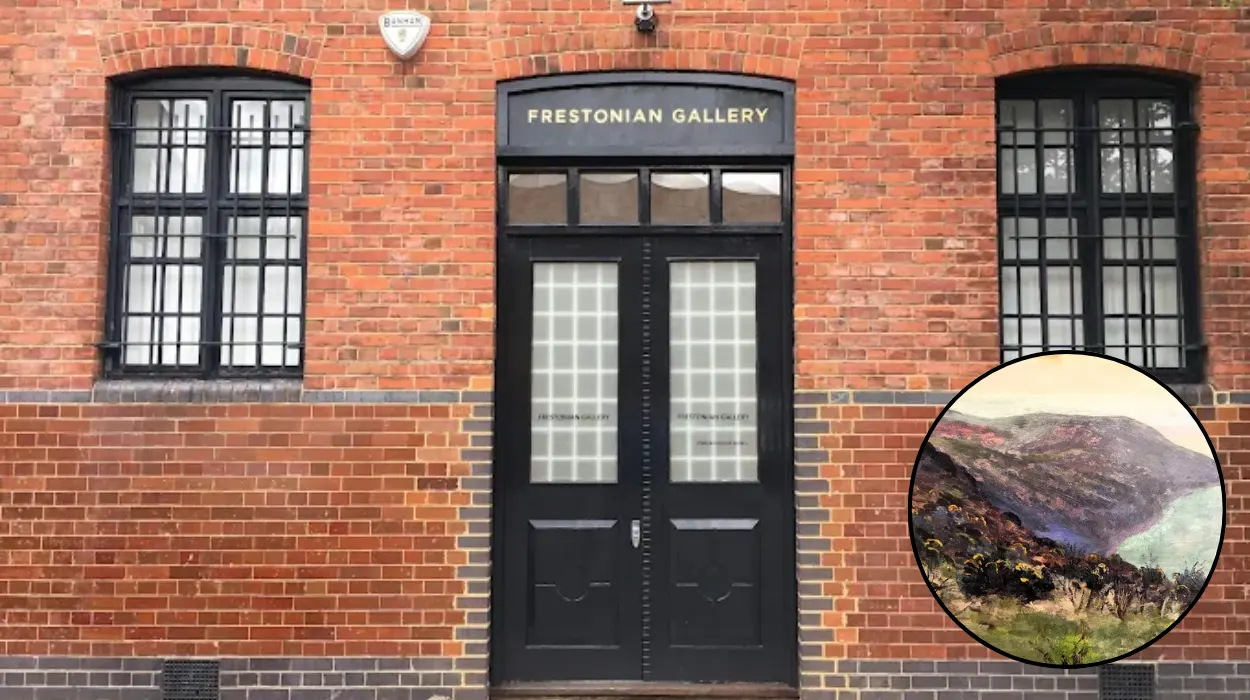
The exhibition showcasing Gibb’s work has opened at the Frestonian Gallery in Holland Park, London. It is scheduled to remain open to the public until 8 August, giving art lovers and historians a window of several weeks to view the rediscovered body of work in person.
The gallery’s location in Holland Park places the exhibition within one of London’s more established gallery districts, offering Gibb’s rehabilitated reputation a fitting platform among the capital’s art scene.
What Does the Exhibition Focus On?
The exhibition concentrates specifically on the twenty-five years Gibb spent living and working in Paris. This period was formative for the artist, as it was during these years that he came under the influence of Paul Cézanne, one of the towering figures of post-impressionist and early modern painting, along with other iconic artists working in the city at the time.
Paris in the early twentieth century was the undisputed centre of the avant-garde art world, and Gibb’s prolonged immersion in that environment exposed him directly to the ideas and techniques that were reshaping European painting. The exhibition’s focus on this quarter-century allows visitors to trace how those Parisian influences fed into Gibb’s developing style.
How Did Gibb’s Move to Exmoor Shape His Work?
Following the end of the First World War, Gibb relocated away from the artistic ferment of Paris and settled near Malmsmead, where he established a house and studio close to Exmoor. It was here that his work took on a markedly different character, rooted in the landscapes of the West Country rather than the urban intensity of the French capital.
During his time on Exmoor, Gibb produced a series of acclaimed pictures depicting some of the area’s most striking beauty spots. Among the locations he captured on canvas were the Doone and Lynn valleys, Foreland Point, and Countisbury Common — all locations celebrated for their dramatic, rugged scenery.
Gibb was, by all accounts, a keen fisherman and naturalist, and this personal connection to the natural world appears to have fed directly into his art. Drawing inspiration from Exmoor’s coastline, rivers, and landscapes, he produced what is now regarded as a remarkable body of work — one increasingly viewed as among the most evocative artistic records of that particular corner of Exmoor.
Who Were Gibb’s Notable Artistic Connections?
Gibb’s circle of acquaintances extended well beyond the world of painting. He was a close personal friend of the American writer Gertrude Stein, a relationship that proved significant not only for Gibb but for the broader cultural exchange between artistic communities. Through this friendship, Gibb played an important role in introducing Stein’s literary work to audiences in Britain and Ireland, acting as something of a cultural conduit between continental modernism and the British Isles.
Gibb’s professional representation also placed him within influential commercial circles of the art world. He was represented by the design firm Betty Joel, a name associated with sophisticated design sensibilities of the period, and by Lucy Wertheim, recognised as a pioneering art dealer who championed innovative and often overlooked artists during this era.
Explore More about Entertainment:
Upstairs, Downstairs Declared ‘Better Than Downton Abbey’ by Fans 2026
Jeremy Clarkson Opens Up About Private Talks with David Cameron on Cancer
Why Was Gibb Largely Forgotten After His Death?
Despite his deep connections to some of the era’s most important artistic movements and individuals, Gibb’s reputation did not endure in the way that many of his contemporaries’ did. At the time he was working, Gibb was dismissed by parts of the artistic establishment as something of a forgotten man on the scene.
He also endured considerable financial hardship during periods of his career, a struggle compounded by criticism directed at what was then seen as his “new art” — an indication of how resistant some sections of the art world remained to the experimental styles Gibb and his peers were pursuing. This combination of financial precarity and critical scepticism appears to have contributed to his slide into relative obscurity in the decades following his death in 1948.
What Is the Gallery Hoping to Achieve With This Exhibition?
The Frestonian Gallery has been explicit about its ambitions for the exhibition. A spokesperson for the gallery said:
“We hope the exhibition will restore Gibb to his rightful place in the history of British modernism.”
This statement frames the exhibition not simply as a retrospective display of historic paintings, but as a deliberate act of art-historical correction — an attempt to ensure that Gibb’s contribution to British modernism is properly recognised after decades of neglect. The choice of words is telling: the gallery is not merely showcasing forgotten paintings for curiosity’s sake, but actively arguing for Gibb’s repositioning within the canon of British art history.
How Does Gibb’s Work Fit Into the Story of British Modernism?
Gibb’s career arguably encapsulates a broader and recurring theme within British art history: the artist whose work, though deeply connected to the major continental movements of the day, struggled to achieve lasting domestic recognition. His direct exposure to Cézanne’s influence in Paris, combined with his associations with Fauvism, Cubism, Pointillism, Vorticism, the Bloomsbury Group, and the White Stag Group, situate him firmly within the experimental currents that defined early modernism across Europe.
Yet it was only after his return to Britain, and his eventual retreat to the relative isolation of Exmoor, that Gibb produced the body of work for which he is increasingly celebrated today — paintings rooted not in the cafés and studios of Paris, but in the valleys, coastlines, and rivers of the English West Country. This juxtaposition between his cosmopolitan artistic education and his ultimately rural subject matter forms a central part of the story the Frestonian Gallery’s exhibition appears keen to tell.
The exhibition, running at the Frestonian Gallery in Holland Park until 8 August, offers visitors the opportunity to assess for themselves whether Gibb’s work merits the reappraisal the gallery is now championing — and to judge whether this once-overlooked painter deserves a firmer place among the recognised pioneers of British modern art.