Key Points
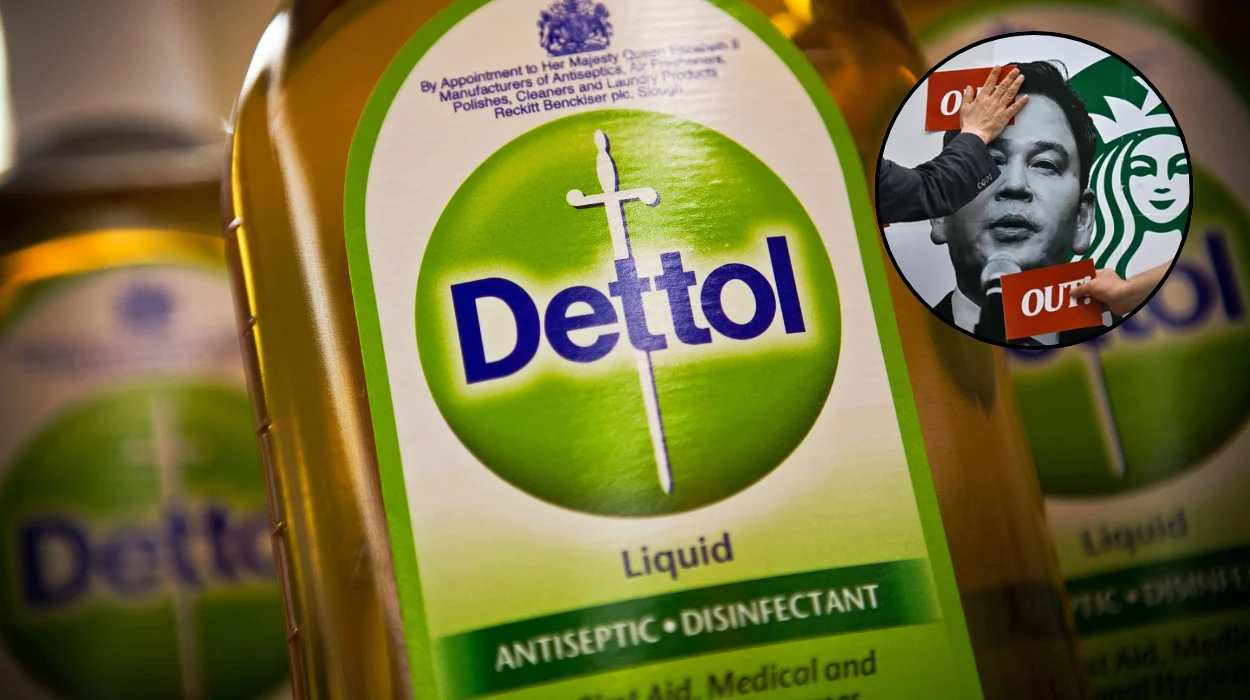
- British hygiene brand Dettol has apologised after a Chinese advertisement it described as a critique of “toxic men” was widely condemned as offensive to women.
- The five-minute advert, released at the end of May across several online platforms, followed a man who compares his current girlfriend with a former partner, calling the ex a “secondhand service.”
- The man tells friends he wants a “clean and untouched” woman, declaring himself willing to overlook his own past while insisting his “future wife” must be a virgin.
- His new girlfriend later discovers his comments, confronts his attitudes, and ends the relationship; a voiceover then likens “toxic men” to germs that Dettol can “eliminate.”
- Dettol withdrew the advert on Sunday following heavy criticism from Chinese social media users, many of whom called for a boycott of the brand.
- The company, owned by British multinational Reckitt, said the advert was meant to “challenge unequal gender attitudes” but that edited clips circulating online had distorted its intended message.
- Dettol said the advert was produced by a third-party agency but accepted “responsibility for any negligence” in creating and reviewing the content.
- The brand said genuine protection includes “safeguarding the dignity of every individual and their right to be treated equally.”
- The controversy drew more than 80 million views on the Chinese platform Weibo, with users voicing anger and pledging to stop buying the brand’s products.
China (Britain Today News) June 24, 2026 – Dettol has apologised after an advertisement released in China, which the company said was intended to criticise “toxic men,” was widely condemned on social media as offensive to women, prompting the British hygiene brand to withdraw the campaign entirely.
- Key Points
- What Happened in the Dettol Advert?
- How Does the Storyline Resolve?
- Why Did the Advert Spark Backlash in China?
- What Did Dettol Say in Its Apology?
- Who Produced the Advert for Dettol?
- How Did Chinese Social Media Users React?
- Who Owns Dettol?
- What Does This Mean for Dettol’s Reputation in China?
- What Happens Next for Dettol’s Marketing in China?
The five-minute advert for a multipurpose disinfectant was released across multiple online platforms at the end of May and quickly drew criticism for the storyline it used to make its point about gender attitudes. The backlash escalated rapidly, culminating in calls across Chinese social media for consumers to boycott the brand altogether.
What Happened in the Dettol Advert?
The advert centres on a man who compares his current girlfriend with a former partner. After learning that his ex-girlfriend had previously lived with someone else, the man likens their past relationship to a “secondhand service” — a phrase that set the tone for much of the backlash that followed.
He goes on to tell his friends that he intends to find a “clean and untouched” woman, someone for whom he can be the first and only sexual partner. The Guardian reported that the man says in the advert:
“I may not be a virgin, but my future wife has to be.”
He adds:
“Luckily, I met her now, she’s clean and hasn’t been contaminated by other men.”
The double standard embedded in those lines — excusing his own history while demanding purity from his partner — became the central point of criticism once clips began circulating widely online. The Guardian noted that the advert was released across many online platforms, which meant the dialogue reached a wide audience almost immediately, with individual scenes and lines being clipped, shared and reshared far beyond the advert’s original context.
The framing of the advert as a multipurpose disinfectant promotion added a further layer of unease for many viewers, given that the product being marketed was explicitly tied, through the closing voiceover, to the idea of “eliminating” the behaviour the man displays. That juxtaposition — a household hygiene product positioned against a narrative about sexual history and personal “purity” — became a recurring point of discussion as the advert spread.
How Does the Storyline Resolve?
The Guardian’s account of the advert describes its ending as a turn against the male character himself. The micro-drama concludes with his new girlfriend discovering what he has said. She calls out his misogyny and ends the relationship. As she throws his socks into a washing machine, a voiceover delivers the advert’s closing message, stating:
“A toxic man is just like these germs – you need Dettol to eliminate them completely to feel at ease.”
The intended message, according to the brand, was that the storyline criticised the man’s attitudes rather than endorsed them. However, that framing did little to contain the backlash once the advert spread online. The structure of the advert — spending the majority of its five-minute runtime on the man’s comments before pivoting in its final moments to condemn him — meant that, for many viewers, the offensive language landed with far more weight than the comparatively brief comeuppance that followed.
The Guardian’s account suggests that this imbalance between setup and resolution was a significant factor in how the advert was received. Rather than reading as a clear-cut takedown of “toxic” attitudes, many viewers experienced the bulk of the advert as a prolonged, detailed airing of those attitudes, with the corrective message arriving only in the closing scenes and the voiceover line tying the narrative back to the Dettol brand.
Why Did the Advert Spark Backlash in China?
Dettol withdrew the advert on Sunday after widespread criticism from Chinese social media users. A significant portion of the backlash centred on the perception that the advert dwelled at length on misogynistic language and a “virgin purity” narrative before arriving at any kind of critique, leaving many viewers with the impression that the offensive content overshadowed the intended message.
Critics also pointed to the double standard at the heart of the man’s dialogue, where he forgives his own past while demanding a partner free of any prior relationships. For many viewers, that contradiction read less as satire and more as an uncritical reflection of attitudes the brand claimed to be challenging.
The backlash was also shaped by the broader cultural conversation around gender attitudes in China, where discussions about double standards in relationships, the policing of women’s personal histories, and the language used to describe women’s worth relative to men have become increasingly prominent on social media. Against that backdrop, an advert that appeared to repeat — even if only to later critique — language about women being “contaminated” by previous relationships was always likely to draw close scrutiny.
The volume and speed of the criticism caught the brand’s attention quickly, with the advert pulled within a relatively short window after the backlash intensified, suggesting the company moved to limit further reputational damage once the scale of the reaction became clear.
What Did Dettol Say in Its Apology?
In a post apologising for the advert, Dettol said, as reported by The promotion had intended to
“challenge unequal gender attitudes and promote healthy, confident views on relationships and lifestyles.”
The company added that edited clips circulating online had distorted the advert’s original message.
Dettol’s statement continued:
“We are well aware that true protection also lies in safeguarding the dignity of every individual and their right to be treated equally.”
The apology represented an attempt by the brand to separate its stated intentions from the content that ultimately reached and angered audiences across Chinese social media platforms. By explicitly invoking “dignity” and “equal treatment” in its statement, Dettol sought to position itself on the side of the values its critics accused the advert of undermining, rather than disputing the substance of the criticism directly.
Dettol disputed the factual content of the advert itself — namely, that the dialogue and storyline described above were accurately represented in the clips circulating online. Instead, the company’s defence centred on the claim that those clips, when edited and shared out of context, distorted what the brand says was the advert’s original intended message of challenging, rather than endorsing, unequal gender attitudes.
Who Produced the Advert for Dettol?
Dettol said the promotion had been produced by a third-party agency. Despite that, the company said it took
“responsibility for any negligence in creating and reviewing the content of the advert,”
accepting accountability for the campaign regardless of who originally created it.
This acknowledgement of responsibility, even while naming an external producer, was a notable element of the brand’s response, reflecting an attempt to address the controversy directly rather than distancing itself from the advert’s content. Brands frequently rely on third-party creative and marketing agencies to produce localised campaigns for specific markets, and the division of responsibility between brand and agency can often become a point of contention when a campaign attracts criticism. In this case, Dettol chose not to shift blame onto the agency that produced the advert, instead framing the episode as a failure in its own oversight of the content before release.
That decision to accept responsibility for “negligence in creating and reviewing the content” suggests the company recognised that, regardless of which party originated the script and storyline, the final decision to approve and release the advert rested with Dettol itself.
How Did Chinese Social Media Users React?
The scale of the reaction was substantial. The Guardian reported that the topic had attracted more than 80 million views on the Chinese social media platform Weibo as of Tuesday, underscoring how quickly the controversy spread and how much public attention it drew.
Among the reactions cited by The Guardian, one Weibo user wrote:
“I will never use Dettol again.”
Sentiments of that kind were echoed widely, with many users explicitly calling for a boycott of the brand. The intensity of the backlash illustrates the risks brands face when advertising campaigns touch on sensitive social themes such as gender attitudes, particularly in markets where social media can amplify criticism rapidly.
The figure of more than 80 million views in a matter of days illustrates just how quickly the controversy moved from a single advert release to a nationwide talking point. On a platform such as Weibo, where trending topics can shape public discourse within hours, that level of engagement placed Dettol’s advert squarely in the centre of an ongoing national conversation about gender attitudes, language and accountability in advertising.
The reaction also extended beyond simple criticism of the advert’s content to broader questions about how multinational brands approach gender-related messaging when adapting global hygiene and cleaning product campaigns for local markets. Several users framed their criticism not solely as a reaction to a single advert, but as part of a wider pattern of brands attempting to engage with social issues in ways that, in their view, ultimately fall short or backfire.
Explore More about World:
JD Vance Says “Strong Progress Made” Toward Final Iran Deal After Switzerland Talks
Doval, Wang Yi Review India-China Ties at BRICS Talks
Who Owns Dettol?
Dettol is owned by Reckitt, the British multinational consumer goods company. As one of Reckitt’s most recognisable hygiene brands globally, Dettol’s advertising decisions in a market as significant as China carry weight well beyond a single campaign, making the scale of the backlash particularly consequential for the broader brand.
China represents a substantial market for international hygiene and consumer goods companies, and maintaining consumer trust in such markets often depends heavily on how brands are perceived to engage with local social and cultural conversations. A campaign that misjudges the tone or framing of a sensitive issue can have consequences that extend well beyond the immediate controversy, potentially shaping consumer attitudes toward the brand over a longer period.
What Does This Mean for Dettol’s Reputation in China?
While Dettol’s apology sought to draw a line between its stated intentions and the content that circulated, the backlash highlights the gap that can emerge between a brand’s internal creative reasoning and how an advert is actually received by the public. The Guardian’s reporting suggests that, regardless of the intended message, large numbers of viewers focused on the explicit language and storyline choices rather than the advert’s eventual critique of “toxic” behaviour.
For a brand built around hygiene and protection, being associated with a campaign that many viewers experienced as reinforcing rather than challenging misogynistic attitudes presents a particular reputational challenge. Calls for a boycott, even if not universally adopted, can still influence consumer sentiment and brand perception in a market Reckitt will be keen to protect.
The episode also raises broader questions about the process by which advertising campaigns addressing social issues are conceived, scripted and approved before release. Dettol’s own admission of “negligence in creating and reviewing the content” points to gaps in that process, suggesting that internal review mechanisms did not adequately anticipate how the advert’s central storyline would be received once it reached a wide audience outside the controlled environment in which it may have first been tested or discussed internally.
What Happens Next for Dettol’s Marketing in China?
As of the latest reporting, Dettol has withdrawn the advert and issued a public apology, but no further details have been confirmed regarding any additional corrective action, internal review processes, or changes to how the brand will work with third-party agencies in future campaigns. The company’s statement focused on accountability for the specific advert rather than outlining broader policy changes.
The episode adds to a wider pattern of multinational brands navigating cultural and social sensitivities when localising marketing campaigns for the Chinese market, where social media reaction can shape a campaign’s fate within days of release.