Key Points
- The Wellcome Collection in London has agreed to hand over 2,000 Jain manuscripts that it now considers to have been acquired unethically.
- The manuscripts were bought in 1919 from a Jain temple in Punjab, then part of undivided India, through agents working for Sir Henry Wellcome.
- Curators say the purchase was legally made but still ethically wrong because it was at a low price and against the interests of the original owners.
- The material will not go to India or Pakistan but to the UK-based Institute of Jainology and then to the University of Birmingham’s Birmingham Centre of Jain Studies.
- The collection is believed to be the largest group of Jain manuscripts outside South Asia.
- The manuscripts date from the 15th to the 19th centuries and include devotional works, medical texts and an early Hindi medical treatise.
- The Institute of Jainology says some of the texts may not have survived had they remained in India during the upheaval of Partition in 1947.
- The transfer is being framed as a model for future restitution discussions because it focuses on access, research and community care.
Why is the Wellcome Collection returning the manuscripts?
London (Britain Today News) May 14, 2026 – the Wellcome Collection has agreed to relinquish 2,000 sacred Jain manuscripts after concluding that the way they were acquired more than a century ago was unethical.
- Key Points
- Why is the Wellcome Collection returning the manuscripts?
- What makes the acquisition controversial?
- How does Jainism shape this decision?
- Where will the manuscripts go next?
- What is inside the collection?
- Why does Partition matter here?
- How is the transfer being handled?
- What does this mean for restitution debates?
- Who said what?
The collection was acquired in 1919 at “a low price” from a Jain temple in what is now Pakistan, and the move is being described as the largest group of Jain manuscripts outside South Asia. The museum’s decision marks an important shift in how institutions judge historic acquisitions, because the items were not stolen in the narrow legal sense but are now considered problematic under modern ethical standards.
The transfer has been negotiated as a restitution arrangement rather than a dispute, with both sides stressing access, scholarship and conservation rather than confrontation. That approach matters because the manuscripts are not simply being removed from one shelf and placed on another; they are being repositioned inside a broader debate about cultural responsibility, historical harm and institutional trust.
What makes the acquisition controversial?
The key issue is that the manuscripts were legally purchased but, according to the Wellcome Collection, not acquired in a fair or ethical way. The museum’s researchers say the 1919 purchase happened at a low price and against the best interests of the original owners, which is why the institution now considers the transaction unacceptable by current standards.
According to the Institute of Jainology’s earlier statement, the manuscripts were obtained during the early 20th century using various agents working for Henry Wellcome, and the conversation around their future has been ongoing for years. That statement also made clear that restitution is viewed as the beginning of a long-term relationship rather than a one-off handover, and that the ethical concern extends beyond ownership to the wider question of keeping Jain material heritage.
How does Jainism shape this decision?
Jainism places strong emphasis on ahimsa, the principle of non-violence, and that idea has influenced the way the Institute of Jainology has handled the issue. Rather than making a public claim or pursuing a confrontational legal route, the institute has presented the handover as a calm and principled process focused on community access and stewardship.
Mehool Sanghrajka, managing trustee for the Institute of Jainology, said the issue has two sides: the ethical problem of underpriced acquisition and the possibility that the texts were protected by being taken to Britain. He argued that the aim is not to reopen old wounds but to ensure that Jains can access the material in a setting capable of preserving it properly.
Where will the manuscripts go next?
The manuscripts will be transferred to the Institute of Jainology and then held at the University of Birmingham’s specialist library, specifically the Birmingham Centre of Jain Studies. That centre was established in 2023 and is being presented as the most suitable home because it can maximise community access, deepen research opportunities and safeguard the collection.
This is unusual because restitution cases often involve a return to the country of origin, but here the destination is a British academic institution serving the Jain community. The reason is practical as much as ethical: there are now virtually no Jains left in Pakistan, and the Jain community in India is fragmented, making there no obvious single institution there to receive the archive.
The Wellcome Collection says it still holds around 265,000 manuscripts from other cultures, so this handover may not be an isolated event. The institution has also indicated that discussions are under way with a few other bodies about possible transfers of material, suggesting a wider reassessment of its collections policy.
What is inside the collection?
The collection contains manuscripts from the 15th to the 19th centuries, including illuminated devotional texts and medical treatises. Around half of the 2,000 items are said to have a health connection, which fits the broader collecting interests of Henry Wellcome as a pharmaceutical tycoon fascinated by medicine and global knowledge systems.
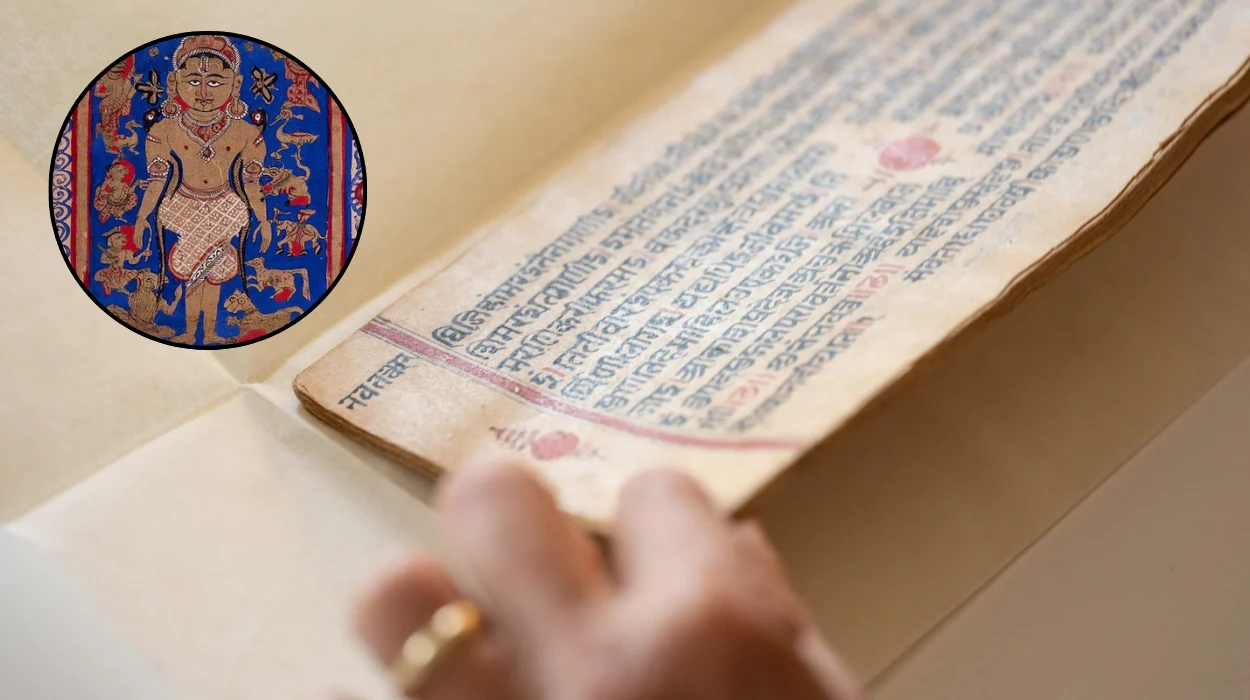
Among the most notable items is an early 16th-century illustrated version of the Kalpasutra, an important Jain scripture, as well as what may be the earliest surviving copy of the first medical treatise in early Hindi, dated 1592. The documents are mainly written in Prakrit, though some are in other South Asian languages, and many are still stored in more than 100 archive boxes.
Some manuscripts are still wrapped in the newspapers used to protect them during transport in 1919, which underlines both the historical nature of the acquisition and the physical fragility of the material. For curators, that fragility strengthens the case for specialist preservation and digitisation rather than leaving the works in uncertain conditions.
Why does Partition matter here?
The history of Partition in 1947 is central to the story because the region where the manuscripts originated became part of Pakistan, and many Jain communities were displaced or forced to flee. During that upheaval, temples were abandoned or destroyed and much Jain material culture was lost, which is why some community representatives now believe the manuscripts may have been preserved only because they were moved to Britain.
That argument does not erase the ethical concerns, but it does complicate the narrative. The Institute of Jainology has therefore taken a deliberately careful position: the material may have been removed under troubling circumstances, yet its survival and future accessibility also matter.
Sanghrajka said that returning objects is always difficult but can have a positive impact on communities and academia. That framing places the focus on practical benefit rather than symbolic victory, which is one reason the agreement has been described as a potential model for others.
How is the transfer being handled?
The formal handover is being processed through institutional channels, including permission to deaccession from the Wellcome Collection’s governors and approval from the Charity Commission. A Memorandum of Understanding on the transfer is being signed at the House of Commons, which gives the move a formal and public character.
The physical transfer will begin this year and may take several years to complete, meaning the process is likely to unfold in stages rather than all at once. That is important because the manuscripts are delicate, the archive is large, and conservation work will have to be done alongside access planning and cataloguing.
Daniel Martin, associate director of collections and digital at the Wellcome Collection, said the museum is grateful to the Jain community for what he called a landmark restitution. He said the process has helped build a strong and lasting bond, and that the institution wants to set a high bar for a collaborative and compassionate approach to restitution.
Explore More About London News:
Mouse Poo and Gnawed Food Packets Found in London School Kitchen 2026
London Gatwick Route 4 Consultation Closes as Airport Reviews Satellite Navigation Plan 2026
What does this mean for restitution debates?
This case adds momentum to wider debates about how museums should deal with culturally significant objects acquired under colonial or unequal conditions. It sits alongside other high-profile disputes over the Elgin Marbles and the Benin Bronzes, while also resembling smaller recent returns made by British institutions to other communities.
The difference here is that the Wellcome Collection is not merely being accused from outside; it has itself accepted the ethical case for transfer. That makes the story more significant, because it shows a major institution publicly acknowledging that a lawful transaction can still fail a modern ethical test.
The result is a carefully balanced precedent: retain the historical record, protect the objects, and expand access without pretending the past was morally neutral. In that sense, the handover is as much about present-day responsibility as it is about 1919.
Who said what?
As reported by Martin Bailey, the Wellcome Collection described the Birmingham Centre of Jain Studies as the “most appropriate place” to maximise community access, deepen research and safeguard the collection. Mehool Sanghrajka of the Institute of Jainology said he hoped the arrangement could become a model for others and that the community’s aim was access, not tension.
The Wellcome Collection also said the handover recognises the hurt caused by unethical acquisition and retention of material heritage. That language is important because it shows an institution usually associated with science and medicine now speaking the language of ethics, redress and cultural memory.