Key Points
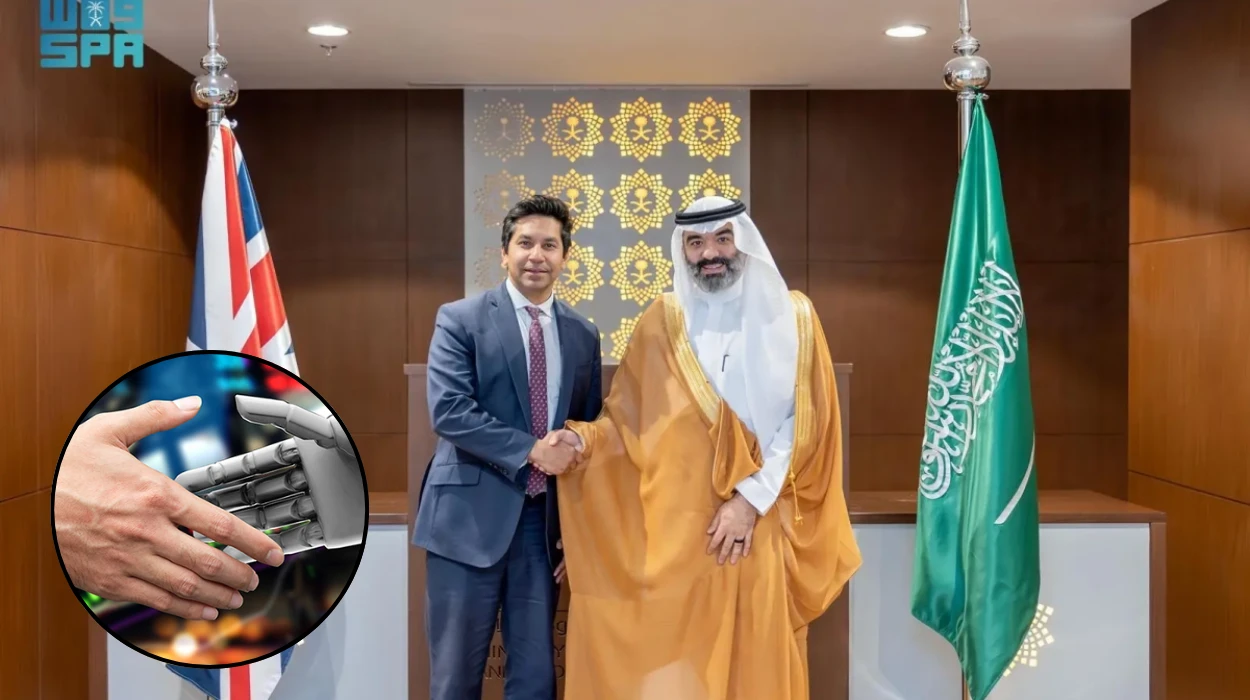
- Saudi Minister of Communications and Information Technology Abdullah Alswaha met UK Prime Minister’s chief business, investment and trade adviser Varun Chandra in Riyadh.
- The meeting took place at the ministry’s headquarters in Riyadh.
- The talks focused on expanding the Saudi-UK partnership in the digital economy.
- Artificial intelligence, digital infrastructure and future technologies were central to the discussions.
- Both sides explored ways to attract more UK tech companies to the Kingdom.
- The meeting also covered joint ventures and strategic investments in digital infrastructure and AI.
- The discussions were framed around supporting digital economy growth.
- The talks also aimed to reinforce Saudi Arabia’s position as a global technology hub.
- The story is based on the details provided in the briefing and is written in British English in a neutral news style.
Riyadh (Britain Today News) May 14, 2026 — Saudi Minister meets UK Trade adviser on digital economy and AI ties. Saudi Arabia and the United Kingdom have discussed widening cooperation in the digital economy, artificial intelligence and advanced technologies during a meeting in Riyadh between senior officials from both countries.
What did the two officials discuss?
As reported in the briefing, Minister of Communications and Information Technology Abdullah Alswaha met Varun Chandra, the UK Prime Minister’s chief business, investment and trade adviser, at the ministry’s headquarters in Riyadh. The meeting centred on prospects for expanding the Saudi-UK partnership in the digital economy, with both sides examining how cooperation could be deepened across several fast-growing technology areas. The discussion also underlined the role of AI, digital infrastructure and future technologies in shaping the next phase of the relationship.
As emphasised in the briefing, the meeting was not limited to broad policy language. It focused on practical opportunities for cooperation, including attracting UK technology companies to the Kingdom and creating stronger investment links. That makes the encounter significant because it ties diplomatic engagement directly to business, technology and long-term economic strategy. The conversation also reflects Saudi Arabia’s continuing effort to position itself as a regional and international digital centre.
Why does this meeting matter?
The talks matter because both countries appear to view digital transformation as a strategic growth area rather than a narrow technical subject. Saudi Arabia has been investing heavily in technology-led development, while the UK has been looking to strengthen trade and investment relationships in sectors linked to innovation and emerging industries. A meeting at ministerial level gives those ambitions a formal channel and signals that both sides consider the technology partnership worth expanding.
The Saudi side’s interest in AI and digital infrastructure is especially notable because these areas are increasingly central to economic planning across the Gulf region. Digital infrastructure forms the backbone for cloud services, data systems, connectivity and smart services, while AI is becoming a key driver of productivity and competitiveness. By discussing these sectors together, the two sides indicated a broader ambition to build a partnership that reaches beyond conventional trade.
How could UK tech firms benefit?
The meeting also explored opportunities to attract UK tech companies to the Kingdom, which could open the door to new commercial activity and long-term partnerships. For British firms, Saudi Arabia offers access to a large and expanding market, as well as the chance to take part in major digital projects and investment programmes. For Saudi Arabia, bringing in UK firms can support knowledge transfer, innovation and the development of a more diverse technology ecosystem.
This type of engagement is often important because it can combine public policy goals with private sector growth. If UK companies enter more deeply into the Saudi market, the outcome could include joint ventures, local partnerships and new service delivery models in areas such as AI, connectivity and digital services. It could also strengthen confidence among investors who are watching how major economies align themselves around future technologies.
Explore More About UK Local News:
London museum to return sacred Jain texts over unethical acquisition 2026
Lorry Gets Stuck In Hole It Was Sent To Fix In Somerset 2026
What was said about joint ventures?
According to the briefing, the two sides discussed strengthening joint ventures and strategic investments in digital infrastructure, artificial intelligence and the digital economy. That language suggests the meeting was not only diplomatic but also commercially focused. Joint ventures can help companies share costs, expertise and market access, while strategic investments can accelerate the rollout of large-scale infrastructure and technology projects.
In practical terms, such cooperation can be important for sectors where development costs are high and specialised knowledge is needed. Digital infrastructure projects often require significant capital, long planning cycles and technical expertise, while AI systems depend on computing power, data environments and regulatory readiness. The discussion therefore appears to have been aimed at creating the conditions for deeper collaboration rather than announcing a single immediate deal.
How does this fit Saudi goals?
The meeting fits into Saudi Arabia’s broader push to strengthen its position as a global technology hub. That ambition depends on building international partnerships, attracting investment and creating a strong environment for innovation. By engaging directly with a senior UK trade adviser, the Saudi minister signalled that the Kingdom sees foreign technology partnerships as part of its economic future.
The emphasis on digital economy growth also points to a wider transformation agenda. Countries seeking to modernise their economies often focus on sectors that can generate high-value jobs, advanced services and new export opportunities. Saudi Arabia’s interest in AI and digital infrastructure suggests that it wants to be seen not only as a buyer of technology but also as a place where technology businesses can scale.
What does the UK gain?
For the UK, the meeting offers a chance to deepen commercial ties with one of the region’s most active investors in technology and infrastructure. British technology companies can benefit from easier access to opportunities in Saudi Arabia if diplomatic and business channels stay aligned. The presence of the UK Prime Minister’s chief business, investment and trade adviser also indicates that the meeting was tied to wider economic objectives.
The UK has a strong interest in maintaining competitive international partnerships for its technology sector, particularly at a time when digital industries are shaping trade, employment and innovation policy. Engagement with Saudi Arabia may therefore support both exports and investment-led cooperation. It may also help British firms position themselves in markets that are rapidly expanding their digital capabilities.
What happens next?
The briefing does not announce a signed agreement or specific timetable, but the tone of the meeting suggests that follow-up work is likely to continue through official and commercial channels. Future discussions may focus on identifying concrete projects, potential investors and areas where cooperation can be converted into measurable outcomes. That could include technology partnerships, infrastructure development, or investment opportunities linked to AI and digital services.
For now, the key outcome is the signalling effect. Both sides have shown that they want to expand the relationship in a sector that is increasingly central to economic policy. If those discussions progress, the Saudi-UK digital partnership could become a more visible part of the wider bilateral relationship.
Why is AI central here?
AI has become one of the most important themes in international economic policy because it affects productivity, public services, industry and investment. In this meeting, AI was discussed alongside digital infrastructure and future technologies, which shows that it was treated as part of a wider ecosystem rather than a standalone issue. That approach reflects how governments and businesses increasingly think about the technology sector.
For Saudi Arabia, AI can support ambitions ranging from smarter public services to advanced industrial applications. For UK firms and policymakers, it represents a major area of export potential and strategic collaboration. The fact that it featured prominently in the talks suggests both countries view it as an area where cooperation can generate long-term value.
Why is this story important?
This story matters because it shows how technology diplomacy is becoming a core part of modern international relations. The meeting in Riyadh brought together trade, investment and innovation in one discussion, with both sides looking at how to build stronger commercial and strategic links. It also reflects Saudi Arabia’s determination to move further into the global digital economy and the UK’s interest in backing its technology sector abroad.
The brief but significant exchange between Alswaha and Chandra may not have produced a headline-grabbing deal, but it points to a bigger trend: countries are increasingly using digital cooperation as a route to growth, influence and future competitiveness. In that sense, the Riyadh meeting is part of a wider effort to shape the next phase of economic partnership through technology.