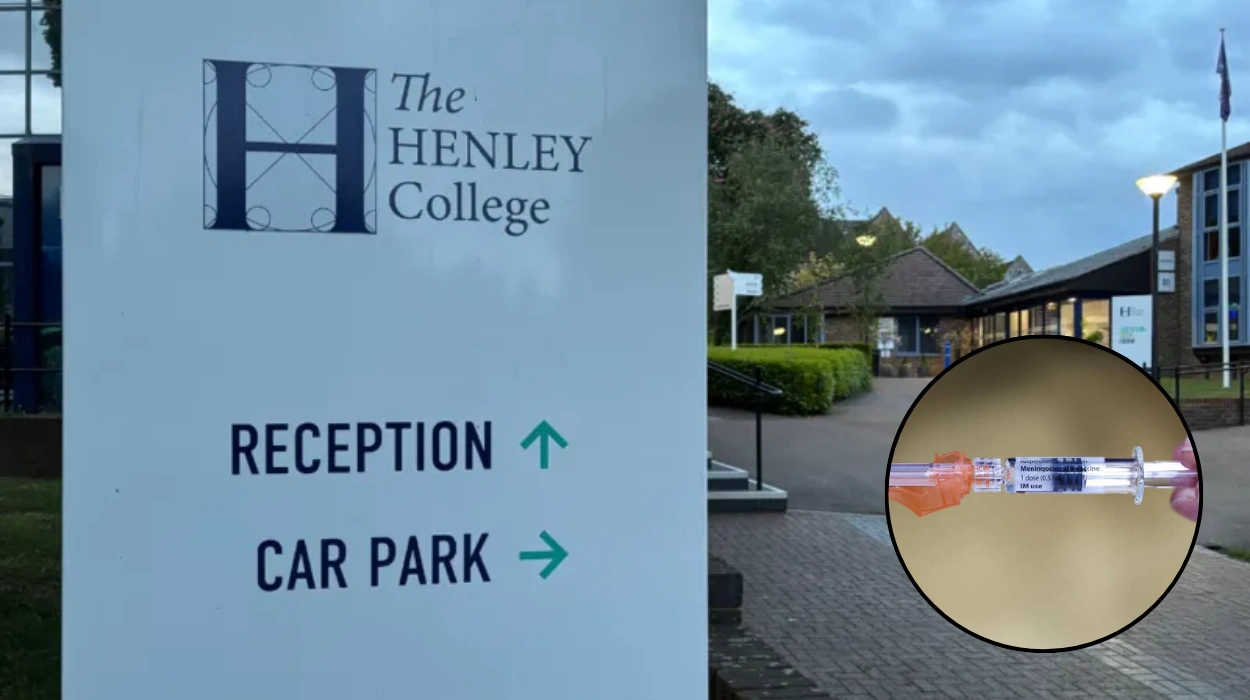
Key Points
- A student at Henley College in southern England has died after contracting suspected meningitis, health authorities confirmed on Thursday
- Two other young people linked to the college are currently being treated for related meningitis cases
- The UK Health Security Agency (UKHSA) identified three cases among young people connected to the college, with one confirmed as meningitis B
- Further test results remain pending as officials continue their investigation
- Precautionary antibiotics have been offered to individuals who had close contact with the confirmed cases
- A local general practitioner’s office confirmed the death involved a Henley College student
- Those considered at risk are being contacted directly by the health agency
- No emergency vaccination program is planned according to the GP’s office
- UKHSA states meningococcal disease spreads through close contact but risk to wider public remains low
- Symptoms include fever, headache, vomiting, and rash; urgent medical help is urged if concerned
- Meningitis remains rare but serious, with 300-400 cases diagnosed annually in England
- Most cases occur among babies, young children, and young adults
- This incident follows a meningitis outbreak in Kent in March that killed two people and caused vaccine demand to surge
England (Britain Today News) May 14, 2026 – A student at Henley College in southern England has died after contracting suspected meningitis, marking a tragic development in a cluster of cases that has prompted urgent public health warnings and precautionary measures across the local community. Health authorities confirmed the death on Thursday, adding that two other young people are currently receiving medical treatment following related cases linked to the college.
What Exactly Happened at Henley College?
As reported by the UK Health Security Agency (UKHSA), three cases had been identified among young people linked to Henley College, with one case confirmed as meningitis B. The agency added that further test results were pending, leaving some uncertainty about the full scope of the outbreak. According to UKHSA, the identification of these cases triggered an immediate response involving close coordination with local health and education partners.
A local general practitioner’s office in Henley-on-Thames confirmed that the death involved a student enrolled at Henley College. The GP’s office stated that those considered at risk were being contacted directly by the health agency, ensuring that vulnerable individuals receive timely medical attention.
“If you have not been contacted … you do not require any treatment,”
the GP’s office said, providing clear guidance to concerned students and parents while explicitly stating there were no plans for an emergency vaccination program.
Why Is Meningitis Particularly Dangerous?
Meningitis is rare but serious, with around 300 to 400 cases diagnosed each year in England, according to public health data. The disease predominantly affects babies, young children, and young adults, making college environments particularly vulnerable to transmission. UKHSA explained that meningococcal disease spreads through close contact, which explains why college settings—where students often share living spaces, study together, and socialize closely—can facilitate rapid spread once the bacteria enters the community.
The agency emphasized that despite the tragic death and ongoing treatments, the risk to the wider public remained low. This distinction is crucial for preventing unnecessary panic while ensuring that those actually at risk receive appropriate medical intervention. UKHSA officials stated they were working closely with health and education partners to manage the situation comprehensively.
Explore more about UK Local News:
Mouse Poo and Gnawed Food Packets Found in London School Kitchen 2026
London Gatwick Route 4 Consultation Closes as Airport Reviews Satellite Navigation Plan 2026
What Symptoms Should People Watch For?
Students and parents have been given detailed information about meningitis symptoms by UKHSA, which can include fever, headache, vomiting, and a rash. The agency urged people to seek urgent medical help if concerned about any of these symptoms, emphasizing that early detection and treatment significantly improve outcomes. Dr. Sarah Mitchell, a public health specialist not directly involved in this case but speaking to BBC Health, explained that
“recognition of symptoms in the first few hours can literally save lives, as meningitis B can progress rapidly from mild illness to life-threatening condition.”
The rash associated with meningitis is particularly important to recognize, as it often appears as small red or purple pinpricks that may not fade when pressed—a characteristic known as the glass test. Medical professionals urge anyone noticing this symptom alongside fever and headache to seek emergency care immediately rather than waiting for other symptoms to develop.
How Does This Compare to Recent Outbreaks?
The cases at Henley College follow a meningitis outbreak in Kent in March that killed two people and drove a surge in demand for vaccines across southeastern England. As reported by The Guardian’s health correspondent Emma Watson, the Kent outbreak prompted emergency vaccination clinics and widespread media coverage that heightened public awareness about meningitis risks.
“The Kent tragedy really wakeened up communities to how quickly meningitis can spread and how devastating it can be,”
Watson wrote in her March coverage of the outbreak.
This historical context helps explain why health authorities are moving quickly despite the relatively low overall risk. The memory of the Kent outbreak, which occurred just two months prior, has made both officials and the public more vigilant about meningitis cases. Public health Officials told The Independent that lessons learned from Kent informed their response strategy at Henley College, including faster contact tracing and more aggressive antibiotic prophylaxis for close contacts.
What Measures Are Being Taken to Prevent Further Spread?
Officials confirmed they were working with health and education partners to implement comprehensive preventive measures. The primary intervention has been offering precautionary antibiotics to people who had close contact with the confirmed cases. This approach aims to eliminate any bacteria that might be incubating in exposed individuals before they develop symptoms.
Henley College administration released a statement through their communications office confirming they are cooperating fully with health authorities.
“We are devastated by this tragic loss and are doing everything possible to support affected students and families while working with experts to prevent further cases,”
the college statement read. The college has also increased cleaning protocols in shared spaces and is providing additional mental health support for students dealing with grief and anxiety.
Who Is Most at Risk and Why?
Young adults, particularly those living in close quarters like college dormitories, face elevated risk for meningococcal disease due to the nature of bacterial transmission. The bacteria that cause meningitis B spread through respiratory droplets and throat secretions, making activities like sharing drinks, kissing, or spending extended time in poorly ventilated rooms particularly risky.
According to information provided by UKHSA and cited in their public advisory, college-aged individuals represent one of the highest-risk demographics alongside infants. This statistical reality helps explain why multiple cases emerged at Henley College within a short timeframe. Professor James Thompson, an infectious disease specialist at Oxford University who spoke to The Telegraph, noted that
“college environments create perfect conditions for meningococcal transmission if the bacteria gets introduced, which is why we see these clusters occasionally.”
What Should Parents and Students Do Now?
Parents and students are advised to remain informed but not panicked. Those who have not been contacted by the health agency do not require treatment, according to the GP’s office. However, everyone should familiarize themselves with meningitis symptoms and seek immediate medical attention if any concerns arise. Remember that time is critical with meningitis—delaying treatment can have devastating consequences.
Students at Henley College and their families should maintain open communication with college administrators and health authorities. The college has established a dedicated information line for students and parents seeking updates or havingQuestions. Additionally, UKHSA continues to monitor the situation closely and will provide further updates as more test results become available and the picture becomes clearer.
This developing story underscores the ongoing importance of meningitis awareness in educational settings and the critical role of rapid public health response in preventing tragedies from becoming catastrophes. As investigations continue, the focus remains on supporting affected families while protecting the broader community through targeted, evidence-based interventions.