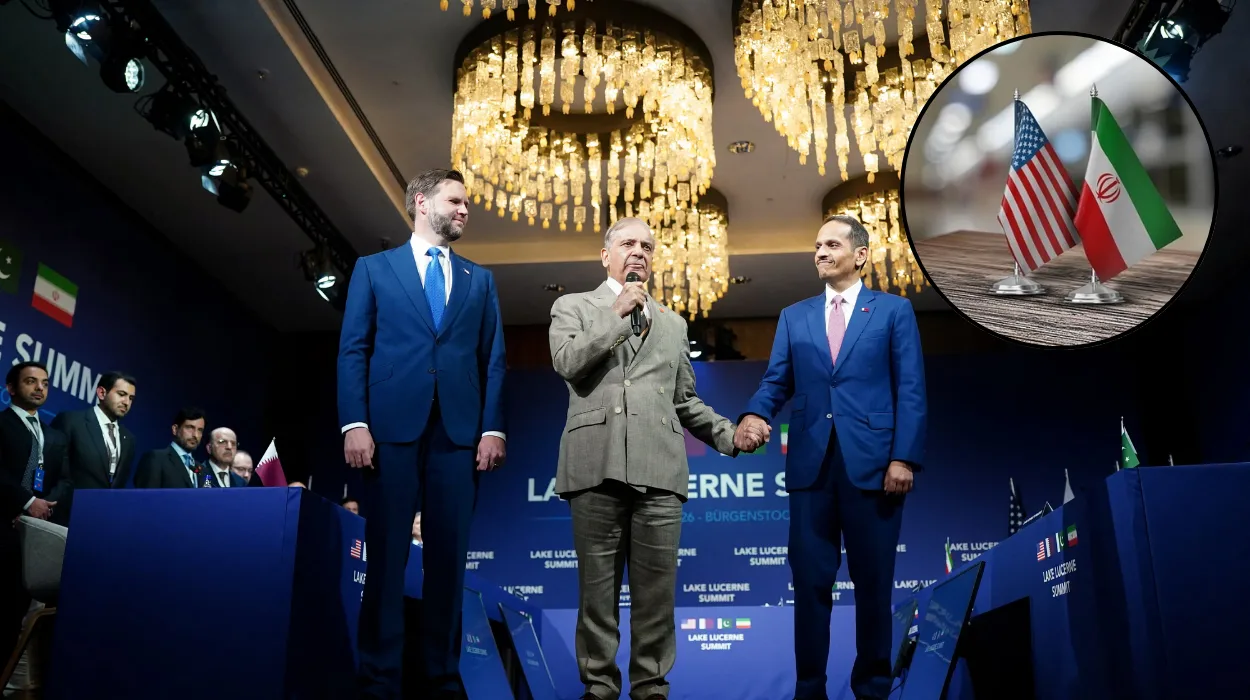
Key Points
- US Vice‑President J. D. Vance said talks at the Bürgenstock resort in Switzerland produced “a very good foundation” for a final Iran deal.
- Vance told reporters the negotiations made “a lot of good progress” and continued late into the night despite reports of a breakdown.
- The talks involved US and Iranian officials with mediators from Qatar and Pakistan; technical-level discussions will continue in the coming weeks and days.
- Vance said negotiators agreed mechanisms to keep the Strait of Hormuz open and a deconfliction channel between Israel and Lebanon.
- Vance announced a breakthrough: Iran has agreed to invite International Atomic Energy Agency (IAEA) inspectors back into the country.
- The US, Iran, Qatar and Pakistan agreed a framework for continued engagement under political oversight.
- Vance described the outcome as laying a foundation for a final deal but stressed the final agreement has yet to be negotiated.
- TankerTrackers reported Iran exported 36 million barrels of crude oil since a memorandum of understanding with the US was announced.
- The 14‑point memorandum of understanding between Iran and the US was announced on 14 June and entered into force on 18 June after electronic signatures by Iranian President Masoud Pezeshkian and US President Donald Trump.
- Provisions of the memorandum include ending hostilities on all fronts, reopening the Strait of Hormuz and lifting the US naval blockade on Iran.
Bürgenstock (Britain Today News) June 22, 2026 — The US vice‑president, J. D. Vance, said Monday that multi‑party negotiations with Iranian officials at the Bürgenstock resort had produced “a very, very good day” that laid “a very good foundation” for reaching a final agreement, while technical talks would continue in the coming weeks and days.
- Key Points
- What did Vice‑President J. D. Vance say about progress in Switzerland?
- Which confidence‑building steps did negotiators achieve in Switzerland?
- Did Washington announce any breakthrough on Iran’s nuclear inspections 2026?
- Who participated in the talks at the Bürgenstock resort?
- How did Vance respond to reports that talks were in jeopardy or that Iran might walk out?
- What does the deconfliction mechanism between Israel and Lebanon mean for the region?
- What framework for continued engagement was agreed and what happens next?
- What are the key provisions of the 14‑point memorandum between Iran and the US?
- What caveats or limits did Vance place on the outcomes announced in Switzerland?
- What are the immediate implications for regional stability and nuclear verification?
- What reactions might follow from regional capitals and international institutions?
- What legal and diplomatic steps formalised the US‑Iran memorandum of understanding?
What did Vice‑President J. D. Vance say about progress in Switzerland?
As reported by J. D. Vance to gathered reporters,
“Yesterday was a very, very good day. We made a lot of good progress.”
He said the participating teams — US and Iranian delegations flanked by mediators from Qatar and Pakistan — had accomplished several concrete objectives and agreed a structure for further technical negotiation under political oversight.
Vance characterised the outcome as foundational rather than final:
“We laid a very good foundation for a successful final deal. The final deal is the house. We set the foundation. We haven’t built the house, but we’ve laid a successful foundation.”
He stressed that the work would continue:
“Those technical negotiations are going to continue over the weeks and days to come.”
Which confidence‑building steps did negotiators achieve in Switzerland?
Vance named specific confidence‑building measures he said were agreed in the talks. He said the parties established mechanisms to keep the Strait of Hormuz open and a deconfliction mechanism between Israel and Lebanon, intended
“to ensure that when things happen, the sides are actually talking to one another”
and to prevent incidents from escalating into a wider regional conflagration.
Vance framed those measures as both practical and preventative: they are aimed at preserving communications between parties in fast‑moving situations and reducing the risk of miscalculation leading to broader hostilities.
Did Washington announce any breakthrough on Iran’s nuclear inspections 2026?
Yes. Vance announced what he described as “a major milestone” on the nuclear file:
“The Iranians have agreed to invite IAEA inspectors back into their country. That is a major milestone for the American people, and the first step in permanently denuclearizing or permanently ending a nuclear weapons program in Iran,”
he said.
He presented the inspectors’ return as a concrete step toward verification and long‑term constraints on nuclear development, while framing it as an initial stage in a broader negotiating process.
Who participated in the talks at the Bürgenstock resort?
Vance identified the principal participants as US and Iranian negotiators, with Qatar and Pakistan acting as mediators. According to Vance, those teams worked in close coordination and agreed a framework that allows technical teams to keep negotiating while political leaders provide oversight, ensuring progress at multiple levels.
How did Vance respond to reports that talks were in jeopardy or that Iran might walk out?
Vance dismissed reports the talks had been derailed, noting that negotiations “continued well past 1 in the morning” despite media reports suggesting Iran might leave. He emphasised continuity:
“Our teams, working with the Iranians, the Qataris, and the Pakistanis, made great progress yesterday. They will continue to work at the technical level with the teams here in Burgenstock.”
What does the deconfliction mechanism between Israel and Lebanon mean for the region?
Vance described the deconfliction mechanism as a channel to ensure communication when hostilities or incidents occur on the Israel‑Lebanon front. The mechanism’s purpose, he said, is to prevent local incidents from spiralling into regional escalation by making sure “the sides are actually talking to one another.”
Analysts typically describe such mechanisms as crisis‑management tools that aim to reduce accidental escalation by creating direct lines for clarification and restraint. Vance framed the arrangement as one of several pragmatic measures intended to stabilise tense theatres concurrently with nuclear discussions.
What framework for continued engagement was agreed and what happens next?
Vance said the US, Iranian, Qatari and Pakistani negotiators agreed on a framework for continued engagement in which technical teams would work under political oversight. He explained that the structure allows negotiations to be both detailed and accountable to ministers and principals.
“They will continue to work at the technical level with the teams here in Burgenstock. Those technical negotiations are going to continue over the weeks and days to come,”
he said.
Vance’s comments indicate a phased process: establish mechanisms and verification steps now, continue detailed technical work next, and seek a comprehensive political agreement later.
How did shipping and energy monitoring groups describe Iran’s exports since the US‑Iran memorandum?
TankerTrackers reported that Iran has exported 36 million barrels of crude oil since the memorandum of understanding with the US was announced. As posted on the social media platform X, the group wrote that
“Iran has exported 36 million barrels of crude oil since 2026‑06‑15. There is roughly an equal amount still afloat in Iran.”
That movement of cargo has direct implications for sanctions evasion concerns, energy markets and the leverage dynamic between Tehran and Washington as diplomacy proceeds.
What are the key provisions of the 14‑point memorandum between Iran and the US?
The memorandum, announced on 14 June and entering into force on 18 June after electronic signatures by Iranian President Masoud Pezeshkian and US President Donald Trump, contains a 14‑point understanding whose provisions include ending hostilities on all fronts, reopening the Strait of Hormuz, and lifting the US naval blockade imposed on Iran.
Vance and other officials have presented the memorandum as a roadmap for de‑escalation and dialogue, designed to create space for technical negotiations and longer term agreements on nuclear, security and regional issues.
How did Vance describe the negotiating tempo and atmosphere in Switzerland?
Vance said negotiators worked late into the night and achieved meaningful progress, describing the previous day as “a very, very good day.” He emphasised the cooperative tone of the technical work and the willingness of parties to remain engaged:
“They will continue to work at the technical level with the teams here in Burgenstock.”
His language sought to convey momentum while managing expectations that further negotiation is required to reach a comprehensive package.
What caveats or limits did Vance place on the outcomes announced in Switzerland?
Vance was careful to stress that while significant steps were taken, the work is incomplete.
“We laid a very good foundation for a successful final deal,”
he said, adding explicitly that the foundation is not the finished product:
“The final deal is the house. We set the foundation. We haven’t built the house, but we’ve laid a successful foundation.”
That distinction signals that verification, sequencing, and political commitments remain to be negotiated — especially if a durable, enforceable arrangement is to be reached.
Are technical negotiators expected to meet again and how long will talks continue?
According to Vance, technical negotiations will continue “over the weeks and days to come.” He framed the dialogue as iterative, with technical teams working under political supervision. The schedule suggests a rolling process rather than a single concluding meeting, with follow‑up sessions likely in multiple locations or continuing remotely.
Explore More about World:
Doval, Wang Yi Review India-China Ties at BRICS Talks
UN Warns EU Migration Law Could Violate Migrants’ Human Rights
What are the immediate implications for regional stability and nuclear verification?
Immediate implications include a possible reduction in near‑term kinetic risk if deconfliction and Strait‑of‑Hormuz arrangements hold, and a re‑establishment of IAEA presence in Iran if the inspectors’ invitation is fulfilled. Vance described the IAEA return as
“the first step in permanently denuclearizing or permanently ending a nuclear weapons program in Iran,”
a claim that frames inspection as central to verification.
Analysts will watch whether the IAEA’s access is broad, timely and backed by robust transparency measures. Without such conditions, verification risks being partial.
What reactions might follow from regional capitals and international institutions?
Reactions from regional capitals and international institutions will likely be cautious optimism mixed with demands for detail. The IAEA, if invited back, will need to verify terms and conditions; regional actors, particularly Israel and Gulf states, will evaluate the durability of deconfliction measures and the memorandum’s enforceability.
Vance’s public statements aim to signal to partners that the US is pursuing both security mechanisms and nuclear constraints simultaneously.
What legal and diplomatic steps formalised the US‑Iran memorandum of understanding?
The memorandum entered into force after electronic signatures by Iranian President Masoud Pezeshkian and US President Donald Trump on 18 June, formalising the 14‑point understanding announced on 14 June. The signing moved the memorandum from announcement to operative status, at least as a political commitment among the parties.
Next steps will involve turning political understandings into technical, verifiable agreements and implementing the steps described in the memorandum.
How should readers interpret Vance’s optimism about a final deal?
Vance’s language blends cautious optimism with realism. By calling the outcome a foundation, not a final product, he prepares observers for prolonged negotiation while signalling that substantive progress has been made. The invitation for IAEA inspectors and the agreement on deconfliction and Strait‑of‑Hormuz mechanisms are tangible milestones, but the ultimate success depends on testing these commitments in practice and resolving outstanding verification and sequencing issues.