Key Points
- Masked rioters tore through Belfast on Tuesday night, fuelled by anti-migrant rage following a stabbing attack allegedly by a Sudanese asylum seeker
- The 30-year-old Sudanese suspect entered the UK via the “Irish route” – flying from Sudan to Paris, then to Dublin, before taking a bus to Belfast in February 2023
- The suspect was granted refugee status in September 2023, allowing him to remain until 2028
- The victim, a man in his 40s identified locally as Stephen Ogilvie, lost an eye and suffered serious injuries to his eyes, face, and back
- Later this week, a new EU crackdown on asylum rules enters force on Friday, giving member states greater powers to process asylum claims and deport failed claimants faster
- The enhanced EU rules make Britain even more attractive for illegal immigrants due to the UK having no returns deals with the EU and weaker border defences
- Since Brexit, the UK has had no EU-wide legal method to return small-boat migrants to the Continent, creating a “legal arbitrage” pull factor
- Last year, more than 41,400 migrants crossed the English Channel – the second-highest annual total on record
- Ireland has an opt-out for EU asylum rules but entered the new European pact to drive down record asylum applications, which hit 18,651 in 2024
- Sir Keir Starmer cannot simply close the border or introduce checks on the frontier with Ireland due to the Good Friday Agreement
- Friedrich Merz, the German chancellor, said in March he wanted 80 per cent of 900,000 Syrian refugees in Germany to go home in the next three years
- Illegal border crossings in the EU are down by 40 per cent this year, but deporting failed asylum seekers remains a problem
- It is the third summer in a row that race riots have occurred in Northern Ireland, with asylum centres regularly attacked in the Republic
- Ireland blamed the Tories’ ditched Rwanda Plan for a surge in Dublin asylum claims, with ministers claiming 80 per cent of migrants arrived from Northern Ireland
North Belfast (Britain Today News) June 10, 2026 – Masked rioters tore through Belfast on Tuesday night fuelled by anti-migrant rage following a stabbing attack allegedly by a Sudanese asylum seeker, while later this week a new EU crackdownis poised to make the UK even more attractive to illegal immigrants. The 30-year-old Sudanese suspect, charged with attempted murder, travelled from his native Sudan to Paris and then to Dublin before taking a bus to Belfast in February 2023, according to police reports. As reported by the Telegraph’s political team, the asylum seeker suspected of carrying out the attack was granted refugee status in September 2023, allowing him to remain until 2028.
- Key Points
- What Triggered the Belfast Riots Tonight?
- How Will New EU Rules Enters Force Friday Change Migration?
- Why Is Britain Becoming More Attractive to Illegal Migrants?
- What Options Does Keir Starmer Have to Close the Irish Border?
- Could Starmer Secure an EU-Wide Migrant Return Deal Through Reset Negotiations?
- How Are Northern Ireland and Ireland Struggling with Modern Migration?
- What Safeguards Exist in the Common Travel Area?
What Triggered the Belfast Riots Tonight?
Monday’s stabbing threw the spotlight again on the backdoor to Britain through Northern Ireland, known as the “Irish route”. As reported by AP News, Jon Boutcher, the chief constable of Northern Ireland, informed the press that the suspect had been residing in the UK under a five-year refugee status issued in September 2023. Boutcher indicated that the individual likely traveled from Sudan to Paris and Dublin before seeking asylum in Belfast, adding that the suspect was not previously known to Northern Irish police.
The victim, a man in his 40s identified locally as Stephen Ogilvie, was taken to the hospital with serious injuries to his eyes, face and back after he was attacked late Monday in north Belfast, police said. A court has heard that the man stabbed repeatedly by the Sudanese asylum seeker lost an eye during the knife attack in Belfast. Graphic footage of the attack in Belfast was shared widely online, shocking the country.
On Tuesday, protesters on June 9 torched a bus and other vehicles and blocked arterial roads in Belfast a day after the brutal stabbing. Protesters in black hoodies, some wearing masks, torched a bus in east Belfast, and cars and trash bins were set ablaze as groups gathered in other parts of the city. Northern Irish police and British authorities issued repeated calls for calm earlier on Tuesday following the attack.
How Will New EU Rules Enters Force Friday Change Migration?
In response to increased migration and a resurgent Right, Europe is imposing harsh new rules that enter into force on Friday, giving member states greater powers to process asylum claims and deport failed claimants faster. As reported by DPA citing negotiators involved in the discussions, the framework would mandate that denied asylum seekers work more closely with authorities or face detention while awaiting deportation.
The provisional understanding, initiated amid rising pressure to limit migration, specifies rejected asylum seekers who cannot be returned to home countries may be relocated to undisclosed “return centers” outside the union. This provision will be applicable when an asylum seeker’s home nation declines to accept them back or if the EU member state initiating the deportation lacks diplomatic ties with the asylum seeker’s country of origin.
Non-commission could result in the loss of welfare benefits and the confiscation of travel documents, according to the proposed legislation. Additionally, the new legislation would permit authorities to detain migrants deemed a risk of flight or a national security threat, allowing for detention periods up to 24 months with the possibility of extending this by six months.
Most of the measures agreed upon are set to take effect immediately once the law is enacted, with certain provisions rolling out 12 months later to allow EU members time to prepare for necessary regulatory adjustments. As Nicholas reported,
“The new regulation will speed up the return process and increase returns of persons who have no legal right to stay in the EU”.
Why Is Britain Becoming More Attractive to Illegal Migrants?
Migrants who have either illegally entered Europe and want to avoid deportation under the enhanced rules, or are looking to avoid detection upon entry, may look to Britain, which has no returns deals and weaker defences. One such weakness is the soft border with Ireland. As the European Union strikes migration deal for more deportations reported by PBS, the EU has initiated a significant transformation of its migration framework with the goal of increasing deportations.
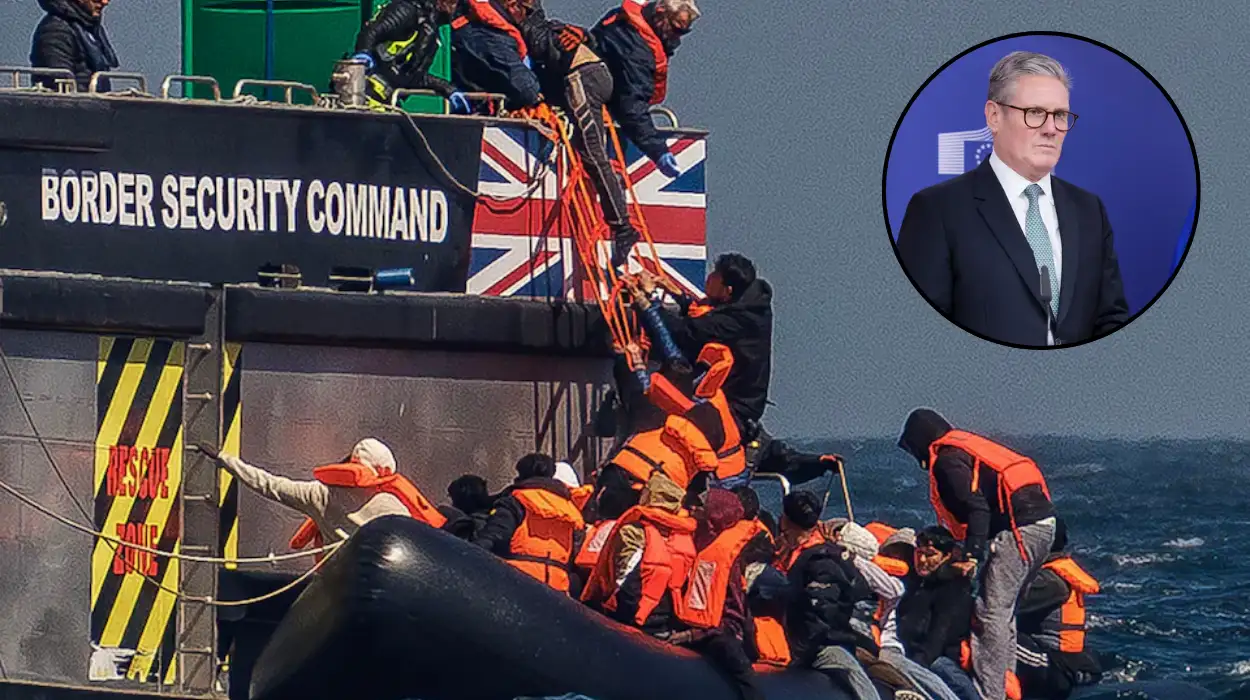
Since Brexit, the UK has had no EU-wide legal method to return small-boat migrants to the Continent. This legal arbitrage is already a pull factor for migrants looking to exploit loopholes and weaker deterrents. Last year, more than 41,400 migrants crossed the English Channel, the second-highest annual total on record.
In July last year, France and Britain agreed a pilot “one-in, one-out” scheme for small-boat migrants, but it has so far had a negligible impact. The new set of tough EU asylum rules only serves to make Britain even more attractive for migrants crossing the Channel or through Ireland.
What Options Does Keir Starmer Have to Close the Irish Border?
This poses a problem for Sir Keir Starmer. But Sir Keir’s options are limited, as he cannot simply close the border or introduce checks on the frontier with Ireland as a result of the Good Friday Agreement, which gradually removed border infrastructure. Its return would be viewed as a threat to the peace process, and checkpoints could become targets. As reported by the Telegraph on border policy, traditional checks such as passport stamps at the border would remove the fig-leaf that allows both unionists and nationalists to accept the end of the Troubles.
The invisible border is a helpful sticking plaster for a peace settlement that allows people in Northern Ireland to consider themselves Irish, British or both. Traditional checks would remove this crucial element of the peace settlement. Brexiteers and unionists still accuse Ireland of weaponising the border during the Brexit negotiations.
The deal created the UK’s first land border with the EU, which meant checks were needed to ensure goods adhered to Single Market rules. Successive British governments took the threat to the peace process seriously enough to agree to the Windsor Framework. This created the Irish Sea border with checks being carried out on British goods entering Northern Ireland, but ensured the land border with Ireland stayed open.
Sir Keir would jeopardise his hopes of an EU Reset deal if he introduces traditional border checks. It would bring back bad memories of Boris Johnson’s threats to rip up the Brexit deal during his premiership and end his hopes of closer ties with Brussels. He also cannot introduce passport checks on travel from Northern Ireland to Great Britain without enraging unionists who already fear the Brexit border has loosened their ties to the UK and made a united Ireland more likely.
Could Starmer Secure an EU-Wide Migrant Return Deal Through Reset Negotiations?
Could the Prime Minister use the Reset negotiations to pitch for an EU-wide migrant return deal? He could expect some support from France and Germany, but there is not enough political will in the EU to start taking illegal migrants back into Europe from Britain. Any such deal would hang on Sir Keir agreeing to European Commission migrant quotas, which would require lengthy negotiations and could be politically suicidal.
A more realistic goal is to secure language promising more intelligence sharing and cooperation on migration before the UK-EU summit in Brussels, which is expected next month. As Sir Keir Starmer has promised that his plan to reset relations with the European Union will be “good for our borders” despite warnings, the Government is locked in negotiations to determine how long young Europeans will be able to live and work in the UK.
Explore More about World:
Dubai Investment Opportunities Attract French Investors
Iran Downs US Helicopter in Hormuz; Trump Promises Retaliation
How Are Northern Ireland and Ireland Struggling with Modern Migration?
Northern Ireland and Ireland are both struggling to adapt to the challenges of modern migration. It is the third summer in a row that there have been race riots in Northern Ireland. Asylum centres have been regularly attacked in the Republic and there were riots in Dublin in 2023.
In 2024, the Irish government blamed the Tories’ ditched Rwanda Plan for a surge of asylum claims in Dublin. Ministers claimed that 80 per cent of its migrants had arrived from Northern Ireland, fleeing the scheme that was eventually frustrated because of human rights laws. The boot is now on the other foot.
Ireland has an opt-out for EU asylum rules but entered the new European pact as part of a push to drive down record numbers of asylum applications, which hit a record high of 18,651 in 2024. Many EU governments are cracking down on illegal immigration to head off the threat of the populist Right.
In March, Friedrich Merz, the German chancellor, said he wanted 80 per cent of the 900,000 Syrian refugees living in Germany to go home in the next three years. Brussels has been busy building “Fortress Europe”. Illegal border crossings are down by 40 per cent this year, but deporting failed asylum seekers remains a problem.
What Safeguards Exist in the Common Travel Area?
Selective but not routine passport checks are carried out in the Common Travel Area (made up of the UK, Ireland, Isle of Man, Jersey and Guernsey). There are provisions allowing for the return of migrants, but these appear increasingly outdated. As Hadi Alodid, aged 30, faced charges in a Belfast court on Wednesday accused of the stabbing incident, the UK interior ministry confirmed the Sudanese suspect entered the country in 2023 and acquired refugee status the same year.
If London and Dublin want to preserve and protect a Common Travel Area that has lasted more than a century, they need to find a way to ensure its safeguards are still fit for purpose. The United Kingdom, along with various European nations, has entered into a significant agreement urging judicial bodies to reassess their approaches to migration cases, aiming to facilitate the deportation of undocumented migrants.
The agreement pushes for a new approach to the continent’s main human rights treaty to tackle modern migration pressures. It affirms that states possess “the undeniable sovereign right” to formulate their own immigration policies and to expel foreign nationals in the interest of the public.
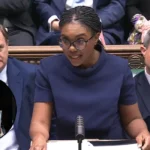
Gavin Robinson, leader of the Democratic Unionist Party, urged officials to manage “uncontrolled immigration” following the stabbing incident. When questioned in Parliament, Northern Ireland Secretary Hilary Benn stated he could not verify whether the accused had entered the U.K. unlawfully.
The establishment of “return hubs” beyond the borders of the 27-member EU marks the EU’s most stringent stance on migration to date, prompting strong backlash from critics who caution that it could jeopardize the safety of migrants and infringe upon human rights from Spain to Romania. Member states will soon have the capability to negotiate bilateral agreements with nations outside the EU to establish deportation centers.