Key Points
- Sir Keir Starmer refused to rule out tax rises when pressed in Prime Minister’s Questions over how his Government will pay for higher defence spending.
- Conservative leader Kemi Badenoch accused the Prime Minister of “dithering” and said the Government did not know where the money for its defence plans would come from.
- The Government’s defence investment plan, known as the Dip, is due to be published before the Nato summit in Turkey on 7 July.
- The plan was originally expected last autumn but has been delayed several times.
- Reports have suggested a dispute inside Government over the scale of the package, with one figure said to be around £15 billion, below the £28 billion defence officials have reportedly called for.
- Badenoch said Starmer had only three choices: cut spending, borrow more, or raise taxes.
- Starmer argued that the Conservatives left behind damage to the armed forces and said his Government is fixing the problem.
- Liberal Democrat leader Sir Ed Davey warned against cutting NHS funding to pay for defence.
- The Prime Minister’s official spokesman declined to say exactly when the Dip would be published or whether it would be funded through tax rises or spending cuts.
LONDON (Britain Today News) June 10, 2026 – Prime Minister Sir Keir Starmer has refused to rule out tax rises to help fund defence spending, setting up a fresh politics clash with opposition parties over how Britain should pay for a planned military investment push.
- Key Points
- Why did Starmer face questions?
- What did Badenoch say?
- How did Starmer respond?
- What is the defence plan?
- Is there a dispute in Government?
- What are the spending choices?
- What did Starmer say about welfare?
- Why did Ed Davey intervene?
- How has the Government handled the timing?
- What was said before PMQs?
- What does this mean politically?
- Why is defence spending under pressure?
- What happens next?
Why did Starmer face questions?
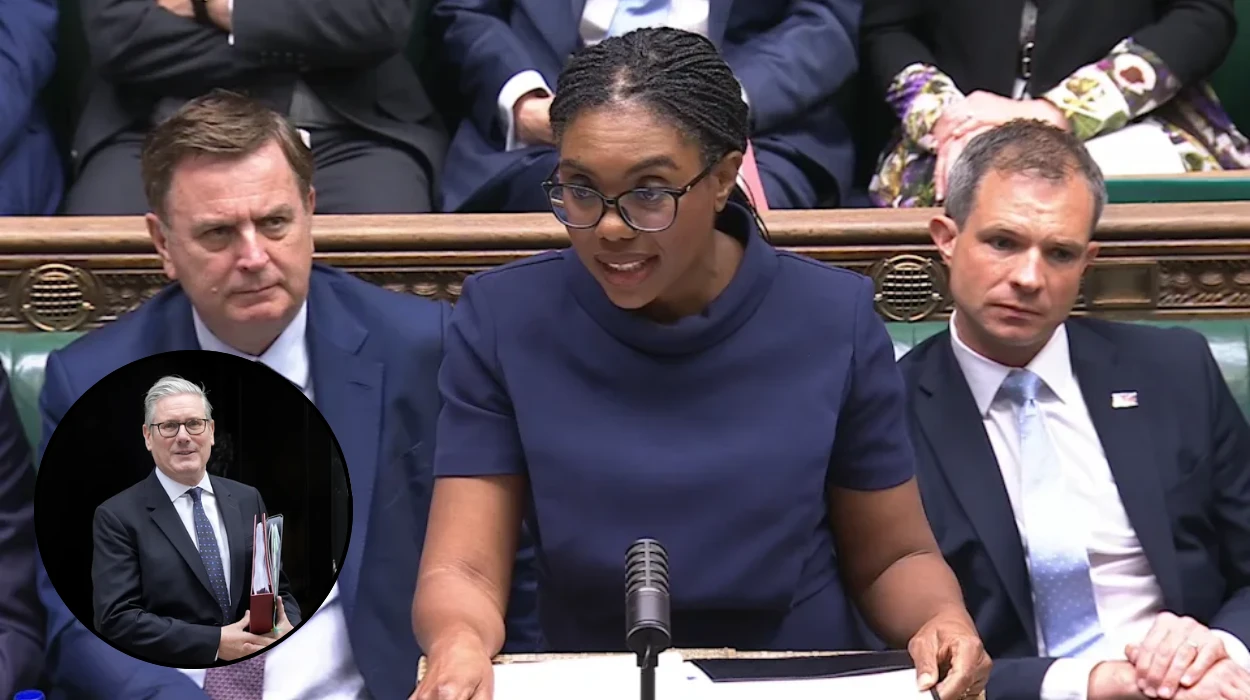
At Prime Minister’s Questions, Conservative leader Kemi Badenoch pressed the Prime Minister to say whether taxpayers should expect higher taxes to pay for the defence package, but he did not give a direct answer.
She argued that the Government had delayed its defence investment plan and accused Starmer of failing to explain where the money would come from.
Her line of attack was clear: she said the Government faced only three options —
What did Badenoch say?
As reported from the Commons exchanges, Badenoch told MPs:
“There is still no defence investment plan”.
She also said:
“He is the Prime Minister, and the reason that he’s dithering is because he doesn’t know where the money is coming from”.
Later in the exchange, she added:
“I asked him if he would rule out tax rises. He did not rule out raising taxes, so tax rises are coming”.
Her broader argument was that the Government was moving too slowly while military planners and financial markets were waiting for clarity.
How did Starmer respond?
Starmer replied by turning the attack back on the Conservatives and accusing them of damaging the armed forces during their time in office.
He said:
“When they left office, 47 out of 49 major defence contracts were delayed or over budget”.
He added:
“That is what we are fixing. You can’t just scrub away and forget”.
The Prime Minister also said:
“We’ve increased defence spending, we are going to publish the defence investment plan, and that will be done before the Nato summit coming up in just a few weeks’ time”.
What is the defence plan?
The defence investment plan — also referred to in reports as the Dip — is intended to set out how the Government will fund military equipment and services.
According to reporting around the issue, the plan has been delayed repeatedly and was initially expected last autumn.
The Government has said the strategy will be published before the Nato summit in Turkey, which begins on 7 July.
That timetable has increased the pressure on ministers to explain whether the spending will be covered by taxes, borrowing, welfare restraint, or other savings.
Is there a dispute in Government?
Reports cited alongside the Commons row suggest there is disagreement at the heart of Government over the size of the package.
One reported figure put the package at £15 billion, while defence officials have reportedly called for about £28 billion over the next four years.
The Government was in the final stages of preparing a defence spending strategy, but that the funding method remained uncertain.
That uncertainty is now central to the political row because ministers have not clearly ruled out tax rises or cuts elsewhere.
What are the spending choices?
Badenoch argued that the Government must choose between lower spending elsewhere, more borrowing, or higher taxes.
Starmer’s wider position, as reflected in earlier Government statements, is that Britain must raise defence spending and make the necessary financial choices to support that goal.
But official remarks from the Treasury have also suggested that taxes and borrowing are not the preferred route, which leaves cuts to other budgets as a possible alternative.
That tension is why the issue has become so politically sensitive ahead of the Nato summit.
What did Starmer say about welfare?
Starmer rejected Badenoch’s suggestion that the Government should simply cut welfare to cover the defence shortfall.
He said the Conservatives had increased welfare spending while failing to reform the system or properly invest in the armed forces.
He argued that the previous government allowed defence spending to fall and welfare spending to rise, and said Labour was now correcting that imbalance.
In the exchange, he presented defence as a core national duty that cannot be ignored.
Why did Ed Davey intervene?
Liberal Democrat leader Sir Ed Davey used his question to raise concern that NHS capital spending could be reduced to pay for defence.
He asked whether the Prime Minister would rule out cuts to the NHS budget to fund military spending.
Starmer replied that the Government would take “the necessary measures” to defend the country while also investing in public services.
He also used the exchange to criticise austerity-era cuts under the Conservatives and the Liberal Democrats, saying his Government would not take lectures on that record.
How has the Government handled the timing?
The official spokesman for the Prime Minister refused to give a firm publication date for the Dip.
He also would not confirm whether the plan would be financed through tax rises or spending cuts elsewhere in government.
Instead, he pointed back to Starmer’s Commons remarks and repeated the commitment to publish the plan before the Nato summit in a few weeks.
That deliberate caution has kept speculation alive and left the political row unresolved.
What was said before PMQs?
Reuters reported in May that Starmer was expected to approve a substantial increase in UK defence spending, with the method of funding still not settled.
At the time, reports indicated the Government aimed to speed up equipment and technology delivery to the armed forces while also supporting economic growth.
Earlier Government statements also showed Starmer’s commitment to a major and sustained rise in defence spending, with a target of 3% of GDP in the next parliament.
Those earlier pledges now sit beside the current dispute over how to pay for them.
Explore More about Politics:
UK Warned of ‘Eye-Watering’ Cuts to Pay for Defence Plans
Nigel Farage to headline Liz Truss CPAC UK conference
What does this mean politically?
The row gives the Conservative leader an opportunity to portray Labour as unclear and divided on taxation and spending.
It also allows Starmer to argue that the Conservatives left behind a damaged defence system and that Labour is now repairing it.
With the Nato summit approaching, the Government will want to end the uncertainty quickly because the plan is meant to show credibility on national security.
Until the plan is published, questions over tax rises, welfare cuts and borrowing are likely to continue dominating the debate.
Why is defence spending under pressure?
The defence row is unfolding against wider pressure on public finances and military readiness.
Reuters reported that raising defence spending without new taxes or borrowing could force reductions in other public spending areas.
Defence reporting has also described the plan as central to Britain’s effort to modernise equipment and respond to security concerns.
That means the dispute is not only political; it is also about how fast the Government can translate promises into a workable budget.
What happens next?
The immediate next step is the publication of the defence investment plan before the Nato summit in Turkey on 7 July.
When that happens, ministers will have to show whether they have chosen tax rises, spending cuts, borrowing, or a combination of all three.
Until then, Badenoch is likely to continue pressing the Government on the same question: where will the money come from.
Starmer, meanwhile, appears determined to keep the plan under wraps until the Government is ready to set it out in full.