Key Points
- UK Home Secretary Shabana Mahmood signed a three-year £662m agreement with France on Thursday to combat Channel migrant crossings.
- At least 50 French police officers trained in riot and crowd control will be deployed to beaches to tackle violence and hostile crowds.
- France to deploy drones, two helicopters, and a camera system worth millions to intercept people smugglers and illegal migrants.
- £100m of UK funding could be redirected or withdrawn after one year if crossings are not sufficiently reduced; specific targets undisclosed.
- New 140-capacity removal centre in Dunkirk, announced in 2023, expected by year-end, staffed by over 200 officers targeting top 10 nationalities: Eritrea, Afghanistan, Iran, Sudan, Somalia, Ethiopia, Iraq, Syria, Vietnam, Yemen.
- Aim to remove hundreds of migrants annually from French beaches for deportation to home countries or prior EU nations.
- Officer numbers to rise 42% to nearly 1,100 law enforcement, intelligence, and military personnel in northern France by summer.
- Additional £501m for beach enforcement; £160m extra if tactics succeed, potentially reducible after a year.
- France to add a new vessel and over 20 maritime officers targeting “taxi boats”.
- Crossings rose to 41,472 in 2025; 6,000+ in 2026 so far, with 602 on nine boats arriving Dover on Saturday.
- Previous 2023 deal (£476m) expires next month; included unpublished metrics and 700 officers.
- In last two months, French stopped six boats, returned migrants, sentenced five smugglers.
- Conservatives and Reform UK criticise lack of conditions; call for ECHR withdrawal.
- Labour’s August 2025 “one-in-one-out” deal: 305 returned to France, 367 arrived in UK by February 2026.
- 60,000 illegal migrants and foreign criminals removed from UK since Labour took office.
United Kingdom (Britain Today News) April 25, 2026 – Home Secretary Shabana Mahmood has sealed a landmark three-year £662m deal with France to halt illegal migrant crossings in the English Channel, deploying riot-trained police to beaches and advanced surveillance technology.
The agreement, signed on Thursday, marks a significant escalation in joint efforts to dismantle people smuggling networks. It introduces performance-linked funding, with ministers stating for the first time that around £100m could be withheld after a year if crossings persist at high levels. While exact targets remain unconfirmed by the UK government, the deal emphasises measurable disruption.
What Does the New Deal Entail?
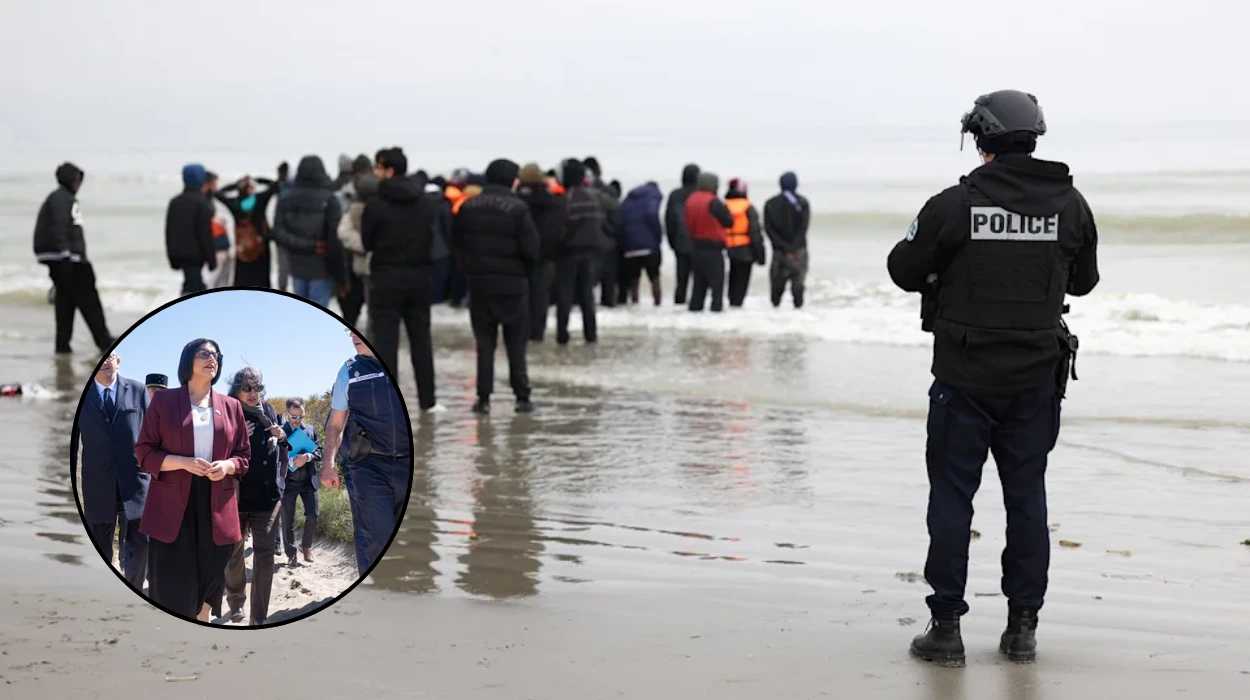
The pact commits France to bolstering beach patrols with at least 50 officers specially trained in riot and crowd control tactics. These personnel will confront violence and hostile crowds amid rising tensions at departure points. As part of the package, millions in UK funds will equip French forces with drones, two helicopters, and a sophisticated camera system designed to spot and intercept smugglers before launches.
Enforcement will intensify dramatically, with the number of law enforcement, intelligence, and military officers in northern France surging by 42% to nearly 1,100 by summer. This includes a new vessel and more than 20 additional maritime officers targeting so-called “taxi boats” used by smugglers. Around £501m targets beach actions directly, with £160m in bonuses if tactics prove effective—though the latter could shrink if reductions falter.
Home Office ambitions extend to physically removing hundreds of migrants yearly from French beaches, deporting them to origin countries like Eritrea, Afghanistan, or other EU states passed en route. A key milestone is the Dunkirk removal centre, first pledged by the prior government in 2023. This 140-capacity facility, staffed by over 200 officers, targets the top 10 nationalities from last year’s crossings: Eritrea, Afghanistan, Iran, Sudan, Somalia, Ethiopia, Iraq, Syria, Vietnam, and Yemen. Completion is slated by year-end.
Speaking at the signing, Shabana Mahmood described it as a “landmark agreement” that would
“really arm us to go after the people smugglers”.
In a subsequent interview, she highlighted its “flexibility”, stating:
“We will keep going – as the business model of the gangs changes, we will change as well in order to disrupt it, to degrade it, to break it down.”
French Interior Minister Laurent Nunez echoed the sentiment:
“This new agreement empowers our security forces to continue their crucial work in combating perilous Channel crossings and strengthening the safety of coastal residents.”
Why Has the Previous Agreement Been Replaced?
The outgoing 2023 UK-France joint declaration saw Britain pay £476m for enhanced patrols disrupting smuggling gangs. It featured unpublished
“metrics to measure progress and success”
and commitments to boost interception rates, backed by around 700 officers on beaches. That arrangement expires next month, prompting this renewal amid criticism over escalating arrivals.
Crossings have climbed over three years, peaking at 41,472 in 2025 despite French efforts. Weather plays a role, with fluctuations common, but Saturday saw 602 migrants reach Dover on nine boats, pushing 2026 totals above 6,000. Recent French successes include halting six boats in the last two months, returning all aboard and jailing five smugglers with deportations.
France maintains its police intercept vessels at sea to prevent boardings, countering UK claims of lax enforcement. In a northern France migrant camp, one man told the BBC he faced homelessness there but hoped for a “normal human being” life in the UK. A woman added:
“There’s a democracy in the UK – everything they give you is good, they protect us.”
How Have UK Opposition Parties Responded?
Conservative MP and shadow home secretary Chris Philp slammed the deal as handing
“half a billion pounds of our money with no conditions at all”.
He noted France thwarted only a third of embarkations last year, often allowing retries, insisting:
“France shouldn’t get a single penny unless they stop the vast majority of the boats.”
Reform UK’s home affairs spokesman Zia Yusuf deemed it “astonishing” and an
“abhorrent misuse of taxpayers’ hard-earned money – funding that could instead deliver thousands of new nurses or police officers here in the UK.”
Both parties advocate withdrawing from the European Convention on Human Rights (ECHR) to curb flows decisively.
Liberal Democrats argue for shattering smuggling business models via large-scale returns pacts with France. The Refugee Council, through director of external affairs Imran Hussain, urges shifting from Channel policing:
“Policing alone will not prevent desperate people from turning to dangerous small boats in the first place. Without safe routes to reach the UK, these men, women and children will be forced into dangerous and potentially deadly small boat crossings.”
Paris-based Migration Policy Institute director Meghan Benton questioned efficacy on BBC Radio 4’s Today programme:
“It was not obvious to me that more money and tougher targets will overcome what is a safety concern or risk aversion on the part of the French authorities.”
She noted a “real floor” on French aggression, with police cautiously boarding but wary of capsizing risks, evolving from non-intervention.
What Other Measures Complement This Deal?
Labour’s August 2025 “one-in-one-out” accord with France enables returning some boat arrivals while accepting equivalents from France who haven’t crossed illegally. By February 2026, 305 had returned and 367 arrived under it.
Since taking office, the government reports removing or deporting nearly 60,000 illegal migrants and foreign criminals from the UK, underscoring broader enforcement.
This multifaceted approach—surveillance, personnel surges, removals, and incentives—aims to adapt to smugglers’ evolving tactics. Yet with crossings persistent, questions linger on whether funding strings and tech will finally stem the tide, or if deeper reforms like ECHR exit prove necessary.