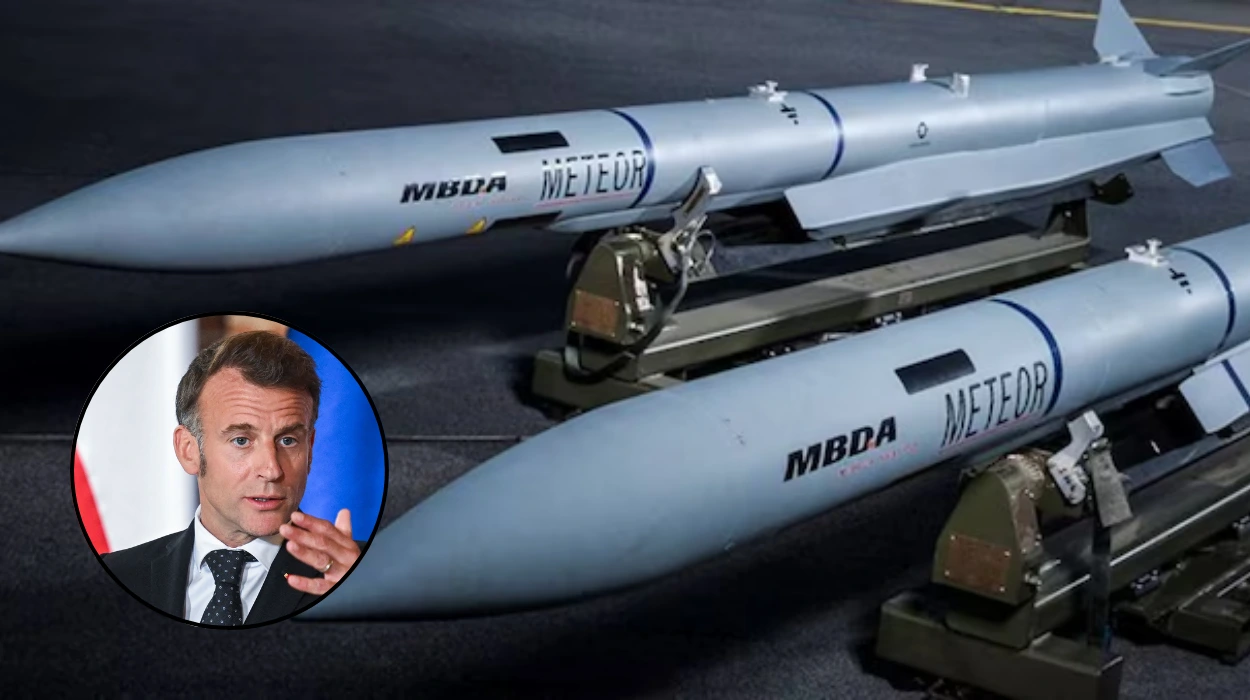
Key Points
- France has expressed formal interest in joining the Anglo-German long-range precision strike programme.
- Trilateral talks between Paris, Berlin and London are expected in early June.
- The programme, announced by the UK and Germany in 2024, aims to develop ground-launched missiles with ranges beyond 2,000 km.
- The initiative is intended to close a capability gap in European conventional long-range strike options and complement nuclear deterrence.
- French participation reflects President Emmanuel Macron’s push for advanced conventional capabilities alongside France’s nuclear forces.
- Industry players mentioned include MBDA, Hypersonics, and France’s ArianeGroup (Airbus/Safran).
- German Defence Minister Boris Pistorius confirmed French interest; Berlin welcomes the move while some in London remain cautious.
- The programme could include stealth cruise missiles and hypersonic systems; initial focus will be on land-based systems.
- Concerns persist that adding France may complicate industrial and political coordination, referencing past Franco-German defence tensions.
- UK and Germany project missiles to enter service in the early 2030s; French involvement could accelerate timelines.
Paris (Britain Today News) May 22, 2026 – France has formally signalled its intention to join the Anglo-German long-range precision strike programme, prompting plans for trilateral talks between Paris, Berlin and London in early June, sources close to the discussions confirmed.
- Key Points
- What has France asked to join and why?
- How would France’s entry change the project?
- Which capabilities are at stake and who are the companies involved?
- Does Europe already have long-range conventional missiles?
- What political debates are reopening in Paris?
- Will adding France risk industrial or political problems?
- When might the missiles enter service?
- How has NATO and other partners reacted?
- What next for trilateral talks?
What has France asked to join and why?
Paris has expressed interest in taking part in the Anglo-German long-range precision strike programme that the UK and Germany announced in 2024. The project aims to produce a family of advanced, ground-launched missiles with ranges exceeding 2,000 km, capable of striking military targets deep inside hostile territory. French officials say participation would reduce a widening gap between conventional capabilities and nuclear deterrence, a theme President Emmanuel Macron has emphasised repeatedly.
In a March speech, President Macron set out a vision in which
“advanced conventional weapons, air defence and surveillance must work to manage escalation before the nuclear threshold is crossed,”
an official readout of the remarks states. French ministers have since argued that joining the Anglo-German initiative would “accelerate development” and provide Paris with more options short of resorting to nuclear forces.
How would France’s entry change the project?
German Defence Minister Boris Pistorius publicly acknowledged French interest this month, saying:
“Now the French want to join us, and do it as soon as possible,”
remarks that Berlin described as a positive step towards broader European cooperation. Berlin’s reaction has been upbeat: German officials see French accession as strengthening what they call the spearhead of their defence agreement with London.
However, London has shown reservations. Some British officials privately warn that adding an additional partner with distinct industrial priorities and weapons concepts could complicate procurement and delay delivery.
“We must be careful that broadening the partnership does not fracture the project’s timetable or its technical coherence,”
a senior UK defence source told TIMG.
Which capabilities are at stake and who are the companies involved?
The Anglo-German proposal envisages a family of systems including stealth cruise missiles and hypersonic weapons. Initial emphasis is on ground-launched systems to provide European forces with the ability to strike deep targets without exposing aircraft or naval platforms to contested airspace or waters.
Industry participants already linked to the programme include the pan‑European missile group MBDA and the Anglo‑German start-up Hypersonics, which in February announced a successful private hypersonic test flight. French officials propose involving ArianeGroup (jointly owned by Airbus and Safran) to supply carrier rocket technologies for hypersonic weapons. ArianeGroup is already a major contributor to France’s strategic missile industrial base and builds the M51 ballistic missile used in the French nuclear deterrent.
A senior French defence industry official told TIMG that
“ArianeGroup’s expertise could shorten developmental timelines and add launch reliability for hypersonic concepts,”
while MBDA noted industry interest in pan-European collaboration to keep supply chains and design bases competitive.
Does Europe already have long-range conventional missiles?
European militaries possess some conventionally armed missiles with ranges of roughly 300 km or more, but most are air- or sea-launched. That means European fighters, warships or submarines currently need to enter contested airspace or waters to strike deep targets — an operational constraint highlighted by Moscow’s extensive use of land‑launched missiles in Ukraine and the deployment of long‑range systems in the Kaliningrad enclave.
French officials argue that a ground‑launched capability with ranges beyond 2,000 km would help deter aggression by providing credible conventional escalation options.
“This would offer new options for conventional escalation at a time when adversaries are deploying new technologies and weapons,”
President Macron said in the March address we cited.
What political debates are reopening in Paris?
France first took part in early talks with the UK and Germany but later stepped back amid internal debate over the relationship between conventional capabilities and nuclear doctrine. Macron’s renewed push reflects a conviction that conventional long‑range strike systems can complement rather than substitute France’s nuclear deterrent.
A joint Franco‑German communiqué published after Macron’s speech pledged collaboration on capabilities including precision deep‑sea attacks, underscoring a bilateral dialogue that now appears to be widening to include the UK. French officials maintain that a participating France could help “reduce the gap” between conventional and nuclear response options.
Explore More about World:
World Health Assembly Condemns Iran Over Gulf Attacks and Hormuz Blockade 2026
World Court Rules Workers Cannot Be Denied Power to Strike: Landmark International Labour Organization Standoff Settled in The Hague 2026
Will adding France risk industrial or political problems?
Historical examples temper optimism. Several high-profile Franco‑German defence collaborations have struggled under political and industrial tensions, notably the FCAS combat aircraft project, which has faced persistent friction. Some UK officials fear similar issues could slow or derail the missile programme if partner interests diverge.
Yet proponents point to successful UK‑French co‑development in the past, such as the Storm Shadow/Scalp cruise missile, as evidence that complex cross‑border projects can succeed.
“The Storm Shadow partnership demonstrates how national priorities can be aligned when the political will exists,”
a defence analyst said.
When might the missiles enter service?
UK and German planners expect initial systems to enter service in the early 2030s. French officials say their involvement could accelerate development and broaden technological options, particularly in hypersonics. The consortium’s timeline depends heavily on resolving technical integration, export-control arrangements and industrial burden-sharing if France joins.
How has NATO and other partners reacted?
Officials emphasise that this is a European-led capability intended to strengthen collective deterrence; discussions with NATO allies continue as part of the broader security framework. A NATO representative who declined to be named told TIMG that
“enhanced European strike options could be a positive addition to allied capability, provided interoperability and command arrangements are clarified.”
What next for trilateral talks?
Diplomats now expect Paris, Berlin and London to convene trilateral talks in early June to define scope, industrial roles and timelines. French, German and British delegations will seek to lay out how national industries can contribute while preserving the technical coherence of the programme.
“The coming weeks will show whether political goodwill can match the ambitious technical vision,”
an EU defence official said.
France’s bid to join the Anglo-German long-range missile programme marks a significant development in European defence cooperation. While Berlin welcomes accession and London expresses caution, the planned June talks will be decisive in determining whether the three powers can align strategy, industry and schedules to field ground‑launched, long‑range conventional options by the early 2030s.