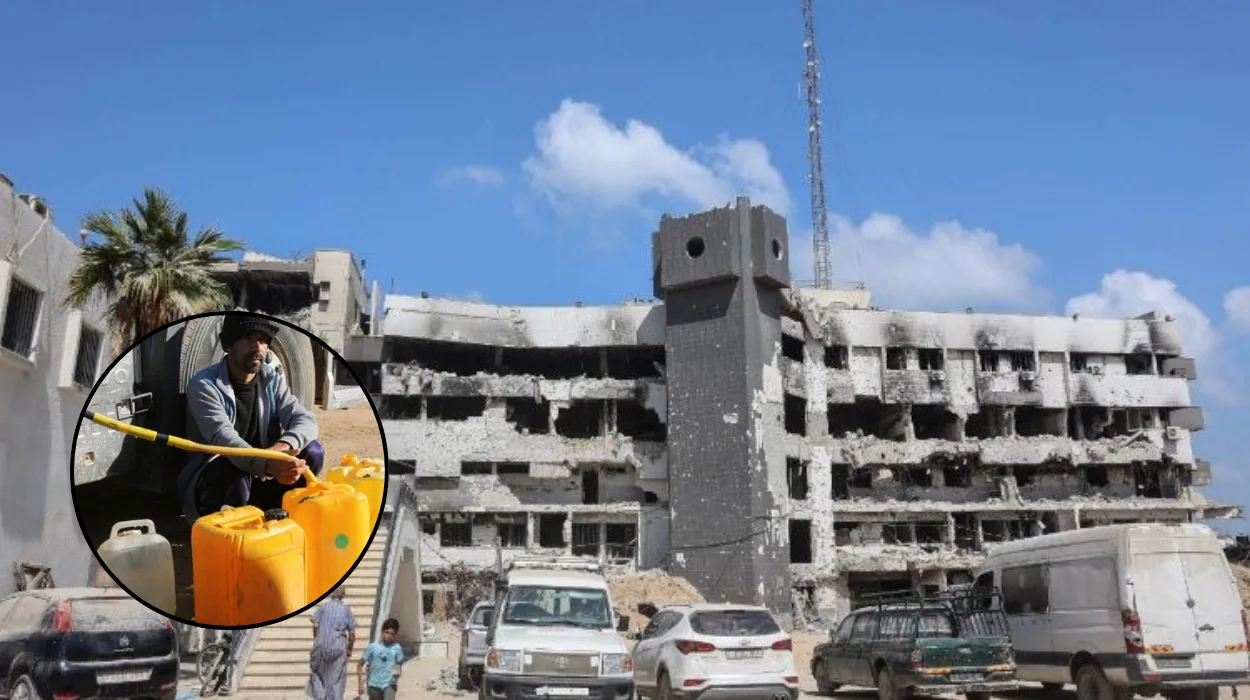
Key points
- The World Health Organization (WHO) has documented 22 attacks affecting hospitals and healthcare facilities across the Gaza Strip since the beginning of 2026.
- The United Nations Office for the Coordination of Humanitarian Affairs (OCHA) reports that only slightly more than half of Gaza’s hospitals remain partially operational, alongside around 58 per cent of primary healthcare centres.
- None of these facilities is currently functioning at full capacity due to ongoing insecurity, damage to infrastructure and shortages of staff and supplies.
- Humanitarian agencies estimate that more than 43,000 people now require long‑term rehabilitation care, including nearly 10,000 children, as a result of life‑changing injuries sustained in the conflict.
- Medical workers on the ground describe acute shortages of oxygen concentrators, laboratory materials, orthopaedic supplies and prosthetic devices, which are severely limiting treatment for amputees, burn victims and those with spinal and brain injuries.
- Aid deliveries remain constrained, with Israeli authorities continuing to classify some medical items as “dual‑use” and restricting or delaying their entry at border crossings.
- UNICEF reported distributing hygiene kits and water containers to around 116,000 people over the past week, but OCHA estimates that 98 per cent of Gaza’s available water is unsafe for human consumption.
- Around 90 per cent of Gaza’s water‑treatment infrastructure has been damaged or destroyed, compounding the healthcare crisis and heightening the risk of disease outbreaks.
- International agencies warn that more than 50,000 conflict‑related injuries now require prolonged rehabilitation, yet no specialised rehabilitation centre is fully operational in Gaza.
- The United Nations and humanitarian organisations are renewing their appeals for unhindered humanitarian access, regular humanitarian corridors and the restoration of essential infrastructure to meet the needs of Gaza’s population after more than two years of war.
Gaza (Britain Today News) May 22, 2026 – The World Health Organization has recorded 22 attacks on hospitals and medical facilities in the Gaza Strip since the beginning of 2026, underscoring how the ceasefire formally announced in October last year has not translated into a secure environment for Gaza’s collapsing healthcare system. According to the United Nations Office for the Coordination of Humanitarian Affairs (OCHA), these incidents have caused casualties, disrupted patient transfers, and further weakened a network of hospitals that were already operating far below capacity. The Gaza Strip, 2026 situation has left just over half of Gaza’s hospitals and around 58 per cent of primary healthcare centres partially functioning, with none able to offer full‑scale services.
- Key points
- How many hospitals are still working in Gaza?
- What injuries are driving the rehabilitation crisis?
- Why are hospitals so overwhelmed by shortages?
- How are attacks on hospitals affecting civilians?
- What are the main barriers to medical aid entry?
- Is Gaza also facing a water and sanitation emergency?
- What are aid agencies demanding now?
As reported by the WHO’s May 2026 update on trauma rehabilitation needs in Gaza, the conflict has left more than 43,000 people in need of long‑term rehabilitation, including nearly 10,000 children who have suffered amputations, spinal injuries, burns or traumatic brain injuries. Officials warn that the number of patients requiring specialised care continues to rise, even as the few remaining functional hospitals struggle to manage basic surgeries and emergency care. Dr Richard Peeperkorn, WHO Representative in the occupied Palestinian territory, stated in an earlier briefing that the surge in rehabilitation needs
“occurs in parallel with the ongoing decimation of the health system,”
stressing that patients cannot get the care they need amid chronic shortages of staff, equipment and medicines.
How many hospitals are still working in Gaza?
According to OCHA’s latest situation reports, only 17 out of 36 hospitals in Gaza are currently functioning, and even these are operating in a severely compromised way, often with power cuts, intermittent fuel supplies and limited staff. The partial‑functioning status means that many wards, intensive care units and operating theatres remain either closed or operating at a fraction of pre‑war capacity.
International health agencies also note that around 58 per cent of primary healthcare centres remain open, but many of these facilities are unable to provide continuous services due to security threats, repeated evacuation orders and the lack of basic medical supplies. As WHO officials have explained, the repeated shelling and targeting of health infrastructure have made it impossible for medical teams to plan long‑term treatment or rehabilitation programmes, forcing them instead to focus on emergency stabilisation and basic wound care.
What injuries are driving the rehabilitation crisis?
WHO analysis released in May 2026 estimates that approximately 25 per cent of all conflict‑related injuries in Gaza could result in life‑changing disabilities, amounting to roughly 43,011 individuals needing long‑term rehabilitation care. Within this group, a substantial proportion are children, whose developing bodies are especially vulnerable to permanent disability if they do not receive timely and appropriate therapy.
The same WHO‑backed study highlights that severe limb injuries, amputations, spinal‑cord damage, traumatic brain injuries and major burns are the main drivers of this vast rehabilitation gap. Earlier WHO modelling had estimated between 13,455 and 17,550 serious limb injuries and between 3,105 and 4,050 amputations by mid‑2024, and the new May 2026 update indicates that an additional nearly 5,000 life‑changing injuries have been recorded since the previous assessment. As a senior WHO technical officer in the region told international media earlier this year,
“The healthcare system is simply not equipped to absorb this scale of chronic, complex injuries.”
Why are hospitals so overwhelmed by shortages?
Medical workers in Gaza describe a situation where basic items such as oxygen concentrators, laboratory reagents, orthopaedic supplies and prosthetic devices are in critically short supply. The few hospitals that remain open are often forced to ration equipment, delay operations, and discharge patients before they are ready, simply because there is nowhere else to put them and no space in rehabilitation units.
In a May 2026 situation report, WHO and partner agencies noted that no specialised rehabilitation centre is currently fully operational in Gaza, and that existing services are overwhelmed by the number of patients. The report also warned that shipments of wheelchairs, prosthetic limbs and rehabilitation equipment have been held up for months at border crossings, with some consignments still pending clearance despite repeated appeals from humanitarian actors. As a WHO technical lead in the field told a United Nations briefing,
“More than 400 patients are waiting for dedicated rehabilitation beds, and many more are effectively being turned away because the system has no capacity.”
How are attacks on hospitals affecting civilians?
Despite the ceasefire that came into effect in October last year, violence has continued in various parts of the Gaza Strip, with health facilities caught in the crossfire. OCHA and monitoring groups have documented repeated incidents in which ambulances, medical convoys and hospital grounds have been struck, making it harder to evacuate the wounded and leaving many patients stranded in damaged buildings.
In a separate report published by an international humanitarian monitoring body in March 2026, researchers recorded thousands of incidents of violence or obstruction against healthcare in the occupied Palestinian territories since October 2023, with the vast majority linked to Israeli military actions. In Gaza, the report notes that hospitals, clinics, pharmacies, medical warehouses and rehabilitation centres have been damaged or destroyed on hundreds of occasions, while hundreds of health workers have been killed or detained.
Explore More about World:
Paris France wants to join British-German long-range missile project 2026
World Health Assembly Condemns Iran Over Gulf Attacks and Hormuz Blockade 2026
What are the main barriers to medical aid entry?
The WHO and UN agencies continue to highlight that restrictions on the entry of medical supplies and “dual‑use” definitions applied by Israeli authorities are major factors slowing the delivery of lifesaving care. Some items essential for trauma and rehabilitation—such as certain plastics, metals, electronics and chemicals—are still classified as having potential military applications, which triggers delays, inspections and sometimes outright denials at crossing points.
In recent weeks, UN officials have reported that over 180 pallets of medical supplies, including vaccines, refrigerated medicines and hygiene products, were recovered at the Kerem Shalom crossing, but they stressed that this does not compensate for the overall shortfall. As a senior UN humanitarian coordinator told a press briefing in April 2026,
“Even when trucks are eventually allowed through, the volume is far below what is needed to put the health system on a recovery trajectory.”
Is Gaza also facing a water and sanitation emergency?
Alongside the health‑system collapse, Gaza is grappling with a worsening water‑and‑sanitation crisis. UNICEF reported in May 2026 that it had distributed hygiene kits and water containers to about 116,000 people across the Strip over the previous week, but stressed that this was only a partial response to the broader emergency.
OCHA’s latest estimates indicate that 98 per cent of Gaza’s available water is unsafe for human consumption, while around 90 per cent of its water‑treatment infrastructure has been damaged or destroyed. This has led to a sharp increase in waterborne diseases and placed additional strain on already overstretched hospitals. As a UNICEF child‑protection officer in the region told reporters,
“Even when a child survives a blast injury, the risk of infection from contaminated water can undo months of treatment unless we see a rapid restoration of water services.”
What are aid agencies demanding now?
Humanitarian organisations are calling for unhindered access for medical and humanitarian convoys, the regular opening of humanitarian corridors, and the removal of restrictions on so‑called “dual‑use” items that serve legitimate medical purposes. They also insist on re‑establishing infrastructure such as power grids, water networks and sewage systems to support any meaningful recovery of the health sector.
In a joint statement issued in late April 2026, the WHO, OCHA and UNICEF reiterated that only a sustained ceasefire, full access and the reconstruction of essential services will allow Gaza to meet the rehabilitation and medical needs of more than 50,000 injured people. As a WHO spokesperson put it in a recent briefing,
“We are not just talking about treating today’s wounded; we are talking about preventing an entire generation from being disabled for life because they cannot get the care they need.”