Key Points
- The International Court of Justice (ICJ) ruled that international law protects the right of workers to strike, providing a major legal boost to unions worldwide.
- The 14-judge panel determined that the historic postwar 1948 Freedom of Association and Protection of the Right to Organize Convention (No. 87) encompasses the right to walk off the job.
- This decisive ruling concludes an intense, 14-year institutional deadlock within the International Labour Organization (ILO) that began when employer groups challenged strike protections in 2012.
- While the court declared the right to strike is intrinsic to organizing, it explicitly left the precise scope, conditions, and regulatory limits of strikes to national courts and sovereign governments.
- The advisory opinion cannot be appealed, and though it does not automatically rewrite domestic legislation, it heavily influences UN guidelines, OECD standards, and global trade pacts.
- The ILO Governing Body will officially reconvene in November to review the decision and outline formal next steps following this rare, historic referral to the world court.
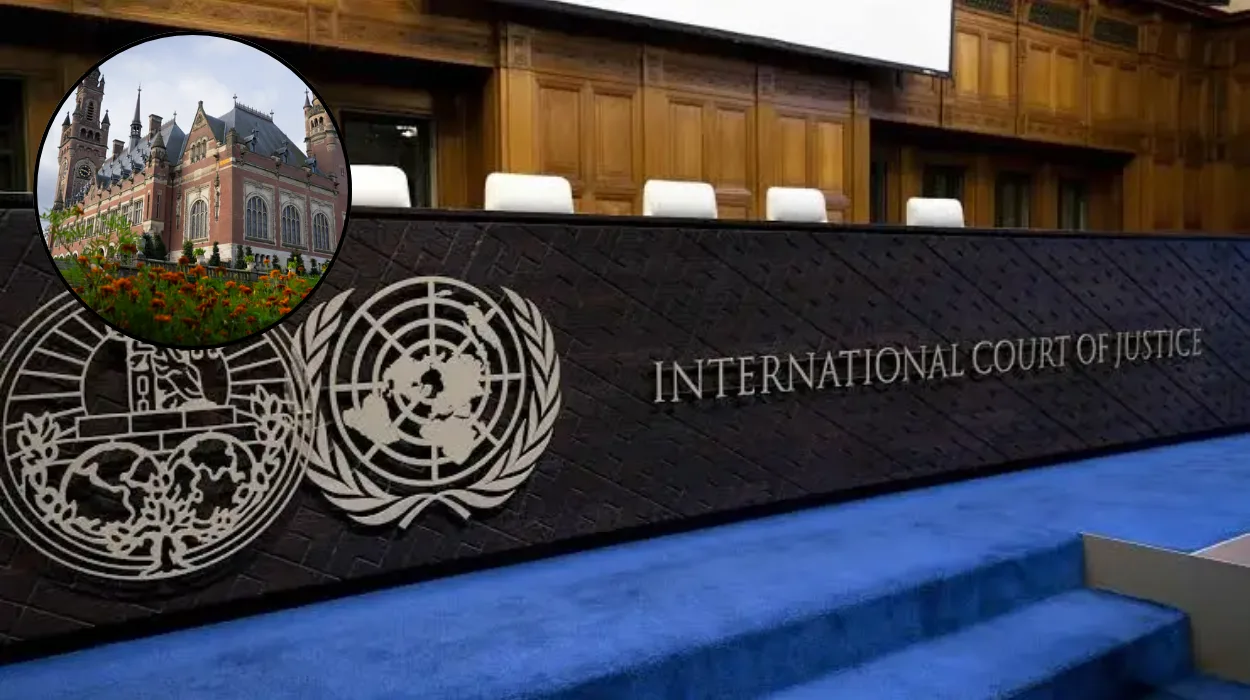
The Hague (Britain Today News) May 21, 2026 – The International Court of Justice has delivered a definitive, landmark advisory opinion declaring that international law explicitly protects the fundamental right of workers to strike, bringing a resounding conclusion to a bitter, decade-long institutional standoff between global trade unions and employer organizations. Reading the highly anticipated determination in the Great Hall of Justice on Thursday, the panel of 14 judges rejected corporate assertions that a lack of explicit wording erased strike protections, finding instead that the right to collectively stop working is inseparable from the internationally recognized freedom to organize. The historic judgment directly impacts millions of employees globally—ranging from dockworkers to logistics delivery drivers—by firmly embedding the legality of industrial action within the United Nations’ overarching human rights framework.
- Key Points
- How Did the International Court of Justice Interpret the Silence of the Treaty?
- What Triggered the Decade-Long Confrontation Within the International Labour Organization?
- How Have Employer Groups and Corporate Representatives Responded to the Ruling?
- Why Is This Opinion Considered an Unprecedented Victory by Labor Scholars?
- What Happens Next to National Labor Laws and Future Global Trade Agreements?
As detailed in the official judicial proceedings by Court President Yuji Iwasawa, the panel focused heavily on the practical function of labor syndicates, concluding that a treaty designed to empower workers would be rendered meaningless if it simultaneously stripped them of their primary negotiating mechanism. However, the international judges carefully balanced their assessment by noting that while the fundamental right exists, the specific regulatory boundaries and everyday restrictions governing strikes remain within the jurisdiction of national legislative bodies and domestic courts. The decision triggers an immediate shift back to the International Labour Organization in Geneva, where governments, labor groups, and corporate secretariats must now figure out how to implement the ruling and manage the next wave of local disputes over the exact limits of legal industrial action.
How Did the International Court of Justice Interpret the Silence of the Treaty?
A major point of contention during the extensive legal proceedings was the absolute absence of the specific word “strike” within the text of the Freedom of Association and Protection of the Right to Organize Convention of 1948, known widely as ILO Convention No. 87. In the official written findings of the 14-judge panel, the court clarified that literal silence does not equate to the non-existence of a right, especially when interpreting a postwar humanitarian treaty intended to protect vulnerable collectives. The judges explained that the treaty explicitly protects the right of workers’ organizations to fully organize their “activities” and formulate their “programs,” terms that naturally and logically encompass the execution of a walkout.
As documented in the court’s official judgment, the panel stated that
“the court notes that strike action is one of the main activities engaged in and tools used by workers and their organizations to promote their interests and improve conditions of labor.”
By focusing on how unions operate in the real world, the judges rejected the technical arguments put forward by corporate legal teams who claimed that omission equaled exclusion. The panel further clarified their legal philosophy by adding that
“therefore, the protection of the right to strike is in line with the object and purpose of the convention.”
What Triggered the Decade-Long Confrontation Within the International Labour Organization?
The roots of this profound legal showdown trace back to a volatile institutional crisis in 2012, when employer groups operating within the International Labour Organization openly and aggressively challenged what labor experts had considered settled law for generations. For decades, the ILO’s specialized committee of experts had operated under the consensus that workers could not effectively defend their livelihoods if they were granted the right to form a union but stripped of the practical power to pause their labor. This corporate challenge disrupted the delicate tripartite structure of the United Nations agency, which relies on cooperation between governments, employers, and workers.
The institutional gridlock escalated rapidly during a series of high-stakes standards meetings, during which corporate delegates systematically refused to discuss or process any labor cases that involved or referenced strike rights. By the year 2013, employer groups escalated the conflict by questioning whether the labor agency’s independent experts possessed the legal authority to interpret international conventions at all. Negotiations dragged on pointlessly for years without a clear path forward, paralyzing vital components of the international labor monitoring system until late 2023, when the Workers’ Group, backed formally by 36 sovereign governments, successfully voted to refer the matter to the world court for a final, authoritative interpretation.
Explore More about World:
US and Israel ‘hoped to install Ahmadinejad as Iran’s leader’ 2026
Surrey Police Investigate Epstein-Linked Historical Abuse Allegations 2026
How Have Employer Groups and Corporate Representatives Responded to the Ruling?
In the immediate aftermath of the announcement in The Hague, corporate associations and employer representatives moved quickly to emphasize the specific legal limitations of the court’s advisory opinion, focusing heavily on what the judges chose not to decide. The International Organisation of Employers, which functions continuously as the secretariat for the entire employer bloc within the complex ILO network, issued a detailed assessment pointing out that the world court had deliberately refrained from creating a uniform blueprint for how strikes must be managed on the ground.
As reported by administrative staff summarizing the corporate response, Roberto Suárez Santos, the secretary-general of the International Organisation of Employers, stated that corporate groups
“remain committed to engaging constructively with governments and workers to identify an agreed tripartite way forward.”
He strongly urged labor unions and international delegates to set aside rhetoric and proceed in a highly pragmatic manner during the upcoming international labor conference scheduled for June in Geneva. Corporate leaders are emphasizing that because Court President Yuji Iwasawa explicitly stated that the opinion
“does not entail any determination on the precise content, scope or conditions for the exercise of that right,”
employers still possess significant leverage to lobby for strict national limitations on strikes, particularly within sectors deemed essential services.
Why Is This Opinion Considered an Unprecedented Victory by Labor Scholars?
Independent legal experts, human rights advocates, and academic authorities have universally characterized the determination as one of the most significant and far-reaching victories for international trade union rights since the end of the Second World War. As reported by legal correspondent Molly Quell, Tonia Novitz, a professor of labour law at the University of Bristol, stated that the opinion is “a victory” because it treats strike action as completely inseparable from the broader, democratic concepts of freedom of association and collective bargaining. She observed that the 14 judges chose to anchor their historic ruling not merely in the isolated text of the 1948 treaty, but within decades of evolving international human rights jurisprudence and regional court precedents.
Furthermore, Novitz highlighted that the world court extended substantial institutional validation to the historical findings of the ILO’s internal supervisory bodies, which had been under relentless attack by corporate executives for over a decade. She concluded her analysis by noting that while domestic battles over strike limits will undoubtedly persist,
“what cannot be denied is that there is a right to strike and that it is intrinsic to protection of freedom of association and the right to organise.”
Similarly, Nicolas Bueno, an assistant professor of public international law and European law at UniDistance Suisse, publicly noted that the clear judgment effectively closes
“a long institutional crisis between employers and workers on the right to strike.”
He added that by applying standard treaty-interpretation rules under the Vienna Convention, the court has provided a strong framework that could push all factions back toward building a fairer globalized economy.
What Happens Next to National Labor Laws and Future Global Trade Agreements?
Because this ruling was delivered as an advisory opinion requested by a specialized United Nations agency, there is absolutely no mechanism for legal appeal, meaning the case is permanently closed at the international level. However, as noted by international jurists, the opinion does not possess the domestic power to automatically rewrite the static statutory laws of individual countries. The practical weight of the decision will be felt most acutely in how it alters the leverage of workers during domestic legal battles and how it shapes international trade pacts that explicitly require participating nations to respect core ILO standards.
The reach of the decision is also bounded by ratification reality; for instance, while Convention No. 87 has been formally ratified by 158 nations, certain major global economies, including the United States, have never ratified the foundational 1948 treaty. Commenting on this dynamic to reporters, international labor law expert Paul van der Heijden stated that the advisory opinion nevertheless hands workers an incredibly potent weapon when their collective actions face severe legal opposition from employers or state authorities, noting that the decision “is important when you go to court.” The International Labour Organization has confirmed that its primary executive body will officially revisit the entire issue during its 358th session in November, marking only the second time in the agency’s 107-year history that it has used the world court to break an internal interpretive deadlock.