Key Points
- Nissan is initiating a major restructuring program to enhance operational efficiency and improve profitability across its European operations.
- The company plans to consolidate two production lines into one at its flagship Sunderland factory in the UK.
- Despite the consolidation at the Sunderland plant, the manufacturer has confirmed this specific change will not result in any job losses.
- Nissan intends to cut approximately 900 jobs across its wider European workforce, representing about 10% of its total employees in the region.
- Proposed structural changes include the partial closure of a warehouse facility in Barcelona and a transition to an importer-only model for Nordic markets.
- These measures form part of the broader ‘Re:Nissan’ recovery plan aimed at simplifying corporate structures and reducing business complexity.
- The manufacturer is navigating significant commercial challenges, including diminished sales figures and the economic impact of US trade policy tariffs.
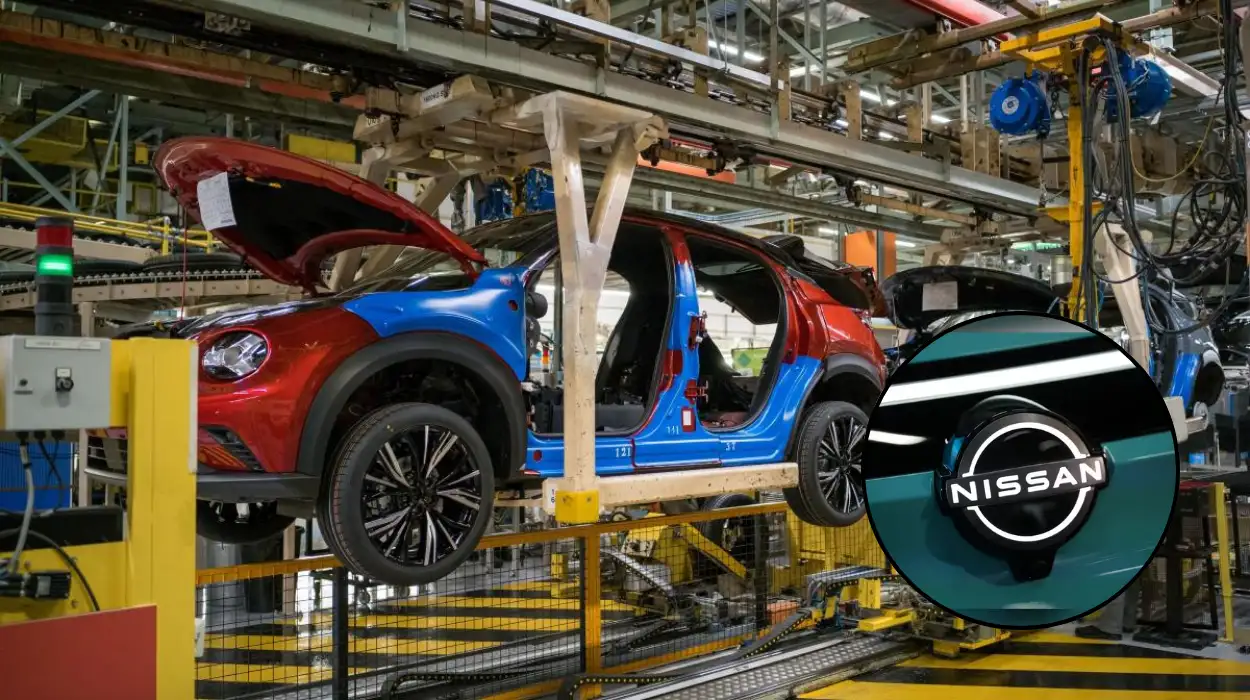
United Kingdom (Britain Today News) May 5, 2026 – Nissan has announced a sweeping restructuring of its European business operations, which includes a significant consolidation of production lines at its Sunderland plant and the reduction of its workforce across the continent by approximately 900 roles. The Japanese automotive giant revealed that it will merge two production lines into one at its Sunderland facility to bolster efficiency and maximize space, while simultaneously initiating consultations regarding substantial changes to its European infrastructure.
The latest strategic shift at the Sunderland manufacturing site aims to streamline operations and open up capacity for future industrial partnerships, according to official company communications. While the Sunderland plant, which currently employs roughly 6,000 staff members, will see two production lines merged, the company has explicitly stated that this maneuver will not result in any staff redundancies at the site. This development follows a substantial £450 million investment announced late last year, which focused on upgrading factory technology and engineering training to support the production of the new electric vehicle Leaf.
Why is Nissan cutting 900 European jobs?
The workforce reduction, which is expected to affect roughly 10% of Nissan’s total European employees, is a central component of the company’s “Re:Nissan” recovery plan. As detailed by a Nissan spokesperson, this recovery strategy is designed to facilitate
“decisive actions to enhance performance and create a leaner, more resilient business that adapts quickly to market changes.”
The company has not yet identified the specific locations or roles that will be impacted by these cuts, but discussions have already commenced with European staff members regarding the planned organizational changes.
Beyond the personnel reductions, the restructuring program includes operational pivots in key European territories. The manufacturer has entered into formal consultations regarding the partial closure of its warehouse in Barcelona, Spain, as part of a wider effort to simplify internal structures. Furthermore, the company is preparing to shift its business model in Nordic markets to an importer-only framework, stepping away from more integrated local operations. These decisions follow a global overhaul initiated by the company last year, which included the closure of seven factories worldwide and a global target of 20,000 job cuts.
How will the Sunderland plant consolidation work?
The consolidation of the two production lines at the Sunderland facility is primarily intended to address existing inefficiencies. While the factory has maintained its status as a critical hub for Nissan’s European output, it is understood that the two lines in question were not operating at maximum capacity. By merging these streams, the company aims to optimize its footprint, improve output efficiency, and create “spare capacity” that could be utilized for future collaborative projects or partnerships.
As noted by the company, the primary goal of this realignment is to ensure the plant achieves full utilization. This assessment of future opportunities is tied to the broader objective of maintaining the Sunderland facility as a cornerstone of the company’s manufacturing base, even as the firm contends with a challenging global economic climate.
What challenges is Nissan currently facing?
The impetus for this restructuring originates from a combination of long-standing market pressures and evolving macroeconomic conditions. Nissan has been grappling with a period of declining sales and is currently under significant pressure to improve its financial performance. The company has publicly acknowledged that it is facing increased headwinds, including the direct and indirect impacts of trade policies under US President Donald Trump, which have necessitated a sharper focus on cost-cutting measures.
The “Re:Nissan” plan is intended to mitigate these pressures by stripping away layers of complexity and refocusing on sustainable profitability. By consolidating regional operations and streamlining production, the manufacturer hopes to establish a more stable footing in a European automotive market that has seen intense competition and fluctuating demand for new vehicle types.