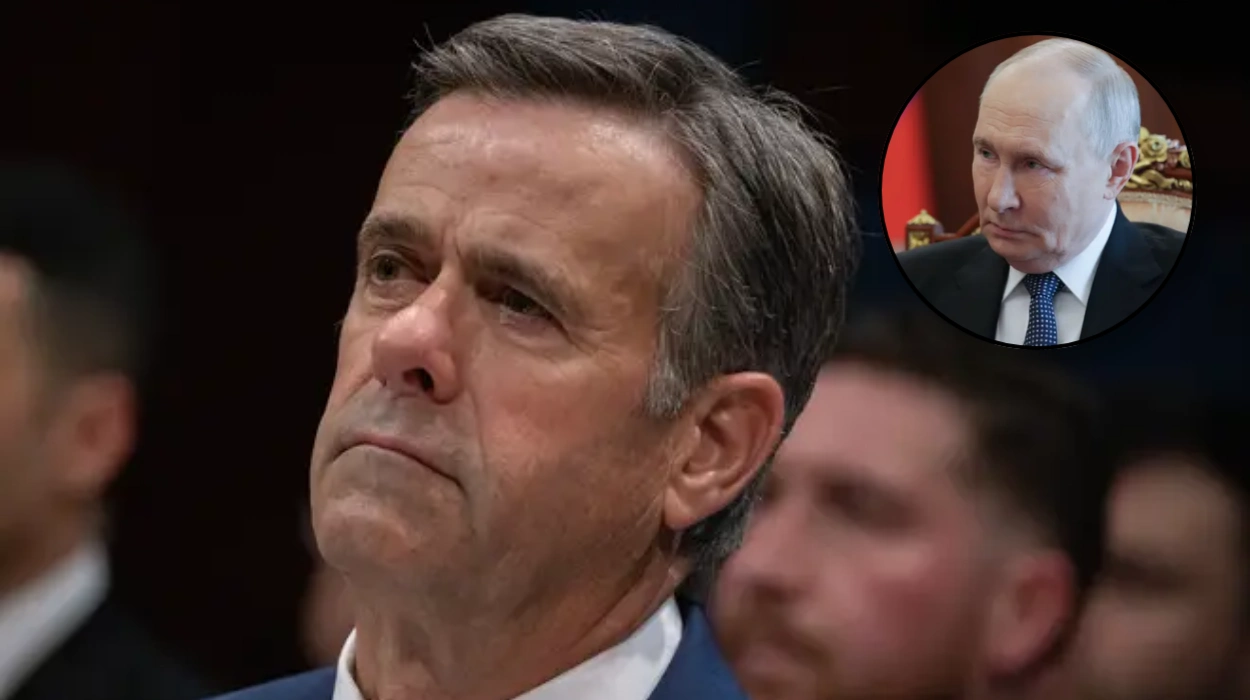
Key Points
- CIA Director John Ratcliffe travelled to Moscow to urge Russian officials not to attack a NATO member state.
- Ratcliffe met Russian intelligence officials but did not hold talks with President Vladimir Putin.
- US President Donald Trump described the trip as “semi-routine”.
- US intelligence reportedly believes Putin may be considering a limited assault to test NATO’s resolve, potentially involving a cyberattack or small-scale land incursion.
- A Baltic nation is considered the most likely target of any such action.
- Kremlin spokesman Dmitry Peskov confirmed that Putin had been briefed on the visit’s outcome but declined to provide further details.
- The visit took place as the war in Ukraine continued and US-Iran peace efforts stalled.
- It was the first known visit by a CIA director to Moscow since William Burns met Putin in November 2021.
- Peskov said intelligence-level contacts between Washington and Moscow often continue even when diplomatic relations are strained.
Moscow (Britain Today News) August 27, 2026 — CIA director John Ratcliffe travelled to Moscow to press Russian officials not to attack a NATO member state, amid growing concern within US intelligence circles that President Vladimir Putin could be preparing to test the alliance’s resolve, according to people briefed on the trip.
- Key Points
- What Happened During CIA Director John Ratcliffe’s Visit to Moscow?
- Why Did Ratcliffe Travel to Russia Now?
- Did Ratcliffe Meet Vladimir Putin During the Visit?
- What Fears Prompted the CIA Director’s Trip, According to Reports?
- Which Country Could Be Targeted if Russia Tests NATO’s Resolve?
- What Did the Kremlin Say About the Visit?
- How Did Donald Trump Describe the Purpose of the Trip?
- What Is the Historical Context of CIA-Russia Intelligence Contacts?
- How Does the Visit Relate to the War in Ukraine and Stalled Iran Talks?
- What Could This Visit Mean for US-Russia Relations Going Forward?
- What Happens Next?
Mr Ratcliffe held talks with Russian intelligence officials during his time in the Russian capital but did not meet President Putin himself, in what US President Donald Trump later described as a “semi-routine” visit. The trip has drawn significant attention given the fragile state of relations between Washington and Moscow, the ongoing war in Ukraine, and stalled negotiations aimed at resolving tensions over Iran.
What Happened During CIA Director John Ratcliffe’s Visit to Moscow?
According to people briefed on the matter, Mr Ratcliffe’s visit to Moscow was focused on urging Russian officials not to pursue any form of military or cyber action against a NATO country. The CIA director met with Russian intelligence counterparts during the trip, though the exact officials involved have not been publicly disclosed. Notably, no meeting took place between Mr Ratcliffe and President Putin, a point later confirmed by the Kremlin.
Why Did Ratcliffe Travel to Russia Now?
The timing of the visit coincides with a period of heightened uncertainty in the region. The war in Ukraine continues without a resolution, and separate diplomatic efforts between the United States and Iran aimed at securing a lasting peace have stalled. Against this backdrop, concerns have grown within US intelligence agencies that Moscow may be contemplating a move against NATO to gauge the alliance’s willingness to respond militarily or otherwise.
Did Ratcliffe Meet Vladimir Putin During the Visit?
No. Despite meeting Russian intelligence officials, Mr Ratcliffe did not hold direct talks with President Putin during his time in Moscow. This was later confirmed by Kremlin spokesman Dmitry Peskov, who told reporters that contact had taken place “via the security services” rather than at the presidential level. Peskov stated:
“All I can tell you is that there have been contacts via the security services. I can tell you that there have been no meetings with the Russian president. Naturally, President Putin is kept informed of everything without delay.”
What Fears Prompted the CIA Director’s Trip, According to Reports?
Reporting on the details of the visit indicated that US intelligence believes President Putin may be considering testing NATO’s resolve through a limited assault. Such an action, according to the reporting, could take the form of a cyberattack or a small-scale land invasion rather than a full-scale military confrontation. The purpose of Mr Ratcliffe’s visit, per those briefed on the matter, was to communicate directly to Russian officials that such an escalation would not be tolerated and to gauge Moscow’s intentions at a sensitive moment in the conflict.
Which Country Could Be Targeted if Russia Tests NATO’s Resolve?
It is understood that any such assault by Russia would most likely be directed at a Baltic nation. The Baltic states — Estonia, Latvia and Lithuania — sit on NATO’s eastern flank and have long been viewed as the alliance’s most exposed members given their proximity to Russia and, in some cases, shared borders or historical ties to the former Soviet Union. While no specific country has been named in connection with the alleged threat, the Baltic region has consistently featured in assessments of where Russian pressure on NATO might first materialise.
What Did the Kremlin Say About the Visit?
Kremlin spokesman Dmitry Peskov confirmed that President Putin had been briefed on the outcome of the meetings that took place during Mr Ratcliffe’s visit on Tuesday. However, Peskov declined to elaborate on what exactly had been discussed between the two sides. When pressed further by reporters on the substance of the talks, Peskov did not provide additional detail, maintaining that the contacts had occurred at the intelligence-services level rather than involving senior political leadership directly.
Peskov also addressed the broader significance of such high-level intelligence contacts continuing despite the strained state of bilateral relations. He said:
“These contacts often continue even during the most difficult periods in bilateral relations. Our president, incidentally, has spoken about this. However, it is still too early to say to what extent this will, overall, help to steer our bilateral relations out of the profound crisis in which they currently find themselves.”
How Did Donald Trump Describe the Purpose of the Trip?
Speaking in a radio interview on Wednesday, US President Donald Trump did not specify the exact reasons behind Mr Ratcliffe’s journey to Moscow but suggested that the visit could ultimately prove beneficial to broader diplomatic efforts. Trump told the Glenn Beck Program:
“Now something may come … out of it. We’re working very hard to get that war ended.”
referring to the ongoing conflict in Ukraine.
When asked directly whether the CIA chief had travelled to Moscow specifically to discuss potential Russian action against NATO or to address matters relating to sanctions on Iran, Trump dismissed both suggestions, replying:
“None of the above. He’s there, you know, very sort of semi-routine.”
What Is the Historical Context of CIA-Russia Intelligence Contacts?
Direct engagement between a sitting CIA director and Russian officials in Moscow is a rare occurrence, particularly given the deterioration in relations between the two countries in recent years. The last known visit of this kind took place when Mr Ratcliffe’s predecessor, William Burns, held talks with President Putin in Moscow in November 2021 — a meeting that occurred three months before Russia’s full-scale invasion of Ukraine began. That earlier visit was itself viewed as a significant, high-stakes diplomatic and intelligence undertaking, underscoring how infrequently such direct contact takes place between the two nations’ top intelligence figures.
How Does the Visit Relate to the War in Ukraine and Stalled Iran Talks?
The visit takes place against a complex geopolitical backdrop. The war in Ukraine remains unresolved, with President Trump publicly stating his administration is working to bring the conflict to an end. At the same time, separate efforts to reach a lasting agreement between the United States and Iran have reportedly stalled. Mr Ratcliffe’s trip to Moscow, therefore, sits at the intersection of several overlapping diplomatic and security challenges facing Washington, even though Trump specifically denied that the visit was intended to address either the Ukraine war directly or the Iran sanctions issue.
Explore More about the World:
German scheme to impose a tax on artificially sweetened beverages
Volkswagen Boss Warns German Workers of More Job Cuts
What Could This Visit Mean for US-Russia Relations Going Forward?
When asked whether visits by senior US officials such as Mr Ratcliffe could help ease the currently strained state of US-Russia relations, Peskov struck a cautiously optimistic but non-committal tone. He acknowledged that intelligence-level contacts between the two countries have historically persisted even during periods of severe diplomatic tension, describing such continuity as broadly positive. However, he was careful not to overstate the potential impact of the latest visit, noting that it remains too early to determine whether this particular exchange will meaningfully help move bilateral relations away from what he described as a “profound crisis.”
What Happens Next?
No further details have been disclosed regarding what specific commitments, if any, were made during Mr Ratcliffe’s talks with Russian intelligence officials. Both the White House and the Kremlin have offered only limited public comment on the substance of the discussions, and neither side has confirmed whether any follow-up meetings are planned. With the war in Ukraine ongoing and diplomatic channels between Washington and Tehran currently stalled, the visit is likely to remain the subject of continued scrutiny as observers attempt to assess its broader implications for regional security and the stability of NATO’s eastern members.
The lack of detailed disclosure from either government means much about the visit remains unconfirmed, including the identities of the Russian officials involved, the precise content of the discussions, and whether any concrete assurances were exchanged regarding Russian conduct towards NATO member states. As things stand, both Washington and Moscow appear content to characterise the trip in general terms — as “semi-routine” from the American side and as a matter for the security services from the Russian side — while offering no further elaboration to the public.